

Fresh coffee is one of life’s simplest pleasures—but what happens after the brew is just as important. If you’ve ever wondered “how do you dispose of coffee grounds” without harming your plumbing or wasting a valuable resource, you’re in the right place.
Used coffee grounds aren’t just waste—they’re packed with nutrients, texture, and surprising versatility. This guide breaks down the smartest, safest, and most sustainable ways to handle coffee grounds, whether you brew with a French press, drip machine, or espresso setup. Expect practical tips, real-world insights, and easy methods you can start using today.
In This Article
Why Properly Disposing of Coffee Grounds Actually Matters
Most people scoop used grounds straight into the trash without a second thought. That works—but it misses the bigger picture.
Coffee grounds are organic material rich in nitrogen, making them far more useful than typical kitchen waste. Tossing them carelessly can lead to unnecessary landfill buildup, while smarter disposal methods can actually benefit your home and environment.
The Hidden Impact of Coffee Waste
- Millions of tons of coffee waste are generated globally each year
- Organic waste in landfills contributes to methane emissions
- Coffee grounds break down easily when handled correctly
Why It’s Worth Doing It Right
- Better for the environment: Reduces landfill waste
- Good for your home: Prevents plumbing issues
- Surprisingly useful: Can be reused in multiple ways
A small daily habit—like how you dispose of coffee grounds—can add up to a meaningful impact over time.
How Do You Dispose of Coffee Grounds the Right Way? (Quick Overview)
There’s no single “best” method—it depends on your space, lifestyle, and how much effort you want to put in. Still, some options clearly stand out.
The Smart Disposal Hierarchy
| Method | Best For | Key Benefit |
| Composting | Homes with outdoor space | Eco-friendly, nutrient-rich soil |
| Reusing | Anyone | Zero waste, practical applications |
| Trash (last resort) | Convenience-focused users | Quick and simple |
| Sink disposal ❌ | Not recommended | Can clog pipes over time |
Quick Decision Guide
- Have a garden or plants? → Compost or reuse
- Live in an apartment? → Indoor compost or creative reuse
- In a rush? → Trash is fine occasionally
- Thinking about the sink? → Avoid it (more on that next)
Key takeaway: The best approach is to treat coffee grounds as a resource, not waste.
Can You Put Coffee Grounds Down the Sink? (Myth vs Reality)
It’s a common habit—rinse your filter or French press and let the grounds wash away. It feels harmless, especially since coffee grounds are small and gritty.
The reality is different.
Why It Seems Safe
- Grounds look fine enough to pass through pipes
- Water carries them easily at first
- No immediate blockage appears
The Real Problem Over Time
Coffee grounds don’t dissolve in water. Instead, they:
- Clump together inside pipes
- Stick to grease or soap residue
- Build up gradually, leading to stubborn clogs
Even homes with garbage disposals aren’t immune. Grounds can accumulate in bends and traps, creating slow drainage and expensive plumbing issues.
What Experts Recommend
- Dispose of grounds in compost or trash instead
- Rinse only residual traces, not bulk grounds
- Use a strainer if needed to catch particles
Bottom line: Putting coffee grounds down the sink is a slow problem waiting to happen—better to avoid it entirely.
Composting Coffee Grounds: The Best Eco-Friendly Solution
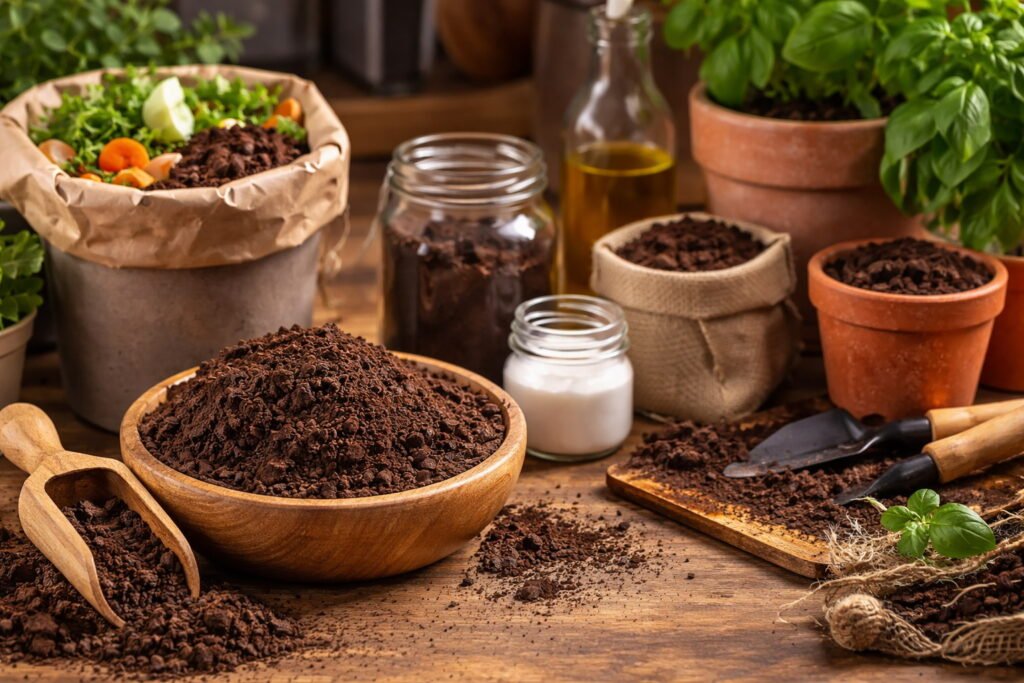
If there’s one method that consistently stands out, it’s composting. Coffee grounds are rich in nitrogen, making them an excellent “green” material in compost systems.
Why Coffee Grounds Work So Well in Compost
- Improve soil structure and drainage
- Add essential nutrients for plant growth
- Encourage beneficial microorganisms
Despite the common myth, used coffee grounds are close to neutral in pH, so they won’t overly acidify your compost when used correctly.
How to Compost Coffee Grounds Properly
Getting it right is simple:
- Mix grounds with “brown” materials like dried leaves, paper, or cardboard
- Avoid dumping large wet clumps—spread them out evenly
- Keep your compost slightly moist, not soggy
- Turn the pile regularly for airflow
Quick Compost Balance Guide
| Material Type | Examples | Role |
| Green | Coffee grounds, food scraps | Nitrogen source |
| Brown | Dry leaves, paper, sawdust | Carbon source |
Pro tip: Used paper coffee filters can go straight into compost too—just tear them up for faster breakdown.
Creative Ways to Reuse Coffee Grounds at Home
Throwing coffee grounds away without reusing them is a missed opportunity. With a bit of creativity, they can replace several household products.
Everyday Uses That Actually Work
Natural deodorizer
Place dried grounds in a bowl to absorb odors in:
- Refrigerators
- Shoes
- Trash bins
DIY body scrub
The gritty texture makes a great exfoliant. Mix with:
- Coconut oil for moisture
- A bit of sugar for extra polish
Grease-cutting cleaner
Coffee grounds help scrub:
- Stubborn pans
- Grill grates
- Kitchen surfaces
Pest Repellent (Simple but Effective)
Sprinkle grounds around areas where pests gather:
- Ant trails
- Garden borders
- Entry points
The strong scent and texture can help deter insects without chemicals.
How Do You Dispose of Coffee Grounds in Small Spaces (Apartments & Urban Living)
No backyard? No problem. Urban living doesn’t limit your options—it just shifts your approach.
Indoor Composting Options
Small-scale systems work surprisingly well indoors:
- Bokashi bins: Ferment food waste (including coffee grounds) with minimal odor
- Worm composting (vermicomposting): Red worms break down grounds efficiently
- Compact compost bins: Designed for kitchens and balconies
These setups are low-maintenance and ideal for apartments.
No-Compost Alternatives
If composting feels like too much effort, try:
- Drying grounds and storing them for reuse
- Sharing with friends who garden
- Donating to local plant communities or urban farms
Check for Community Compost Programs
Many cities now offer shared composting initiatives. A quick search can reveal:
- Drop-off points
- Weekly collection services
- Community gardens accepting organic waste
Practical tip: Store used grounds in a breathable container to prevent mold before disposal or reuse.
Using Coffee Grounds in Your Garden: What Works and What Doesn’t
Coffee grounds can be a great addition to your garden—if you use them correctly. While they’re often praised as a miracle soil booster, misuse can do more harm than good.
What Actually Works
Used coffee grounds contain small amounts of nutrients like nitrogen, potassium, and phosphorus. They also improve soil texture.
Best ways to use them:
- Mix lightly into soil rather than dumping on top
- Add to compost first for balanced nutrient release
- Use as a thin layer of mulch (not thick piles)
Plants That Tend to Benefit
Some plants respond well to coffee-enriched soil:
- Leafy greens (spinach, lettuce)
- Root vegetables (carrots, radishes)
- Acid-loving plants (roses, blueberries—in moderation)
What to Avoid
Common mistakes can limit plant growth:
- Overloading soil with grounds → can reduce airflow
- Applying thick layers → may create a water barrier
- Using fresh (unused) grounds → too acidic and strong
Pro tip: Think of coffee grounds as a supplement, not a main ingredient in your soil.
Coffee Grounds and Odor Control: A Simple Everyday Hack
One of the easiest ways to reuse coffee grounds is also one of the most effective—odor control.
Coffee naturally contains compounds that trap and neutralize odors, making it a great alternative to chemical air fresheners.
Where Coffee Grounds Work Best
Place a small container of dried grounds in:
- Refrigerators
- Closets or drawers
- Cars
- Near trash cans
They absorb smells instead of masking them.
How to Use Them Properly
- Always dry the grounds first to prevent mold
- Use an open container or breathable pouch
- Replace every 1–2 weeks for best results
Why It Works
The porous structure of coffee grounds helps capture odor-causing molecules, similar to activated charcoal—just more accessible.
Quick win: It’s one of the simplest ways to reduce waste while improving your home environment.
How Do You Dispose of Coffee Grounds Without Waste (Zero-Waste Approach)
A zero-waste mindset changes how you see coffee grounds. Instead of asking “Where do I throw this?”, the better question becomes “How can I use this?”
Shift From Disposal to Reuse
Every batch of coffee grounds has multiple potential uses:
- Composting for soil enrichment
- Household cleaning and deodorizing
- Gardening support
Even small efforts can significantly reduce daily waste.
Build a Simple Routine
Making this habit stick doesn’t require extra effort:
- Keep a small container near your coffee station
- Separate grounds immediately after brewing
- Rotate between reuse methods (compost, cleaning, odor control)
Reduce Waste From the Start
Smarter coffee habits help minimize overall waste:
- Brew only what you’ll drink
- Adjust grind size for efficiency (avoids overuse of coffee)
- Use reusable filters instead of disposable ones
Common Mistakes to Avoid When Disposing of Coffee Grounds
Even with good intentions, a few small missteps can turn coffee grounds from helpful to problematic.
Mistakes That Cause the Most Issues
- Dumping large wet clumps
Thick piles don’t break down well and can develop mold quickly. - Putting grounds down the drain
Over time, buildup can lead to stubborn clogs and slow drainage. - Overloading compost or soil
Too much nitrogen in one place disrupts balance and airflow. - Storing grounds in sealed containers while wet
Trapped moisture leads to unpleasant odors and spoilage.
What to Do Instead
- Spread grounds out to dry before storing or reusing
- Mix with other materials when composting
- Dispose in small, manageable amounts
Simple rule: Treat coffee grounds like a resource that needs balance, not bulk.
From Brewing to Disposal: Smarter Coffee Habits at Home
How you brew coffee directly affects how easy it is to manage the leftover grounds. A few smart adjustments can reduce waste and simplify cleanup.
How Brewing Methods Impact Coffee Waste
| Brewing Method | Ground Texture | Waste Handling Tip |
| French press | Coarse | Easy to compost, minimal mess |
| Drip coffee | Medium | Dispose with filter or compost together |
| Espresso | Fine | Clumps easily—break apart before reuse |
Practical Habits That Make a Difference
- Use reusable filters to cut down on paper waste
- Dial in your grind size for better extraction and less waste
- Measure your coffee (standard ratio: 1:15 to 1:18 coffee-to-water)
Better brewing doesn’t just improve flavor—it makes disposal cleaner and more efficient.
Bonus: Surprising Uses for Coffee Grounds You Probably Haven’t Tried
Once you start saving your grounds, you’ll find even more creative uses beyond the usual tips.
Unexpected but Practical Ideas
- Natural dye
Coffee grounds can give paper or fabric a warm, vintage tone. - Scratch repair for dark wood
Mix grounds with a little water to mask minor surface scratches. - Non-slip traction
Sprinkle on slippery outdoor surfaces for extra grip. - Hand deodorizer
Rub grounds on your hands to remove strong smells like garlic or fish.
These uses may not replace everyday products entirely, but they’re smart, low-cost alternatives worth trying.
FAQ: How Do You Dispose of Coffee Grounds (Answered Clearly)
Can coffee grounds go in the garbage disposal?
It’s not recommended. Grounds can build up in pipes over time, increasing the risk of clogs.
Are coffee grounds good for all plants?
No. Some plants benefit, but too much can harm soil balance. Always use in moderation or compost first.
Do coffee grounds attract bugs?
Generally no. In fact, they can help repel certain pests like ants when used properly.
How long do used coffee grounds last?
When dried, they can last several weeks. Wet grounds should be used quickly to avoid mold.
Can you reuse coffee grounds for brewing again?
Technically yes, but the flavor will be weak and often bitter. It’s better to reuse them for other purposes.
Learn More About Sustainable Coffee Practices
For deeper insights into sustainable coffee habits and responsible waste management, check out the
Specialty Coffee Association’s resources:
https://sca.coffee/research
They provide valuable guidance on brewing standards, sustainability, and improving your overall coffee routine.
Turning coffee grounds into something useful doesn’t require extra effort—just a shift in mindset. Start small: compost a batch, try a deodorizer, or use them in your garden. Over time, these simple habits add up to less waste and a smarter coffee routine.

Meet Suzee Amelia, the creative voice behind this space—a blog dedicated to exploring coffee culture, lifestyle insights, and everyday inspiration. With a passion for discovering rich flavors and sharing practical tips, Sophie Langford brings a thoughtful and engaging approach to every post.

1 thought on “How Do You Dispose of Coffee Grounds? 10 Smart, Surprising Ways You’re Missing”