Coffee packaging does far more than hold beans—it protects quality, communicates value, and drives buying decisions. Choosing the right coffee packaging for your brand can be the difference between blending into the shelf and becoming a memorable, repeat-purchase favorite.
Modern coffee buyers are more informed than ever. They evaluate not just flavor profiles, but also sustainability, freshness, and brand story—all of which are communicated through packaging. A thoughtfully designed package builds trust instantly, while a poor choice can silently push customers away.
This guide breaks down everything you need to know to make smart, strategic packaging decisions that align with your brand, your audience, and your growth goals.
In This Article
Why Choosing the Right Coffee Packaging for Your Brand Matters
Packaging is your first handshake with the customer. Whether someone discovers your product online or in a retail aisle, the packaging speaks before your coffee ever does.
Packaging shapes perception instantly
Research shows consumers form opinions in under 7 seconds. A premium-looking bag signals quality, even before brewing.
Key psychological triggers:
- Color influences taste expectations
- Texture signals premium vs. budget
- Typography builds trust and clarity
Acts as a silent salesperson
Strong packaging communicates:
- Roast level
- Flavor notes
- Origin story
- Brand personality
A well-designed coffee bag answers questions before they’re asked.
Direct impact on freshness and quality
Coffee is highly sensitive to:
- Oxygen
- Light
- Moisture
Improper packaging leads to stale coffee—no matter how good your beans are.
Retail vs. eCommerce impact
Packaging plays different roles depending on where it’s sold:
| Channel | Packaging Role | Priority |
| Retail | Shelf visibility & brand recognition | Design & differentiation |
| eCommerce | Protection & unboxing experience | Durability & storytelling |
A brand that understands this distinction gains a competitive edge immediately.
Understanding Buyer Intent
Not every coffee buyer is the same. Packaging must align with who you’re selling to and why they’re buying.
Retail shelf shoppers
These buyers:
- Make quick decisions
- Compare multiple brands side-by-side
- Respond to bold visuals
Packaging strategy:
- Eye-catching colors
- Clear labeling
- Strong brand identity
eCommerce customers
Online buyers:
- Cannot touch or smell the product
- Rely heavily on visuals and descriptions
Packaging strategy:
- Photogenic design
- Durable materials for shipping
- Memorable unboxing experience
Premium vs. budget audiences
| Audience Type | Packaging Expectations |
| Premium | Elegant, minimal, high-end finishes |
| Budget | Practical, simple, cost-efficient |
Premium buyers often associate heavier materials and minimalist design with better quality.
Subscription-based customers
Consistency matters more than novelty here.
Winning elements:
- Resealable packaging
- Functional design
- Familiar branding
Gift buyers and seasonal shoppers
Packaging becomes part of the gift itself.
Effective features:
- Unique textures or finishes
- Limited edition designs
- Story-driven branding
Core Functions of Coffee Packaging (Beyond Looks)
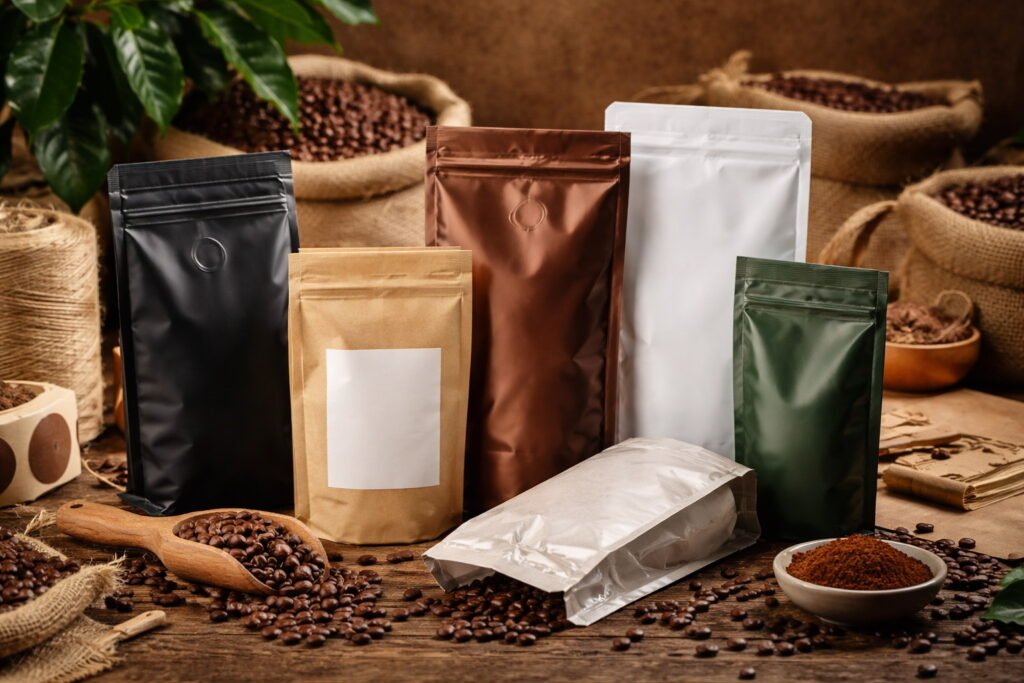
Great packaging performs multiple roles simultaneously. A visually appealing bag means little if it fails to protect what’s inside.
Freshness preservation is critical
Coffee begins losing flavor within hours of roasting if exposed to air.
Essential protection factors:
- Oxygen barrier
- Moisture resistance
- UV/light protection
Degassing: a non-negotiable for fresh coffee
Freshly roasted beans release carbon dioxide. Without proper ventilation, packaging can inflate or even burst.
Solution:
- One-way degassing valves
- Allows gas to escape without letting oxygen in
Protection during shipping and storage
Transportation introduces risks:
- Compression
- Temperature fluctuations
- Rough handling
Durable packaging prevents:
- Bag tears
- Seal failures
- Product contamination
Food safety and compliance
Coffee packaging must meet regulatory standards depending on your market.
Typical requirements include:
- Food-grade materials
- Proper sealing
- Contamination prevention
Quick reference: packaging function checklist
| Function | Why It Matters | Must-Have? |
| Oxygen barrier | Prevents staleness | Yes |
| Degassing valve | Releases CO₂ safely | Yes |
| Moisture protection | Avoids spoilage | Yes |
| Structural durability | Prevents damage in transit | Yes |
| Visual branding | Drives purchase decisions | Yes |
Case Study: Small Roaster Scaling with Better Packaging
A specialty coffee startup switched from simple kraft bags to foil-lined pouches with valves and custom branding.
Results within 6 months:
- 32% increase in repeat customers
- 21% reduction in product returns
- Stronger brand recognition in retail
The change wasn’t just aesthetic—it directly improved product quality and customer trust.
Types of Coffee Packaging Materials Explained
Material choice directly influences freshness, sustainability, cost, and brand perception. Each option comes with trade-offs, so understanding them is essential when choosing the right coffee packaging for your brand.
Kraft paper bags: natural and approachable
Kraft packaging delivers an organic, artisanal feel that resonates with eco-conscious buyers.
Advantages:
- Strong visual appeal for “natural” brands
- Lightweight and cost-effective
- Easy to print and customize
Limitations:
- Poor oxygen barrier without lining
- Limited shelf life for fresh coffee
Best suited for: Local roasters, farmer-market brands, eco-focused startups
Foil-lined bags: maximum freshness protection
Foil-lined packaging is considered the industry standard for specialty coffee.
Advantages:
- Excellent oxygen and moisture barrier
- Extends shelf life significantly
- Ideal for freshly roasted beans
Limitations:
- Less eco-friendly
- Slightly higher cost
Best suited for: Specialty coffee brands, eCommerce sellers, premium products
Plastic-based packaging: practical and scalable
Plastic materials like polyethylene (PE) or polypropylene (PP) offer flexibility and durability.
Advantages:
- Affordable for large-scale production
- Strong and puncture-resistant
- Lightweight for shipping
Limitations:
- Environmental concerns
- Lower perceived premium value
Best suited for: High-volume brands, budget-friendly coffee lines
Compostable and biodegradable materials
Sustainability has become a major buying factor, pushing innovation in eco-friendly packaging.
Advantages:
- Appeals to environmentally conscious consumers
- Reduces landfill impact
- Supports brand sustainability messaging
Limitations:
- Shorter shelf life in some cases
- Higher cost
- Limited availability of high-barrier options
Best suited for: Eco-focused brands, direct-to-consumer coffee companies
Tin cans and glass jars: premium and reusable
Rigid packaging creates a distinct, upscale presence.
Advantages:
- Strong shelf impact
- Reusable and gift-friendly
- Excellent protection from external elements
Limitations:
- Higher shipping costs
- Heavier and less convenient
Best suited for: Luxury coffee brands, gift sets, limited editions
Material comparison table
| Material Type | Freshness Protection | Sustainability | Cost Level | Brand Perception |
| Kraft Paper | Low–Medium | High | Low | Natural / Artisan |
| Foil-lined | High | Low–Medium | Medium | Premium / Professional |
| Plastic-based | Medium | Low | Low | Practical / Budget |
| Compostable | Medium | High | High | Eco-conscious |
| Tin / Glass | High | Medium | High | Luxury / Giftable |
Choosing the Right Coffee Packaging for Your Brand Identity
Packaging must feel like your brand before customers even read the label. Every design decision should reinforce your positioning in the market.
Align packaging with brand positioning
Strong brands create consistency between product quality and visual identity.
Examples:
- Premium brand → minimalist design, muted tones, clean typography
- Youth-focused brand → bold colors, playful graphics
- Artisan brand → earthy tones, hand-drawn elements
Mismatch creates confusion—and confusion kills conversions.
Minimalist vs. bold design styles
| Style | Characteristics | Ideal For |
| Minimalist | Clean layout, neutral colors, simple text | Premium, specialty coffee |
| Bold | Bright colors, strong graphics | Retail shelf visibility |
Minimalist design often signals confidence and quality, while bold design grabs attention in crowded spaces.
Communicate key product details clearly
Customers expect instant clarity. Packaging should answer:
- What type of coffee is this?
- Where is it from?
- How does it taste?
- When was it roasted?
Essential label elements:
- Origin (single-origin or blend)
- Roast level
- Flavor notes
- Brewing recommendations
Color psychology in coffee packaging
Colors subtly influence how customers perceive taste and quality.
Common associations:
- Brown → warmth, richness, tradition
- Black → luxury, boldness
- Green → sustainability, freshness
- Gold → premium quality
Smart brands use color strategically—not randomly.
Typography and brand voice
Fonts communicate personality:
- Serif fonts → traditional, refined
- Sans-serif → modern, clean
- Script fonts → artisanal, handcrafted
Consistency across packaging builds recognition and trust over time.
Coffee Bag Styles and Formats You Should Know
Structure matters just as much as material. The right format improves usability, shelf presence, and customer satisfaction.
Stand-up pouches (Doypack)
A popular and versatile choice.
Features:
- Stands upright on shelves
- Large printable surface
- Works well with zippers and valves
Best for: Retail and eCommerce brands
Flat bottom (box bottom) bags
Offers a premium, structured look.
Features:
- Stable base for display
- Multiple panels for branding
- High-end appearance
Best for: Specialty and premium coffee brands
Side gusset bags
Traditional coffee packaging style.
Features:
- Expands on the sides
- Compact storage
- Often used with valves
Best for: Wholesale and classic coffee brands
Pillow bags
Simple and cost-effective format.
Features:
- Lightweight
- Minimal structure
- Lower production cost
Best for: Budget products, single-use coffee
Single-serve packaging (pods and sachets)
Convenience-driven format growing rapidly in demand.
Features:
- Pre-measured servings
- Easy to use
- Highly portable
Best for: Busy consumers, offices, travel use
Format comparison table
| Format | Shelf Presence | Cost | Convenience | Brand Impact |
| Stand-up pouch | High | Medium | High | Versatile |
| Flat bottom bag | Very High | High | High | Premium |
| Side gusset | Medium | Medium | Medium | Traditional |
| Pillow bag | Low | Low | Medium | Budget |
| Single-serve | Medium | High | Very High | Convenience-driven |
Valves, Zippers, and Features That Matter
Functionality separates average packaging from exceptional user experience. Small details—often overlooked—can dramatically influence freshness, convenience, and customer satisfaction.
One-way degassing valves: essential for freshness
Freshly roasted coffee releases carbon dioxide for several days after roasting. Without proper ventilation, packaging can swell or even rupture.
A one-way degassing valve solves this problem by:
- Letting CO₂ escape safely
- Preventing oxygen from entering
- Preserving aroma and flavor
When to use it:
- Always for freshly roasted whole beans
- Highly recommended for ground coffee sold quickly
Resealable zippers: convenience that drives loyalty
Customers rarely use an entire bag at once. A resealable zipper keeps coffee fresh between uses.
Benefits:
- Maintains freshness after opening
- Improves usability
- Reduces need for additional storage containers
Brands that prioritize convenience often see higher repeat purchases.
Tear notches and easy-open features
Simple opening mechanisms create a smoother first experience.
Why it matters:
- No scissors needed
- Reduces frustration
- Improves perceived quality
A difficult-to-open bag can instantly damage brand perception.
Window vs. no-window packaging
Clear windows allow customers to see the product—but come with trade-offs.
| Feature | Window Packaging | No-Window Packaging |
| Visual appeal | High transparency | More mystery/premium feel |
| Freshness | Lower (light exposure) | Higher protection |
| Branding space | Limited | Full design control |
Best practice:
Use windows only when visual product appeal outweighs freshness concerns.
Additional features worth considering
- Matte or gloss finishes for tactile experience
- Embossing or debossing for premium feel
- QR codes for storytelling and traceability
- Hang holes for retail display flexibility
Feature checklist for high-performing packaging
- Degassing valve (for fresh coffee)
- Resealable zipper
- Durable seals
- Easy-open design
- Light-blocking structure
Every added feature should serve a purpose—not just aesthetics.
Sustainability Considerations in Coffee Packaging
Eco-conscious packaging is no longer optional for many brands—it’s a competitive advantage. Customers increasingly choose brands that align with their environmental values.
Understanding sustainability options
Recyclable packaging
- Can be processed through existing recycling systems
- Often made from mono-material plastics
- Requires proper disposal by consumers
Compostable packaging
- Breaks down into natural elements under specific conditions
- Ideal for reducing landfill waste
- May require industrial composting facilities
Biodegradable packaging
- Decomposes over time naturally
- Less controlled than compostable materials
The trade-off: sustainability vs. shelf life
Eco-friendly materials sometimes lack the barrier strength of traditional packaging.
Key challenge:
- Maintaining freshness while reducing environmental impact
Smart solution:
- Hybrid materials that balance performance and sustainability
What modern consumers expect
Recent buying trends show:
- Customers are willing to pay more for sustainable packaging
- Transparency matters more than perfection
- Greenwashing damages trust quickly
Clear communication is critical:
Explain what makes your packaging sustainable and how to dispose of it.
Certifications and eco-labeling
Certifications add credibility to sustainability claims.
Examples:
- Compostable certification marks
- FSC-certified paper sourcing
- Recyclability labels
Including these signals builds trust and authority.
Sustainability comparison table
| Packaging Type | Eco Impact | Shelf Life | Consumer Appeal |
| Traditional foil | Low | High | Medium |
| Recyclable plastic | Medium | Medium | High |
| Compostable | High | Medium | Very High |
| Kraft paper | High | Low | High |
Case Study: Eco Packaging Boosting Brand Loyalty
A direct-to-consumer coffee brand switched to compostable bags and clearly explained disposal instructions on the packaging.
Outcomes:
- 40% increase in customer retention
- Stronger brand differentiation
- Higher engagement on social media
Sustainability worked not just as a value—but as a marketing driver.
Cost vs. Quality: Finding the Right Balance
Budget decisions shape your packaging strategy, but choosing the cheapest option often leads to higher long-term costs.
Understanding packaging cost breakdown
Typical cost components include:
- Material selection
- Printing (digital vs. flexographic)
- Add-ons (valves, zippers)
- Shipping and storage
- Minimum order quantities (MOQs)
Average cost structure
| Cost Element | Impact on Budget | Notes |
| Materials | High | Biggest cost driver |
| Printing | Medium | Custom designs increase cost |
| Features | Medium | Valves and zippers add value |
| Logistics | Variable | Depends on weight and volume |
MOQ (Minimum Order Quantity) considerations
Suppliers often require bulk orders.
Challenges:
- High upfront investment
- Storage requirements
Opportunities:
- Lower cost per unit
- Better margins at scale
Start small if testing, scale once validated.
When to invest in premium packaging
Premium packaging makes sense when:
- Selling high-end or specialty coffee
- Targeting gift buyers
- Competing in saturated markets
- Building a long-term brand
Cutting costs in these cases can harm brand perception.
Scaling packaging as your brand grows
Early stage:
- Use stock bags with labels
- Keep costs flexible
Growth stage:
- Transition to custom-printed packaging
- Improve materials and features
Established brand:
- Invest in premium finishes
- Optimize supply chain
Hidden cost of cheap packaging
Choosing low-quality packaging can result in:
- Product spoilage
- Negative reviews
- Increased returns
- Brand damage
Savings upfront often turn into losses later.
Practical budgeting rule
Many successful coffee brands allocate:
- 8%–15% of product cost to packaging
This range balances quality and profitability effectively.
Custom vs. Stock Packaging: Which Is Better for Your Coffee Brand?
Choosing between custom and stock packaging can shape how your brand is perceived from day one. Both options serve different stages of business growth, and the right decision depends on your goals, budget, and speed to market.
Custom Packaging: Built for Brand Recognition
Custom packaging is designed specifically for your brand, with printed graphics, colors, and messaging directly on the bag or container.
Key advantages:
- Strong brand identity and shelf appeal
- Higher perceived value and professionalism
- Better storytelling through design
- Consistent look across all product lines
Challenges to consider:
- Higher upfront investment
- Longer production lead times
- Larger minimum order quantities (MOQs)
Best for:
- Established brands
- Premium coffee lines
- Retail-focused businesses
Stock Packaging: Flexible and Cost-Effective
Stock packaging refers to pre-made bags or containers that you customize using labels or stickers.
Why many startups choose this:
- Low upfront cost
- Quick turnaround
- Easy to test different designs or products
- Lower MOQ requirements
Limitations:
- Less visually striking compared to custom prints
- Label durability issues in some conditions
- May look less premium on crowded shelves
Quick Comparison Table
| Feature | Custom Packaging | Stock Packaging |
| Cost | High upfront | Low upfront |
| Branding Impact | Strong | Moderate |
| Flexibility | Low | High |
| MOQ | High | Low |
| Speed to Market | Slower | Faster |
Smart Strategy for Growth
Many successful coffee brands follow a phased approach:
- Start with stock packaging + high-quality labels
- Validate product-market fit
- Transition to custom packaging as demand grows
“Packaging should evolve with your brand—not hold it back.”
Packaging for Different Sales Channels
Packaging that works in a retail store might fail in an eCommerce environment. Understanding how your product reaches customers is essential when choosing the right coffee packaging for your brand.
Retail Shelf Packaging
Retail environments are highly competitive. Your packaging must grab attention instantly.
Key priorities:
- Bold, clear design that stands out
- Easy-to-read product information
- Durable materials for handling
- Barcodes and compliance labeling
Winning features:
- Matte or soft-touch finishes
- Structured bags (flat bottom)
- Clean typography and contrast
eCommerce Packaging
Online shoppers don’t interact with your product physically before buying—so the unboxing experience becomes crucial.
Focus areas:
- Strong protection during shipping
- Lightweight materials to reduce costs
- Memorable unboxing experience
Pro tip:
Add small extras like thank-you cards or brewing tips to increase brand loyalty.
Wholesale and Bulk Packaging
Selling to cafés, restaurants, or offices requires a different approach.
Must-have features:
- Larger bag sizes (1kg or more)
- Durable, cost-efficient materials
- Simple, functional design
Subscription Box Packaging
Recurring deliveries create an opportunity to build emotional connections.
What works well:
- Consistent branding
- Seasonal or limited-edition designs
- Easy-open and resealable features
Channel-Based Packaging Strategy Table
| Channel | Priority | Recommended Packaging Style |
| Retail | Visual appeal | Flat bottom, custom printed |
| eCommerce | Protection + experience | Pouches with inserts |
| Wholesale | Functionality | Large side gusset bags |
| Subscription | Brand experience | Custom pouches with variations |
Labeling Requirements and Compliance
Ignoring labeling regulations can delay product launches or even result in fines. Smart brands treat compliance as part of their packaging strategy—not an afterthought.
Essential Information Every Coffee Package Must Include
Clarity builds trust. Customers want to know exactly what they’re buying.
Core labeling elements:
- Product name (e.g., whole bean coffee)
- Net weight (grams or ounces)
- Roast level (light, medium, dark)
- Origin (country or region)
- Roasting date or best-before date
- Business name and contact details
Optional but High-Value Information
Adding more detail can elevate your brand and justify premium pricing.
- Flavor notes (e.g., chocolate, citrus, floral)
- Brewing recommendations
- Certifications (organic, fair trade)
- QR codes linking to sourcing stories
Barcode and Retail Compliance
Retailers typically require standardized barcodes for inventory management.
Important considerations:
- Use GS1-certified barcodes
- Ensure proper placement and readability
- Maintain consistent SKU structure
Regional Regulations Matter
Requirements vary depending on where you sell your coffee.
- US: FDA guidelines for food labeling
- EU: Strict traceability and allergen rules
Reliable reference: You can review global food labeling basics from the U.S. Food and Drug Administration or visit their official guidance here:
👉 https://www.fda.gov/food/food-labeling-nutrition
Common Compliance Mistakes to Avoid
- Missing or unclear expiration dates
- Incorrect weight measurements
- Illegible font sizes
- Misleading claims (e.g., “organic” without certification)
Common Mistakes When Choosing Coffee Packaging
Even great coffee can struggle to sell if the packaging misses the mark. Many brands unknowingly limit their growth by overlooking critical details when choosing the right coffee packaging for your brand.
Ignoring Freshness Requirements
Freshness is non-negotiable in coffee.
What goes wrong:
- Using non-barrier materials that allow oxygen in
- Skipping one-way degassing valves for freshly roasted beans
- Choosing packaging that doesn’t protect from light or moisture
Result: Flat, stale coffee and disappointed customers.
Overdesigning or Underbranding
Balance matters more than complexity.
Common pitfalls:
- Overcrowded labels with too much information
- Minimal designs that fail to communicate value
- Inconsistent branding across products
“Design should guide the customer, not confuse them.”
Choosing the Cheapest Option Without Testing
Saving money upfront can cost more long term.
Risks include:
- Packaging failures during shipping
- Poor sealing leading to spoilage
- Negative customer reviews
Smart move: Always test samples under real conditions before committing to bulk orders.
Not Considering Logistics and Storage
Packaging doesn’t exist in isolation—it’s part of your supply chain.
Overlooked factors:
- Storage space for bulky packaging
- Shipping weight and cost implications
- Durability during long-distance delivery
Quick Mistake-to-Solution Table
| Mistake | Impact | Solution |
| No degassing valve | Stale coffee | Use valve-equipped bags |
| Poor material choice | Reduced shelf life | Choose foil-lined or high-barrier bags |
| Weak branding | Low shelf visibility | Invest in clear, bold design |
| No testing | Product damage | Run real-world packaging tests |
Step-by-Step Process for Choosing the Right Coffee Packaging for Your Brand
Clarity comes from following a structured approach. Instead of guessing, use a repeatable system to make confident packaging decisions.
Define Your Target Audience
Every packaging decision should reflect your ideal customer.
Ask yourself:
- Are they budget-conscious or premium buyers?
- Do they shop online or in-store?
- Do they value sustainability?
Set a Realistic Budget
Packaging is an investment—not just a cost.
Typical allocation:
- 10–30% of total product cost (depending on positioning)
Choose Material and Format
Match functionality with brand identity.
Examples:
- Premium brand → Flat bottom, matte finish, foil-lined
- Eco-focused brand → Kraft or compostable pouches
- Budget brand → Stock bags with labels
Test Samples Before Scaling
Never skip this step.
What to test:
- Seal strength
- Freshness retention
- Durability during shipping
- Customer perception
Gather Feedback and Refine
Real users provide insights no designer can predict.
Sources of feedback:
- Early customers
- Retail partners
- Online reviews
Finalize Supplier and Production
Choose partners who can grow with your business.
Key considerations:
- Consistent quality
- Scalable production capacity
- Reliable lead times
Simple Workflow Overview
| Step | Action |
| Audience | Define customer profile |
| Budget | Set packaging spend range |
| Material & Format | Select based on needs |
| Testing | Validate performance |
| Feedback | Improve design |
| Production | Scale with trusted supplier |
Future Trends in Coffee Packaging
The coffee industry is evolving quickly, and packaging is at the center of that transformation. Staying ahead of trends can position your brand as innovative and forward-thinking.
Smart Packaging and Digital Integration
Technology is turning packaging into an interactive experience.
Emerging features:
- QR codes linking to farm stories or brewing guides
- Blockchain traceability for transparency
- Augmented reality experiences
Minimalist and Transparent Branding
Modern consumers value clarity and authenticity.
What’s trending:
- Clean layouts with fewer elements
- Neutral color palettes
- Honest, straightforward messaging
Rise of Reusable Packaging Systems
Sustainability is no longer optional—it’s expected.
Innovations include:
- Refillable coffee containers
- Return-and-reuse programs
- Subscription-based packaging loops
Advancements in Compostable Materials
Eco-friendly packaging is becoming more effective and accessible.
New developments:
- Improved oxygen barriers in compostable films
- Hybrid materials balancing sustainability and performance
- Wider availability at lower costs
Trend Impact Table
| Trend | Benefit | Impact on Brands |
| Smart packaging | Customer engagement | Stronger brand connection |
| Minimalist design | Better clarity | Higher perceived value |
| Reusable systems | Reduced waste | Increased customer loyalty |
| Compostable materials | Eco-friendly positioning | Competitive differentiation |
FAQs About Choosing the Right Coffee Packaging for Your Brand
What is the best packaging for freshly roasted coffee?
Foil-lined bags with a one-way degassing valve are widely considered the best option. They protect against oxygen, moisture, and light while allowing carbon dioxide to escape, keeping coffee fresh longer.
Is eco-friendly coffee packaging worth it?
Yes—especially for brands targeting conscious consumers. Compostable or recyclable packaging can boost brand perception, though it may involve trade-offs in shelf life and cost.
How much should I budget for coffee packaging?
A typical range is 10–30% of your product cost. Premium brands often invest more to enhance perceived value and customer experience.
Can I start with simple packaging and upgrade later?
Absolutely. Many successful brands begin with stock packaging and labels, then transition to custom packaging as they scale and validate demand.
Do I need custom packaging to build a strong brand?
Not immediately. Strong branding can start with well-designed labels. Custom packaging becomes more important as competition increases and retail presence grows.
What packaging size works best for coffee products?
Popular sizes include 100g, 250g, 500g, and 1kg. The right choice depends on your target market—smaller sizes for specialty buyers and larger ones for regular consumers.
Does packaging really affect coffee taste?
Indirectly, yes. Poor packaging allows oxygen and moisture to degrade flavor, while high-barrier materials preserve aroma and freshness.
Final Thoughts: Making Packaging a Competitive Advantage
Choosing the right coffee packaging for your brand is not a one-time decision—it’s an evolving strategy that grows alongside your business. Smart brands treat packaging as a powerful tool, not just a container.
A well-designed package does three critical things:
- Protects product quality so every cup meets expectations
- Communicates brand value instantly on shelf or screen
- Creates emotional connection that drives repeat purchases
Consistency, clarity, and customer alignment separate average packaging from high-performing packaging. Brands that continuously test, refine, and adapt their packaging often outperform competitors—even when the coffee quality is similar.
“Customers don’t just buy coffee—they buy the story, the experience, and the promise your packaging delivers.”
Growth starts with intentional decisions. Review your current packaging and identify one area you can improve today—whether it’s freshness, design, sustainability, or usability.
Simple next steps you can take right now:
- Test a new packaging material or format
- Improve label clarity and storytelling
- Add features like valves or resealable zippers
- Gather customer feedback on your current packaging
For deeper guidance on packaging compliance and food labeling standards, explore trusted resources like the U.S. Food and Drug Administration to ensure your brand meets global requirements.
Your packaging is often the first handshake with your customer—make it count.