Coffee packaging is no longer just about keeping beans fresh—it has become a strategic decision that directly impacts cost, brand image, and environmental responsibility. Businesses today face a constant challenge: how to balance cost and sustainability in coffee packaging without sacrificing quality or profitability.
Rising material costs, increasing consumer demand for eco-friendly products, and stricter environmental regulations are forcing coffee brands to rethink their packaging strategies. The good news? Achieving a balance is not only possible—it can actually create a competitive advantage.
This guide breaks down the key factors, materials, and decisions that help coffee businesses reduce costs while moving toward sustainable packaging solutions.
In This Article
The Challenge of Cost vs Sustainability in Coffee Packaging
Balancing cost and sustainability in coffee packaging is not a simple trade-off. It’s a multi-layered decision involving product protection, logistics, and long-term brand value.
Why Coffee Packaging Is So Critical
Coffee is highly sensitive to:
- Oxygen
- Moisture
- Light
- Temperature
Poor packaging leads to flavor loss, reduced shelf life, and wasted product—which ultimately increases costs.
The Core Conflict
- Low-cost packaging often uses multi-layer plastics or foil laminates that are difficult to recycle
- Sustainable packaging tends to cost more due to newer materials and limited scalability
This creates a dilemma for businesses trying to remain profitable while reducing environmental impact.
Breaking a Common Myth
Many assume:
“Sustainable packaging is always expensive.”
Reality tells a different story. Costs depend on:
- Order volume
- Material innovation
- Supplier relationships
- Packaging design efficiency
Smart decisions can significantly narrow—or even eliminate—the cost gap.
Why Coffee Packaging Matters for Both Profit and Planet
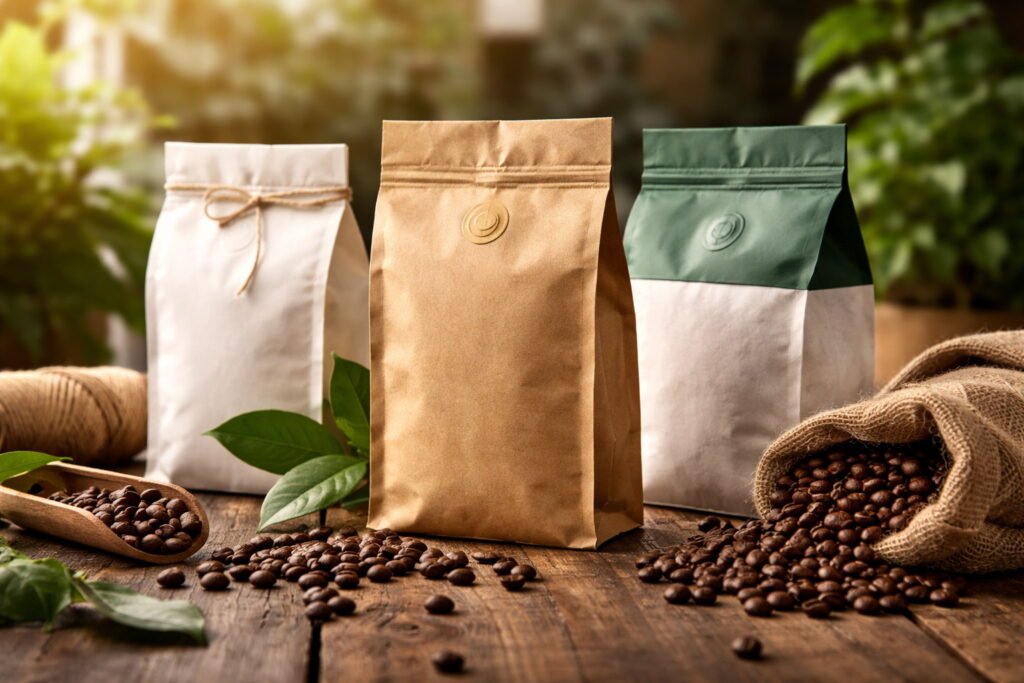
Packaging decisions affect more than just the product—they shape operational costs, brand perception, and environmental footprint.
Environmental Impact of Traditional Packaging
Most conventional coffee bags are made from multi-layer laminates (plastic + aluminum). These materials:
- Are non-recyclable in most regions
- Contribute to landfill waste
- Require high energy to produce
Cost Implications Across the Supply Chain
Unsustainable packaging often appears cheaper upfront but carries hidden costs:
- Waste disposal fees
- Regulatory risks
- Brand damage
Sustainable packaging, on the other hand, can:
- Reduce long-term waste costs
- Improve logistics efficiency (lighter materials)
- Increase customer loyalty
Consumer Expectations Are Shifting
Modern coffee buyers increasingly prefer brands that align with their values.
Key insight:
- 60%+ of consumers are willing to pay more for sustainable packaging (varies by market)
That means sustainability is no longer optional—it’s a revenue driver.
Types of Coffee Packaging Materials and Their Cost-Sustainability Tradeoffs
Choosing the right material is the foundation of balancing cost and sustainability in coffee packaging. Each option comes with its own strengths and limitations.
Comparison Table: Coffee Packaging Materials
| Material Type | Cost Level | Sustainability | Barrier Protection | Best Use Case |
| Plastic Laminates | Low | Low | Excellent | Mass production |
| Kraft Paper + Lining | Medium | Medium | Good | Mid-range brands |
| Compostable Packaging | High | High | Moderate | Premium eco brands |
| Recyclable Mono-Material | Medium | High | Good | Growing standard |
Plastic Laminates (Low Cost, Low Sustainability)
Widely used due to:
- Low production cost
- Excellent barrier protection
- Long shelf life
Downside:
- Difficult or impossible to recycle
- Increasing regulatory pressure
Kraft Paper with Inner Lining (Moderate Balance)
A popular “middle-ground” option:
- Natural appearance appeals to eco-conscious buyers
- Slightly better sustainability profile
Limitations:
- Still contains plastic lining
- Not fully compostable or recyclable
Compostable and Biodegradable Materials (High Sustainability, Higher Cost)
These materials are designed to:
- Break down under specific conditions
- Reduce landfill impact
Challenges include:
- Higher price point
- Limited availability
- Shorter shelf life in some cases
Recyclable Mono-Material Packaging (The Emerging Sweet Spot)
Single-material solutions (like PE or PP) are gaining traction because they:
- Are easier to recycle
- Offer decent barrier protection
- Balance cost and sustainability effectively
Industry trend: Many coffee brands are shifting toward mono-material packaging as a practical compromise.
How to Balance Cost and Sustainability in Coffee Packaging Through Material Selection
Material selection is where strategy turns into real-world impact. Choosing the right packaging isn’t about picking the “greenest” option—it’s about finding the best fit for your product, scale, and budget.
Match Material to Business Size
Different business stages require different approaches:
- Small roasters
- Lower order volumes
- Higher per-unit costs
- Best approach: start with recyclable or partially sustainable materials
- Growing brands
- Increasing demand
- More negotiating power
- Best approach: transition to mono-material or lightweight packaging
- Large-scale operations
- High volume = lower cost per unit
- Ability to invest in innovation
- Best approach: adopt custom sustainable solutions
Align Packaging with Shelf Life Needs
Not all coffee requires the same level of protection.
| Coffee Type | Shelf Life Need | Recommended Packaging |
| Whole beans | High | High-barrier recyclable or laminate |
| Ground coffee | Very high | Strong barrier materials |
| Fresh specialty | Moderate | Recyclable mono-material |
| Ready-to-drink | Low–moderate | Lightweight packaging |
Choosing over-engineered packaging increases costs unnecessarily.
Choosing underperforming materials leads to waste and product loss.
Adopt Hybrid Approaches
A practical way to balance cost and sustainability in coffee packaging is to combine solutions:
- Use recyclable outer layers with minimal plastic lining
- Offer refill packs instead of fully packaged units
- Introduce limited eco-friendly product lines before scaling
This phased approach reduces financial risk while moving toward sustainability goals.
Think Beyond Materials
Material selection is only one part of the equation. Consider:
- Transportation efficiency
- Storage requirements
- Compatibility with existing machinery
Smart choices here can offset higher material costs elsewhere.
Cost Breakdown: What You’re Really Paying For
Understanding cost structure is essential to making better packaging decisions. Many businesses focus only on unit price, overlooking the bigger picture.
Core Cost Components
| Cost Factor | Description |
| Raw Materials | Base material (plastic, paper, compostable film) |
| Manufacturing | Production, sealing, valve insertion |
| Printing & Design | Branding, ink type, finishes |
| Logistics | Shipping weight and volume |
| Storage | Space efficiency and durability |
| Waste & Compliance | Disposal, recycling, regulations |
Hidden Costs That Add Up
Cheap packaging can become expensive over time.
Examples:
- Product spoilage due to poor barriers
- Higher shipping costs from heavier materials
- Regulatory fines for non-compliance
- Lost customers due to unsustainable branding
“The cheapest packaging upfront is rarely the cheapest in the long run.”
Sustainability as a Long-Term Investment
Sustainable packaging often delivers indirect financial returns:
- Improved brand loyalty
- Higher perceived value
- Reduced environmental fees
- Better retail partnerships
Real-World Insight
A mid-sized coffee brand switching to lightweight recyclable packaging reported:
- 12% reduction in shipping costs
- 8% increase in repeat customers
This demonstrates how balancing cost and sustainability in coffee packaging can create both savings and growth.
Sustainable Packaging Options That Won’t Break Your Budget
Sustainability doesn’t have to mean premium pricing. With the right strategies, businesses can reduce environmental impact while staying cost-efficient.
Lightweight Packaging for Lower Costs
Reducing material weight leads to:
- Lower shipping costs
- Reduced carbon footprint
- Easier handling and storage
Even small reductions can have a significant cumulative effect at scale.
Minimalist Packaging Design
Less material equals lower cost.
Effective minimalist strategies:
- Eliminate unnecessary layers
- Reduce excess headspace in bags
- Use simple, clean branding
Minimalism not only saves money—it also aligns with modern, eco-conscious aesthetics.
Bulk Purchasing and Supplier Negotiation
Scaling your orders can dramatically reduce costs.
Tips:
- Negotiate long-term contracts
- Consolidate packaging SKUs
- Partner with suppliers offering sustainable options at scale
Choose Recyclable Over Compostable (When Appropriate)
Compostable packaging sounds ideal, but it often:
- Costs more
- Requires specific disposal conditions
Recyclable mono-material packaging can be:
- More affordable
- More accessible for consumers
- Easier to scale
Quick Comparison: Budget-Friendly Sustainable Options
| Strategy | Cost Impact | Sustainability Impact |
| Lightweight materials | ↓ Cost | ↑ Sustainability |
| Minimalist design | ↓ Cost | ↑ Sustainability |
| Bulk purchasing | ↓ Cost | Neutral |
| Recyclable materials | Moderate | High |
How to Balance Cost and Sustainability in Coffee Packaging with Smart Design Choices
Design plays a bigger role than most brands realize. Even with the same material, thoughtful design can cut costs, reduce waste, and improve sustainability outcomes.
Right-Sizing Packaging
Oversized packaging is one of the most common—and costly—mistakes.
Benefits of downsizing:
- Less material usage
- Lower shipping weight
- Reduced storage space
Practical tip: Audit your current packaging and measure unused space. Even a 10–15% size reduction can significantly lower costs.
Eliminate Unnecessary Components
Every extra feature adds cost and environmental impact.
Consider removing:
- Double layers or excessive lining
- Non-essential inserts
- Overly complex closures
Focus on what actually protects the coffee and enhances usability.
Standardize Packaging Sizes
Custom sizes may look appealing but often increase production costs.
Advantages of standardization:
- Lower manufacturing costs
- Faster production times
- Easier inventory management
This is especially effective for brands with multiple SKUs.
Eco-Friendly Printing Choices
Printing is often overlooked in sustainability efforts.
Smarter alternatives include:
- Water-based or soy-based inks
- Fewer colors to reduce ink usage
- Matte finishes instead of heavy coatings
“Good design is not just about aesthetics—it’s about efficiency.”
Balancing Branding and Sustainability
Eye-catching packaging matters, but not at the expense of cost efficiency.
Strong branding can still be achieved through:
- Clean typography
- Strategic color use
- Minimalist visuals
A well-designed simple package often performs better than an over-designed one.
The Role of Packaging Technology in Reducing Costs and Waste
Technology is reshaping how businesses approach coffee packaging. Modern innovations allow brands to maintain quality while improving sustainability and reducing expenses.
Degassing Valves: Small Component, Big Impact
Fresh coffee releases carbon dioxide, making degassing valves essential.
However:
- Traditional valves are often made from mixed materials
- They can complicate recycling
New developments include:
- Recyclable valve options
- Integrated valve systems that reduce material use
Advances in Barrier Films
Barrier films protect coffee from oxygen and moisture—but historically relied on multi-layer plastics.
Recent innovations offer:
- Mono-material barrier films
- Comparable protection with improved recyclability
- Reduced environmental footprint
This is a major breakthrough in balancing cost and sustainability in coffee packaging.
Automation and Production Efficiency
Modern machinery improves both cost and sustainability.
Key benefits:
- Reduced material waste during production
- Faster packaging speeds
- Lower labor costs
Automation also ensures consistent quality, reducing defects and product loss.
Smart Packaging Innovations
Emerging technologies include:
- QR codes for transparency and traceability
- Digital printing to reduce waste in short runs
- Reusable packaging systems
While some options require upfront investment, they can lower long-term operational costs.
Supplier Selection: Finding the Right Partners
The right supplier can make or break your ability to balance cost and sustainability in coffee packaging. Choosing wisely ensures quality, transparency, and long-term savings.
Evaluate Sustainability Claims Carefully
Not all “eco-friendly” claims are equal.
Look for:
- Verified certifications (e.g., recyclable, compostable standards)
- Clear material breakdowns
- Transparency in sourcing
Avoid vague terms like “green” or “environmentally friendly” without proof.
Local vs Global Suppliers
Each option comes with trade-offs.
| Supplier Type | Advantages | Challenges |
| Local | Faster delivery, lower shipping emissions | Higher unit costs |
| Global | Lower production cost, wider options | Longer lead times |
A hybrid sourcing strategy often works best.
Negotiating Minimum Order Quantities (MOQs)
High MOQs can increase upfront costs and storage needs.
Strategies to manage MOQs:
- Start with smaller trial orders
- Partner with suppliers offering flexible terms
- Consolidate designs to increase order volume per SKU
Build Long-Term Relationships
Strong supplier relationships lead to:
- Better pricing
- Priority production
- Access to new sustainable materials
Consistency also helps suppliers optimize their processes, which can reduce your costs over time.
Key Questions to Ask Suppliers
Before committing, ask:
- What materials are used and are they certified?
- Can you provide lifecycle or sustainability data?
- Are there cost-saving alternatives available?
- What innovations are you currently developing?
Consumer Perception: Are Customers Willing to Pay More?
Consumer behavior has shifted dramatically in recent years. Sustainability is no longer a niche preference—it’s becoming a mainstream expectation, especially in the coffee industry.
How Sustainability Influences Buying Decisions
Today’s consumers often associate sustainable packaging with:
- Higher product quality
- Ethical sourcing
- Brand transparency
This perception can justify premium pricing, particularly in specialty coffee markets.
Price Sensitivity Still Matters
Not all customers are willing to pay more.
Key insight:
- Budget-conscious buyers prioritize price
- Premium buyers prioritize sustainability and brand values
Successful brands segment their audience and adjust packaging strategies accordingly.
Communicating Value Through Packaging
Sustainable packaging only delivers value if customers understand it.
Effective communication includes:
- Clear recycling or composting instructions
- Certifications displayed visibly
- Short messaging explaining environmental benefits
“If customers don’t understand your sustainability effort, it doesn’t influence their decision.”
Case Insight
A specialty coffee brand introduced recyclable packaging and added a simple label:
“This bag is fully recyclable—help us reduce waste.”
Result:
- Increased customer trust
- Higher engagement on social media
- Improved repeat purchase rates
Regulatory and Compliance Considerations
Ignoring regulations can quickly turn a cost-saving decision into a financial risk. Packaging laws are evolving globally, pushing businesses toward more sustainable practices.
Key Regulatory Areas
- Packaging waste reduction policies
- Recycling and labeling requirements
- Restrictions on single-use plastics
Governments are increasingly holding brands accountable for end-of-life packaging impact.
Labeling Requirements for Sustainability Claims
Claims must be:
- Accurate
- Verifiable
- Not misleading
Using vague or false claims can lead to penalties and damage brand credibility.
The Risk of Greenwashing
Greenwashing occurs when brands exaggerate sustainability efforts.
Common mistakes:
- Claiming “eco-friendly” without proof
- Highlighting minor improvements as major changes
- Ignoring full lifecycle impact
To avoid this:
- Be transparent
- Provide evidence
- Educate consumers honestly
Helpful Resource
For global guidance on sustainable packaging practices, refer to the Ellen MacArthur Foundation, which provides frameworks for circular packaging systems.
Case-Based Strategies: Small vs Large Coffee Brands
Not all businesses approach packaging the same way. Scale plays a huge role in determining what’s feasible.
Small Coffee Roasters
Challenges:
- Limited budget
- Higher per-unit costs
Best strategies:
- Start with recyclable packaging
- Focus on minimalist design
- Use storytelling to highlight sustainability efforts
Medium-Sized Brands
Opportunities:
- Growing production volume
- Better supplier leverage
Best strategies:
- Transition to mono-material packaging
- Optimize logistics and storage
- Test eco-friendly product lines
Large Coffee Brands
Advantages:
- Economies of scale
- R&D capabilities
Best strategies:
- Invest in innovative materials
- Develop custom sustainable solutions
- Lead industry-wide change
Mini Case Study
A mid-sized roaster transitioned from multi-layer plastic to recyclable mono-material packaging:
- Reduced environmental impact
- Maintained shelf life
- Strengthened brand positioning
This demonstrates that balancing cost and sustainability in coffee packaging is achievable at scale.
How to Balance Cost and Sustainability in Coffee Packaging Over Time
Sustainability is not a one-time decision—it’s an ongoing process of improvement.
Start Small and Scale Gradually
Avoid costly overhauls by:
- Testing new materials in limited batches
- Gathering customer feedback
- Expanding successful solutions
Measure Return on Investment (ROI)
Track both direct and indirect benefits:
- Cost savings in logistics
- Customer retention rates
- Brand perception improvements
Transition Strategies
A phased approach works best:
- Replace non-recyclable materials
- Optimize packaging size and weight
- Invest in advanced sustainable options
This reduces risk while maintaining operational stability.
Continuous Improvement Mindset
Markets evolve, technologies improve, and regulations change.
Brands that succeed:
- Stay informed
- Adapt quickly
- Invest strategically
Common Mistakes to Avoid
Even well-intentioned brands can make costly errors.
Overinvesting in Expensive “Green” Solutions
Not all sustainable packaging delivers ROI. Focus on practical impact, not trends.
Ignoring Product Protection
Sustainability should never compromise freshness.
Poor packaging leads to:
- Product waste
- Customer dissatisfaction
- Financial losses
Choosing Aesthetics Over Functionality
Beautiful packaging that fails in transit or storage creates hidden costs.
Failing to Educate Customers
Customers need guidance on:
- How to recycle
- Why the packaging matters
Without this, sustainability efforts lose effectiveness.
FAQs About Cost and Sustainability in Coffee Packaging
Q1: Is sustainable coffee packaging always more expensive?
Not necessarily. Costs depend on material choice, order volume, and design efficiency. Many recyclable options are now competitively priced.
Q2: What is the most cost-effective sustainable option?
Recyclable mono-material packaging is often the best balance between affordability and environmental impact.
Q3: Can small coffee businesses afford eco-friendly packaging?
Yes. Starting with small, incremental changes—like reducing material use or switching to recyclable options—keeps costs manageable.
Q4: Does sustainable packaging affect coffee freshness?
Modern materials offer strong barrier protection, though careful selection is required to match product needs.
Q5: Should I switch completely or gradually?
A phased transition is usually more practical and cost-effective, especially for growing brands.
Ready to Balance Cost and Sustainability in Coffee Packaging?
Balancing cost and sustainability in coffee packaging isn’t about choosing one over the other—it’s about making smarter, data-driven decisions at every stage.
Every improvement counts:
- A lighter bag
- A better material
- A more efficient design
These small changes compound into lower costs, stronger branding, and reduced environmental impact.
If you’re planning your next packaging upgrade, start by auditing your current approach and identifying one area to improve today. Then build from there.
Your coffee deserves packaging that protects both your product—and the planet.