
Curious about Trader Joe’s cold brew coffee caffeine content and whether it’s stronger than your usual cup? You’re not alone. Cold brew has built a reputation for being smoother and more powerful—but how much caffeine are you actually getting from Trader Joe’s version?
This guide breaks it down clearly. You’ll learn the real caffeine numbers, how different products compare, and what it means for your daily coffee routine. Whether you’re trying to boost energy or avoid overdoing it, this will help you make smarter choices.
In This Article
Why Everyone’s Curious About Trader Joe’s Cold Brew Coffee Caffeine Content
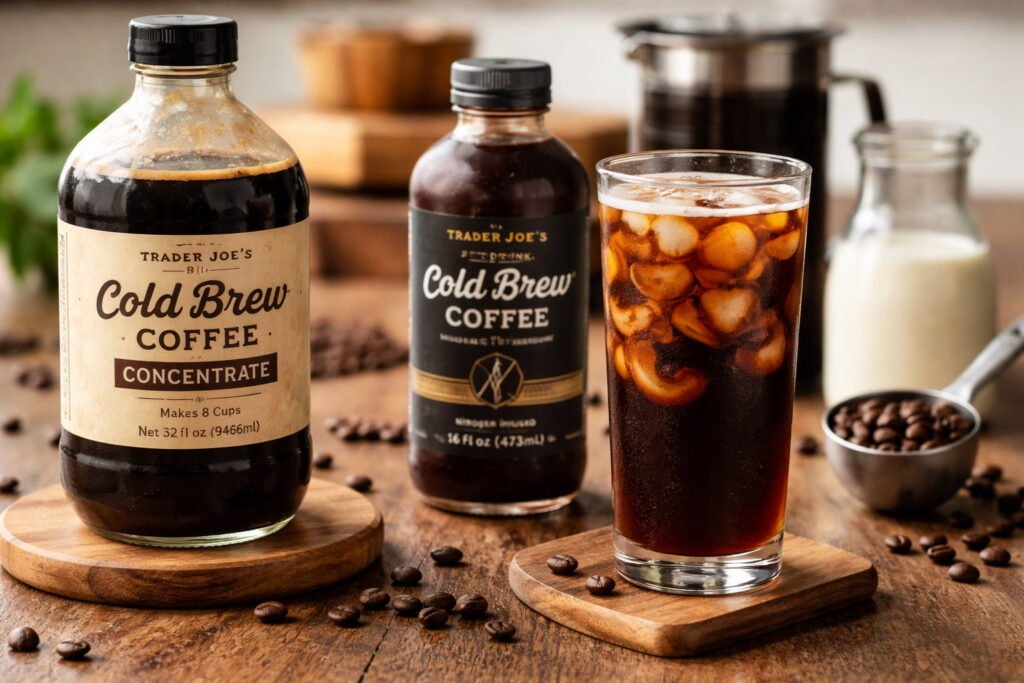
Cold brew has exploded in popularity over the past few years, especially among people who want a less acidic, smoother coffee experience. Trader Joe’s made it even more accessible with ready-to-drink bottles and concentrates that are easy to grab and go.
The catch? Cold brew often contains more caffeine than it tastes like.
That smooth, low-acidity profile can be misleading. Many people assume it’s weaker because it’s less bitter—but in reality, it can deliver a stronger caffeine punch than traditional hot coffee.
Here’s why caffeine content matters:
- Energy levels: Too little won’t wake you up, too much can cause jitters
- Tolerance differences: Everyone reacts differently to caffeine
- Daily limits: Most adults should stay under ~400 mg per day
Trader Joe’s cold brew sits right in that sweet spot where it’s easy to drink but easy to overconsume. That’s exactly why understanding the caffeine content is so important.
Trader Joe’s Cold Brew Coffee Caffeine Content: The Quick Answer
If you’re looking for a fast, practical answer, here it is:
- Trader Joe’s Ready-to-Drink Cold Brew:
Around 100–150 mg of caffeine per 8 oz serving - Trader Joe’s Cold Brew Concentrate:
Roughly 200–300 mg of caffeine per 8 oz (undiluted)
👉 Key takeaway: The concentrate is significantly stronger and must be diluted before drinking.
To put that into perspective:
| Drink Type | Average Caffeine (8 oz) |
| Regular brewed coffee | 80–100 mg |
| Trader Joe’s cold brew (ready-to-drink) | 100–150 mg |
| Trader Joe’s cold brew concentrate | 200–300 mg |
What this means for you:
- Ready-to-drink = slightly stronger than regular coffee
- Concentrate = potentially double the caffeine, depending on how you mix it
That’s why many first-time drinkers feel a bigger kick than expected.
Breaking Down the Numbers: How Much Caffeine Is Actually Inside?
Understanding Trader Joe’s cold brew coffee caffeine content gets easier when you look at how it’s measured and consumed.
Caffeine Per Ounce vs Per Serving
Cold brew is often stronger per ounce than regular coffee, especially in concentrate form.
- Ready-to-drink cold brew: ~12–18 mg per ounce
- Concentrate (undiluted): ~25–35 mg per ounce
A typical bottle might contain multiple servings, so drinking the whole thing in one go can quickly push your caffeine intake much higher than intended.
Ready-to-Drink vs Concentrate: What’s the Real Difference?
The biggest confusion comes from mixing up these two products.
Ready-to-Drink Cold Brew
- Pre-diluted and balanced
- Drink it straight from the bottle
- Consistent caffeine per serving
Cold Brew Concentrate
- Highly concentrated coffee extract
- Designed to be diluted (usually 1:1 or 1:2)
- Caffeine depends entirely on how you prepare it
Important tip:
If you drink concentrate without diluting it properly, you could easily consume 2–3 cups’ worth of caffeine in one glass.
How Dilution Changes Total Caffeine Intake
Dilution is where you control your caffeine experience.
Common ratios for Trader Joe’s concentrate:
- 1:1 (strong): High caffeine, bold flavor
- 1:2 (balanced): Moderate caffeine, smoother taste
- 1:3 (light): Lower caffeine, more refreshing
Example:
- 4 oz concentrate + 4 oz water = ~150 mg caffeine
- 4 oz concentrate + 8 oz water = ~100 mg caffeine
Small adjustments make a big difference. Once you dial in your preferred ratio, you can enjoy consistent flavor and predictable caffeine levels.
What Affects Trader Joe’s Cold Brew Coffee Caffeine Content?
Not all cold brew is created equal. Even within the same brand, Trader Joe’s cold brew coffee caffeine content can vary based on several behind-the-scenes factors.
Bean Type and Roast Level
The type of coffee bean plays a subtle but important role.
- Arabica beans (most commonly used): smoother flavor, slightly less caffeine
- Robusta beans: harsher taste, significantly higher caffeine
Roast level also influences perception:
- Light roast: slightly higher caffeine retention, brighter flavor
- Dark roast: bolder taste, but marginally less caffeine by weight
That said, the difference isn’t dramatic—brew method matters more than roast when it comes to caffeine.
Brew Time and Extraction Method
Cold brew is steeped for a long time—usually 12 to 24 hours—which allows more caffeine to be extracted compared to quick hot brewing.
Key factors:
- Longer steep time = more caffeine extraction
- Coarse grind = slower, steady extraction
- Cold water = smoother, less acidic result
This slow process is what gives cold brew its signature high caffeine + low bitterness combo.
Coffee-to-Water Ratio
This is where caffeine levels can swing dramatically.
- Stronger ratio (more coffee grounds): higher caffeine concentration
- Weaker ratio (more water): lighter caffeine content
Trader Joe’s concentrate uses a high coffee-to-water ratio, which is why it’s so potent before dilution.
Storage and Packaging
While storage doesn’t drastically change caffeine levels, it can affect how the coffee tastes—and how strong it feels.
- Fresh cold brew = more vibrant flavor, clearer caffeine impact
- Oxidized coffee = duller taste, sometimes perceived as weaker
Trader Joe’s sealed bottles help preserve both flavor integrity and caffeine consistency, making it reliable compared to homemade batches.
Trader Joe’s Cold Brew vs Regular Coffee: Which Packs More Caffeine?
At first glance, cold brew doesn’t taste as strong as hot coffee. That’s where many people get it wrong.
In reality, Trader Joe’s cold brew often contains more caffeine than regular brewed coffee.
Side-by-Side Comparison
| Coffee Type | Caffeine (8 oz) | Taste Profile |
| Hot brewed coffee | 80–100 mg | Bright, slightly acidic |
| Trader Joe’s cold brew (ready-to-drink) | 100–150 mg | Smooth, low acidity |
| Trader Joe’s cold brew (diluted concentrate) | 100–200 mg+ | Rich, bold, customizable |
Why Cold Brew Feels Smoother—but Hits Harder
Cold brewing extracts fewer acidic compounds but plenty of caffeine. The result:
- Less bitterness
- Less sharpness
- Same or higher caffeine content
That smoothness makes it dangerously easy to drink quickly—leading to higher caffeine intake without realizing it.
Common Misconceptions About Cold Brew Strength
Let’s clear up a few myths:
- “Cold brew is weaker than hot coffee” → False
It’s often stronger, especially in concentrate form - “Stronger taste = more caffeine” → Not always
Bitterness and caffeine are not directly linked - “Iced coffee = cold brew” → Incorrect
Iced coffee is hot brewed then cooled, usually with less caffeine
Comparing Trader Joe’s Cold Brew to Other Popular Cold Brew Brands
Trader Joe’s has built a loyal following for offering solid quality at a lower price. But how does its caffeine content compare to other cold brew options?
Caffeine Strength Comparison
| Brand Type | Caffeine Level | Notes |
| Trader Joe’s Ready-to-Drink | Medium–High | Balanced and approachable |
| Trader Joe’s Concentrate | High | Very strong, customizable |
| Premium bottled cold brew brands | Medium–High | Often smoother, more refined |
| Café cold brew (coffee shops) | High (varies) | Can be inconsistent |
Price vs Caffeine Value
Trader Joe’s stands out for its cost-to-caffeine ratio:
- Lower price per ounce
- Strong concentrate option
- Easy to stretch across multiple servings
For budget-conscious coffee drinkers, it’s one of the most efficient ways to get a caffeine boost.
Flavor vs Strength Trade-Offs
Some premium brands focus heavily on flavor nuance, sometimes dialing back intensity.
Trader Joe’s approach:
- Bold, chocolatey, slightly nutty profile
- Smooth but not overly complex
- Strong caffeine presence, especially in concentrate form
What to expect:
- Great everyday cold brew
- Less “specialty coffee” complexity
- Reliable strength and consistency
Is Trader Joe’s Cold Brew High in Caffeine? (What It Means for You)
Short answer: yes—especially if you’re drinking the concentrate.
Trader Joe’s cold brew sits on the higher end of the caffeine spectrum, but how it affects you depends on your tolerance, habits, and how you prepare it.
For Beginners vs Experienced Coffee Drinkers
If you’re new to coffee or sensitive to caffeine:
- Even the ready-to-drink version may feel strong
- A full serving could lead to jitters or restlessness
- Starting with smaller portions is the safest move
If you’re a regular coffee drinker:
- Ready-to-drink cold brew feels like a mild upgrade from drip coffee
- Concentrate offers a customizable energy boost
- Easier to scale up or down depending on your day
Effects of Higher Caffeine Intake
A stronger cold brew can be great—until it isn’t. Here’s what to watch for:
Potential benefits:
- Increased focus and alertness
- Longer-lasting energy (thanks to slow consumption)
- Smoother experience with less acidity
Possible downsides:
- Jitters or shakiness
- Increased heart rate
- Sleep disruption if consumed late
When It Might Be Too Strong
Trader Joe’s cold brew may be too intense if:
- You’re drinking it on an empty stomach
- You finish a full bottle in one sitting
- You don’t dilute the concentrate properly
- You’re sensitive to caffeine or limiting intake
In these cases, adjusting your serving size—or dilution—makes a noticeable difference.
How to Control Your Caffeine Intake with Trader Joe’s Cold Brew
One of the biggest advantages of Trader Joe’s cold brew (especially the concentrate) is control. With a few small tweaks, you can dial in exactly how much caffeine you want.
Dilution Tips for Better Balance
Start with a ratio that matches your tolerance:
- 1:1 (concentrate : water/milk) → strong and energizing
- 1:2 → balanced, everyday drink
- 1:3 or more → lighter, more refreshing
Milk, oat milk, or even coconut water can soften both the flavor and caffeine intensity.
Best Serving Sizes for Different Needs
Instead of pouring a full glass, think in terms of caffeine goals:
- Light boost (50–80 mg):
Small glass, heavily diluted - Moderate energy (80–120 mg):
Standard serving, balanced ratio - High energy (150–200+ mg):
Strong mix or larger portion (best reserved for mornings)
Tip: Measure your pours at least once or twice—you’ll quickly learn what your “ideal cup” looks like.
When to Drink It for Maximum Benefit
Timing matters just as much as quantity.
- Morning (best choice): clean, steady energy
- Early afternoon: fine in moderate amounts
- Late afternoon/evening: risky for sleep quality
Because cold brew can feel lighter, it’s easy to underestimate how long the caffeine lingers.
Best Ways to Enjoy Trader Joe’s Cold Brew Without Overdoing It
Getting the most out of Trader Joe’s cold brew coffee caffeine content isn’t just about numbers—it’s about how you prepare and enjoy it.
Smart Serving Ideas
- Over ice + water (classic): keeps it refreshing and controlled
- With milk or cream: slows down sipping and softens intensity
- Diluted with cold water: best for hot weather and hydration balance
Low-Caffeine Variations That Still Taste Great
Want the flavor without the full caffeine hit?
- Use a 1:3 or 1:4 dilution ratio
- Add more ice (it naturally dilutes over time)
- Mix with milk to reduce overall coffee concentration
These small changes can cut caffeine significantly without sacrificing the cold brew experience.
Turn It Into a Balanced Daily Habit
Cold brew works best when it fits into your routine—not overwhelms it.
Simple habits to keep things in check:
- Stick to one measured serving per day
- Avoid drinking straight from the bottle
- Pair it with food to reduce caffeine spikes
- Rotate with lower-caffeine options when needed
Brewing Your Own Cold Brew: Can You Match Trader Joe’s Caffeine Levels?
Trader Joe’s makes cold brew convenient, but replicating (or even controlling) Trader Joe’s cold brew coffee caffeine content at home is absolutely possible—and often more flexible.
A Simple Cold Brew Method That Works
You don’t need fancy gear to get started:
- Coarse ground coffee (similar to sea salt texture)
- Cold, filtered water
- A jar, French press, or cold brew maker
Basic steps:
- Add coffee grounds to your container
- Pour in cold water (see ratios below)
- Stir gently to saturate grounds
- Steep for 12–18 hours in the fridge or at room temp
- Strain using a fine mesh or paper filter
How to Adjust Strength and Caffeine
This is where homemade cold brew shines—you control everything.
Common brew ratios:
| Style | Coffee : Water Ratio | Result |
| Concentrate | 1:4 | Very strong, similar to Trader Joe’s concentrate |
| Standard cold brew | 1:6 to 1:8 | Ready-to-drink strength |
| Light brew | 1:10+ | Lower caffeine, more refreshing |
Want something close to Trader Joe’s concentrate?
👉 Aim for 1:4 ratio and a full 16–18 hour steep.
Equipment That Makes It Easier
While a mason jar works fine, a few tools improve consistency:
- French press: easy filtering and cleanup
- Cold brew maker (Toddy-style): designed for concentrate brewing
- Paper filters: produce cleaner, less gritty results
Consistency in grind size and ratio will give you predictable caffeine levels—something even store-bought options can’t always guarantee.
Flavor Profile Meets Strength: Does Stronger Mean Better?
It’s easy to assume that more caffeine equals better coffee. In reality, flavor and strength don’t always go hand in hand.
What Trader Joe’s Cold Brew Tastes Like
Most Trader Joe’s cold brew products lean toward:
- Chocolatey undertones
- Nutty, slightly roasted notes
- Low acidity and smooth finish
This makes it approachable, even for people who usually find coffee too sharp or bitter.
The Relationship Between Caffeine and Flavor
Caffeine itself is slightly bitter, but it’s not the main driver of flavor.
- Long steep times extract more oils and sugars, not just caffeine
- Smoothness comes from low acidity, not low strength
- Stronger brews can taste balanced if extracted properly
Choosing Based on Taste vs Energy Boost
Different goals call for different approaches:
- For flavor: dilute more, use milk, or go lighter
- For energy: use a stronger ratio or concentrate
- For balance: aim for a 1:2 dilution and sip slowly
Understanding your preference helps you get the most out of every cup.
FAQs About Trader Joe’s Cold Brew Coffee Caffeine Content
How much caffeine is in Trader Joe’s cold brew concentrate?
It typically contains around 200–300 mg of caffeine per 8 oz when undiluted, making it significantly stronger than regular coffee.
Is Trader Joe’s cold brew stronger than espresso?
Per ounce, espresso is more concentrated. However, a full serving of cold brew often contains more total caffeine than a single espresso shot.
Can you drink Trader Joe’s cold brew every day safely?
Yes, as long as your total daily caffeine intake stays within recommended limits (generally up to 400 mg for most adults). Portion control is key.
Does cold brew have more caffeine than iced coffee?
In most cases, yes. Cold brew is steeped longer and often uses a higher coffee-to-water ratio, resulting in higher caffeine content.
How much should you dilute Trader Joe’s cold brew concentrate?
A 1:1 ratio is strong, while 1:2 or 1:3 creates a more balanced and lower-caffeine drink. Adjust based on your tolerance and taste preference.
Final Thoughts: Should You Choose Trader Joe’s Cold Brew for Your Daily Caffeine Fix?
Trader Joe’s cold brew offers a rare combination: smooth flavor, strong caffeine, and excellent value. That makes it a great option for anyone who wants a reliable energy boost without the bitterness of traditional coffee.
Still, the strength can sneak up on you—especially with the concentrate.
The smartest approach is simple:
- Measure your servings
- Dilute intentionally
- Pay attention to how your body responds
If you’re curious about safe caffeine intake levels and how they affect your body, this resource from the U.S. Food and Drug Administration is worth a quick read:
👉 https://www.fda.gov/food/food-additives-petitions/spilling-beans-how-much-caffeine-too-much
Dial in your ideal ratio, experiment with different serving styles, and turn your cold brew into something that works perfectly for your routine.

Meet Suzee Amelia, the creative voice behind this space—a blog dedicated to exploring coffee culture, lifestyle insights, and everyday inspiration. With a passion for discovering rich flavors and sharing practical tips, Sophie Langford brings a thoughtful and engaging approach to every post.
