
Creating a home coffee setup under budget doesn’t mean settling for weak, bitter brews or instant coffee shortcuts. With the right approach, you can brew rich, balanced, café-quality coffee at home—without spending a fortune.
This guide breaks down exactly how to build a smart, affordable coffee setup from scratch. You’ll learn what gear actually matters, where to spend (and where not to), and how to get the best flavor from even the simplest tools. Whether you’re a beginner or upgrading from basic equipment, this is your roadmap to better coffee on a budget.
In This Article
Why a Home Coffee Setup Under Budget Is Worth It
Daily coffee runs add up faster than most people realize. A single cup from a café might feel cheap, but over a month, it can quietly drain your wallet.
Brewing at home flips that equation.
The Real Cost Comparison
- Average café coffee: $2–$5 per cup
- Monthly (1 cup/day): $60–$150
- Yearly: $700–$1,800
A well-planned home coffee setup under budget can cost less than two months of café spending—and last for years.
More Control Over Flavor
Brewing your own coffee gives you full control over:
- Grind size
- Water temperature
- Coffee-to-water ratio
These variables directly impact taste. Once dialed in, your home brew can easily outperform most takeaway coffee.
Consistency and Convenience
No queues, no waiting, no inconsistency. You get the same quality every morning, tailored to your taste preferences.
What “Budget” Really Means for a Home Coffee Setup
“Budget” doesn’t mean buying the cheapest option available. It means spending intentionally to maximize quality per dollar.
Understanding Budget Tiers
| Budget Level | What to Expect | Ideal For |
| Under $50 | Basic manual brewing setup | Absolute beginners |
| $50–$100 | Better consistency and tools | Everyday coffee drinkers |
| $100–$200 | Near café-quality results | Enthusiasts on a budget |
A smart setup focuses on function over aesthetics. Expensive machines often add convenience—not necessarily better taste.
One-Time vs Ongoing Costs
One-time investments:
- Brewer (French press, pour-over, AeroPress)
- Grinder
- Kettle
Ongoing costs:
- Coffee beans
- Filters (if applicable)
- Occasional maintenance
Balancing these is key. Overspending upfront on gear while neglecting bean quality is a common mistake.
Where to Spend vs Where to Save
Spend more on:
- A decent grinder (huge impact on flavor)
- Fresh, quality coffee beans
Save on:
- Fancy kettles (basic works fine)
- Accessories you don’t need yet
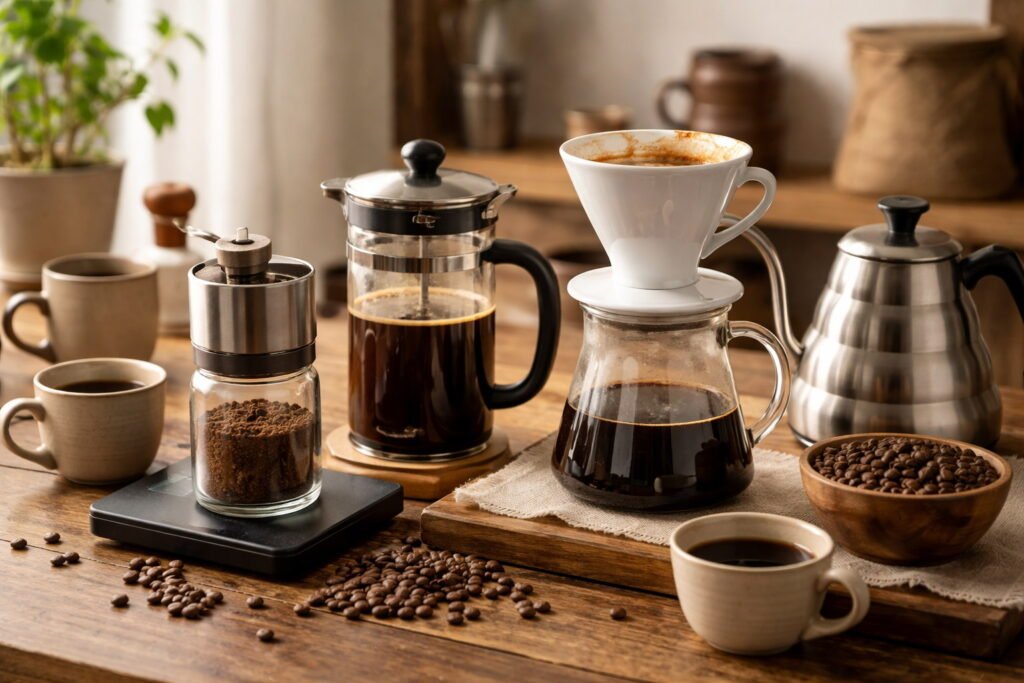
The Essential Gear for a Home Coffee Setup Under Budget
You don’t need a full barista station to make great coffee. A few well-chosen tools can deliver excellent results.
Must-Have Equipment (Core Setup)
These are the essentials for any home coffee setup under budget:
- Brewer (French press, pour-over, or AeroPress)
- Grinder (manual or entry-level electric)
- Kettle (any basic kettle works)
- Scale (optional but highly recommended for consistency)
Minimum Viable Setup Examples
Ultra-Budget Setup (Under $50):
- French press
- Pre-ground coffee (short-term solution)
- Basic kettle
Balanced Budget Setup (Under $100):
- Pour-over dripper
- Manual burr grinder
- Paper filters
- Basic scale
Must-Have vs Nice-to-Have
Must-have:
- Grinder (if using whole beans)
- Brewer
- Hot water source
Nice-to-have (upgrade later):
- Gooseneck kettle (better pour control)
- Digital scale with timer
- Storage containers for beans
Why Simplicity Wins
Complex setups don’t guarantee better coffee. In fact, simpler tools often:
- Require less maintenance
- Cost significantly less
- Deliver more consistent results for beginners
Choosing the Right Brewing Method (Cheap but Excellent)
The brewing method shapes your coffee’s flavor more than most people expect. The good news? Some of the best methods for a home coffee setup under budget are also the cheapest.
French Press: Rich, Full-Bodied, and Foolproof
A classic for a reason. The French press uses immersion brewing, which extracts more oils and creates a heavier mouthfeel.
What to expect:
- Flavor: Bold, rich, slightly textured
- Grind size: Coarse (like sea salt)
- Brew time: 4 minutes
Why it’s budget-friendly:
- No paper filters needed
- Minimal technique required
- Durable and long-lasting
Best for: People who enjoy strong, full-bodied coffee with minimal effort.
Pour-Over: Clean, Bright, and Precise
Pour-over brewing gives you control over every variable, making it ideal for dialing in flavor—even on a budget.
What to expect:
- Flavor: Clean, bright, nuanced
- Grind size: Medium (like sand)
- Brew time: 2.5–3 minutes
Why it’s worth it:
- Extremely affordable entry cost
- Highlights subtle flavor notes in beans
- Easy to upgrade later
Pro tip: A steady pour matters more than a fancy kettle.
Best for: Those who enjoy lighter, more complex coffee.
AeroPress: Versatile and Travel-Friendly
Compact, durable, and surprisingly powerful, the AeroPress can mimic multiple brewing styles.
What to expect:
- Flavor: Smooth, balanced, low bitterness
- Grind size: Medium to fine
- Brew time: 1–2 minutes
Why it stands out:
- Fast brewing time
- Easy cleanup
- Highly forgiving for beginners
Best for: Anyone who wants flexibility without complexity.
Drip Coffee Makers: Convenience Over Control
Basic drip machines can still produce good coffee if used correctly.
What to expect:
- Flavor: Balanced but less complex
- Grind size: Medium
- Brew time: Automatic
Budget tip:
Choose a simple, reliable model rather than one packed with features you won’t use.
Quick Comparison Table
| Method | Flavor Profile | Skill Level | Cost | Best For |
| French Press | Bold, heavy | Easy | Low | Strong coffee lovers |
| Pour-Over | Clean, bright | Medium | Low | Flavor clarity |
| AeroPress | Smooth, balanced | Easy | Low | Versatility |
| Drip Machine | Mild, consistent | Easy | Medium | Convenience |
Budget Coffee Grinders: Manual vs Electric
If there’s one place to spend slightly more in your home coffee setup under budget, it’s the grinder. Freshly ground coffee dramatically improves flavor—far more than upgrading your brewer.
Why Grinding Fresh Matters
Coffee starts losing aroma minutes after grinding. Fresh grinding preserves:
- Aromatics (flavor complexity)
- Sweetness
- Balanced extraction
Pre-ground coffee often tastes flat or stale by comparison.
Manual Grinders: The Budget Champion
Manual burr grinders are the go-to choice for affordable setups.
Pros:
- Lower cost
- Consistent grind size
- Portable and quiet
Cons:
- Requires effort
- Slower for multiple cups
Ideal for: Solo brewers or small batches.
Entry-Level Electric Grinders: Convenience First
Electric grinders save time but come with trade-offs at lower price points.
Pros:
- Fast and effortless
- Better for larger quantities
Cons:
- More expensive
- Cheap models often inconsistent
What to Avoid in Cheap Grinders
Not all budget grinders are equal.
Avoid:
- Blade grinders (uneven grind = uneven extraction)
- Inconsistent burr sets
- Grinders with no grind size control
Grind Size Quick Guide
| Brewing Method | Grind Size | Texture |
| French Press | Coarse | Sea salt |
| Pour-Over | Medium | Sand |
| AeroPress | Medium-Fine | Table salt |
Beans Matter More Than Equipment (Smart Spending Tips)
You can have the best gear in the world, but without good beans, your coffee will always fall short. In a home coffee setup under budget, beans should be a top priority.
Whole Beans vs Pre-Ground
Whole beans win every time.
- Stay fresh longer
- Preserve flavor complexity
- Allow grind size control
Pre-ground coffee is convenient but sacrifices quality quickly.
How to Find Affordable, High-Quality Beans
Great coffee doesn’t have to be expensive.
Look for:
- Recently roasted beans (check roast date)
- Local roasters (often fresher than supermarkets)
- Medium roasts for balance and versatility
Budget tip:
Buy smaller quantities more often to keep beans fresh.
Local Roasters vs Supermarket Coffee
Local roasters:
- Fresher
- More flavor variety
- Slightly higher cost but better value per cup
Supermarket options:
- Cheaper upfront
- Less fresh
- Limited flavor complexity
Flavor Expectations on a Budget
Even affordable beans can taste great when brewed properly.
Common flavor profiles:
- Chocolatey and nutty (Brazil, Colombia)
- Fruity and bright (Ethiopia, Kenya)
- Balanced and smooth (blends)
Storage Tips That Preserve Flavor
Poor storage can ruin good beans fast.
Do this:
- Store in an airtight container
- Keep away from light, heat, and moisture
- Avoid refrigeration (causes condensation)
Building a Home Coffee Setup Under Budget (Step-by-Step Plan)
A great home coffee setup under budget isn’t about buying everything at once—it’s about building smart, step by step. This approach keeps costs low while improving your coffee immediately.
Step 1: Choose Your Brewing Method First
Your brewer defines your workflow, grind size, and flavor profile.
- Want bold and simple → French press
- Prefer clean and nuanced → Pour-over
- Need versatility → AeroPress
Lock this in before buying anything else.
Step 2: Allocate Your Budget Wisely
Think in percentages, not just total cost.
- 40% → Grinder (biggest impact on flavor)
- 30% → Beans (ongoing but crucial)
- 20% → Brewer
- 10% → Accessories
This prevents overspending on gear that doesn’t improve taste.
Step 3: Buy Essentials Only (Start Lean)
Avoid the trap of overbuying.
Start with:
- One brewing device
- One grinder
- One kettle
That’s enough to make excellent coffee right away.
Step 4: Dial In Your Brewing Basics
Even budget setups can produce incredible coffee when dialed in properly.
Baseline brew ratio:
- 1:15 to 1:17 (coffee : water)
Example:
- 20g coffee → 300–340ml water
Adjust based on taste:
- Too bitter → grind coarser or shorten brew time
- Too sour → grind finer or increase brew time
Step 5: Optimize Your Coffee Workflow
Efficiency matters more than fancy tools.
- Keep all gear in one place
- Pre-measure coffee for faster mornings
- Use a simple routine to stay consistent
Hidden Costs to Watch Out For
A home coffee setup under budget can quietly become expensive if you overlook recurring costs and unnecessary upgrades.
Ongoing Costs That Add Up
- Coffee beans (monthly expense)
- Filters (for pour-over or drip)
- Electricity (minor but consistent)
These are unavoidable, so plan for them early.
Maintenance and Replacement Costs
Even budget gear needs care.
- Grinder burrs wear down over time
- French press filters may need replacing
- Kettles can degrade with heavy use
Tip: Regular cleaning extends the life of your equipment and improves taste.
The “Accessory Trap”
It’s easy to overspend on extras that don’t improve your coffee.
Common unnecessary purchases:
- Expensive storage jars (basic airtight works fine)
- Specialty tools you won’t use daily
- Overpriced branded accessories
How to Avoid Overspending
- Upgrade only when you feel a limitation
- Focus on flavor improvement, not aesthetics
- Set a monthly coffee budget
Best Budget Combinations (Real Setup Examples)
Seeing real setups makes it easier to build your own home coffee setup under budget without overthinking.
Under $50 Setup (Absolute Beginner)
What you get:
- French press
- Pre-ground coffee (short-term)
- Basic kettle
What to expect:
- Strong, bold coffee
- Limited control but good starting point
Upgrade priority: Grinder
Under $100 Setup (Balanced Quality)
What you get:
- Pour-over dripper
- Manual burr grinder
- Paper filters
- Basic scale
What to expect:
- Cleaner, more flavorful coffee
- Better consistency
Upgrade priority: Better beans or gooseneck kettle
Under $200 Setup (Near Café-Level Results)
What you get:
- AeroPress or high-quality pour-over setup
- High-quality manual grinder
- Digital scale with timer
- Gooseneck kettle
What to expect:
- Excellent flavor clarity
- Full control over brewing variables
- Consistent, repeatable results
Quick Comparison Table
| Budget | Setup Quality | Flavor Potential | Upgrade Flexibility |
| <$50 | Basic | Moderate | Limited |
| <$100 | Solid | High | Good |
| <$200 | Advanced | Very High | Excellent |
How to Make Your Cheap Setup Taste Expensive
A home coffee setup under budget can deliver surprisingly premium results when you dial in a few key variables. Small tweaks often create the biggest flavor improvements.
Upgrade Your Water Quality First
Coffee is over 98% water. Poor water = dull coffee.
- Use filtered water whenever possible
- Avoid distilled water (lacks minerals for extraction)
- Ideal water temperature: 90–96°C
Better water instantly improves clarity and sweetness.
Master Your Coffee-to-Water Ratio
Consistency is everything.
Standard starting point:
- 1:16 ratio (e.g., 20g coffee → 320ml water)
Adjust based on taste:
- Stronger → 1:14
- Lighter → 1:17
Pro tip: Use a simple scale—even a cheap one makes a big difference.
Dial in Grind Size and Brew Time
Grind size directly affects extraction.
- Too fine → bitter, over-extracted
- Too coarse → sour, under-extracted
Quick fix guide:
- Bitter? Go coarser or reduce brew time
- Sour? Go finer or extend brew time
Control Your Pour (Even Without Fancy Gear)
Pour-over doesn’t require expensive kettles.
- Pour slowly and evenly
- Start with a bloom phase (30–45 seconds)
- Avoid flooding the coffee bed
Consistency beats perfection.
Small Habits That Elevate Flavor
- Preheat your brewer and cup
- Rinse paper filters to remove taste
- Clean equipment regularly
Common Mistakes When Creating a Home Coffee Setup Under Budget
Even the best budget setups can fail if common mistakes creep in.
Overspending on Equipment Instead of Beans
Expensive gear won’t fix stale or low-quality coffee.
Fix: Prioritize fresh beans first.
Ignoring Grind Consistency
Inconsistent grind leads to uneven extraction and muddled flavors.
Fix: Use a burr grinder whenever possible.
Buying Too Many Gadgets Too Early
More tools don’t equal better coffee.
Fix: Master one method before expanding.
Skipping Cleaning and Maintenance
Old coffee oils create bitterness and off-flavors.
Fix:
- Rinse after every use
- Deep clean weekly
Guessing Instead of Measuring
Eyeballing coffee leads to inconsistent results.
Fix: Use a scale and stick to a repeatable ratio.
Upgrade Path: When and What to Improve First
Once your home coffee setup under budget is running smoothly, upgrading strategically can unlock even better results.
Upgrade Your Grinder First
This delivers the biggest improvement in flavor.
- Better grind consistency
- More precise control
- Cleaner, more balanced cups
Refine Your Brewing Method
Once you understand your current method, consider:
- Switching from French press to pour-over for clarity
- Exploring AeroPress recipes for versatility
Invest in Better Beans
As your skills improve, higher-quality beans become more noticeable.
- Single-origin coffees
- Freshly roasted batches
- Experimenting with roast levels
When to Consider Espresso Gear
Espresso machines are expensive and complex.
Upgrade only if:
- You’re committed to learning espresso techniques
- You drink milk-based drinks regularly
Space-Saving Ideas for Small Coffee Corners
A great home coffee setup under budget doesn’t require a large kitchen. Smart organization makes even small spaces work beautifully.
Keep It Minimal and Functional
- Stick to one brewing method
- Store only daily-use tools within reach
- Avoid clutter
Use Vertical Space
- Wall-mounted shelves
- Hanging hooks for mugs
- Stackable storage containers
Create a Dedicated Coffee Zone
Even a small corner can feel like a café.
- Tray-based setups for easy organization
- Keep beans, grinder, and brewer together
- Maintain a clean, inviting space
FAQ: Home Coffee Setup Under Budget
What’s the cheapest way to start making good coffee at home?
Start with a French press and fresh coffee. It’s affordable, easy to use, and produces rich, satisfying results without extra equipment.
Is a grinder really necessary for beginners?
Yes. Freshly ground coffee dramatically improves flavor. Even a basic manual burr grinder is a major upgrade over pre-ground coffee.
Can I get café-quality coffee on a tight budget?
Absolutely. With good beans, proper ratios, and consistent technique, a budget setup can rival—or exceed—many café drinks.
What grind size should I use for different brewing methods?
French press: coarse (sea salt). Pour-over: medium (sand). AeroPress: medium-fine (table salt). Adjust slightly based on taste.
How long should I brew coffee for the best flavor?
French press: ~4 minutes. Pour-over: 2.5–3 minutes. AeroPress: 1–2 minutes. Small adjustments can fine-tune taste.
How should I store coffee beans to keep them fresh longer?
Use an airtight container, keep it away from heat and light, and avoid refrigeration to prevent moisture buildup.
Learn More About Coffee Brewing Standards
If you want to dive deeper into brewing science and industry standards, the Specialty Coffee Association (SCA) offers detailed guidelines on extraction, ratios, and best practices:
https://sca.coffee/research
Great coffee at home doesn’t require a big budget—just the right approach. Start simple, refine your technique, and upgrade only when it truly makes a difference.
Now it’s your turn—pick your setup, brew your first cup, and start experimenting. Your perfect coffee routine is closer (and cheaper) than you think.

Meet Suzee Amelia, the creative voice behind this space—a blog dedicated to exploring coffee culture, lifestyle insights, and everyday inspiration. With a passion for discovering rich flavors and sharing practical tips, Sophie Langford brings a thoughtful and engaging approach to every post.
