

A home coffee setup for beginners doesn’t need to be complicated—or expensive—to produce great coffee. With the right essentials and a bit of know-how, you can brew café-quality cups right in your kitchen.
This guide walks you through exactly what matters: the must-have equipment, how to choose the right brewing method, and the small details that make a big difference in flavor. Expect practical tips, beginner-friendly explanations, and smart recommendations so you can avoid costly mistakes and start brewing confidently.
In This Article
Why Your Home Coffee Setup Matters More Than You Think
Great coffee isn’t just about beans—it’s about how everything works together. Your setup determines whether your coffee tastes balanced and flavorful or flat and bitter.
A well-thought-out home coffee setup gives you:
- Consistency – repeatable results every morning
- Control – ability to adjust taste based on preference
- Efficiency – faster, smoother brewing routine
- Cost savings – fewer trips to expensive cafés
Many beginners assume better coffee requires expensive machines. In reality, technique and freshness matter more than price tags.
What Most Beginners Get Wrong
Common mistakes often come down to misunderstanding the basics:
- Using pre-ground coffee that’s already stale
- Ignoring grind size, leading to under- or over-extraction
- Buying advanced gear (like espresso machines) too early
- Skipping measurements and guessing ratios
Key takeaway: A simple, well-balanced setup will outperform a complex one used incorrectly.
Home Coffee Setup for Beginners: What You Actually Need (and What You Don’t)
Building your first home coffee setup is exciting—but it’s easy to overbuy. Marketing often pushes unnecessary gadgets that don’t improve your coffee.
The Core Principle: Start Simple
A beginner setup should focus on function, not features. You only need a few tools to make excellent coffee.
What You Truly Need
- A reliable brewing method
- Fresh coffee beans
- A grinder (preferably burr)
- A way to measure coffee and water
What You Can Skip (For Now)
- Espresso machines
- High-end accessories
- Smart coffee gadgets
- Multiple brewing devices
Minimalist vs Enthusiast Setup
| Setup Type | Best For | What It Includes |
| Minimalist | Beginners who want simplicity | Dripper/French press, grinder, basic kettle |
| Balanced | Most home brewers | Pour-over gear, burr grinder, scale, gooseneck kettle |
| Enthusiast | Coffee hobbyists | Espresso machine, advanced tools, multiple brewers |
Insight: Most beginners are happiest starting with a balanced setup—it offers control without overwhelming complexity.
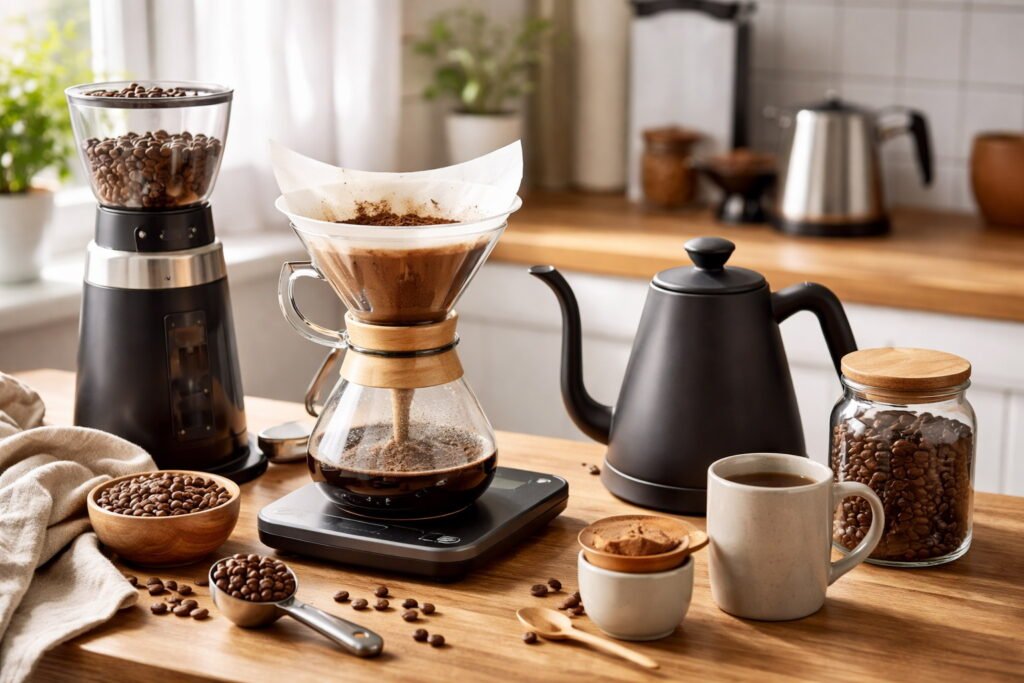
The 5 Essential Pieces of a Beginner Home Coffee Setup
A solid home coffee setup for beginners revolves around five core elements. Get these right, and you’re already ahead of most people.
Coffee Maker (Your Brewing Method)
This is the heart of your setup. Choose based on how much effort and control you want.
Popular beginner-friendly options:
- Pour-over (V60, Kalita) – clean, bright flavors
- French press – full-bodied and rich
- Drip machine – convenient and consistent
Each method extracts coffee differently, which affects taste and texture.
Grinder (The Game Changer)
If there’s one upgrade that transforms your coffee instantly, it’s this.
Why it matters:
- Freshly ground coffee preserves aroma and flavor
- Proper grind size ensures balanced extraction
Pro tip:
A burr grinder delivers consistent particle size, which leads to smoother, more predictable results than blade grinders.
Fresh Coffee Beans
Even the best setup can’t fix stale beans.
Look for:
- Roast date (not just expiration date)
- Whole beans instead of pre-ground
- Roast level suited to your taste (light, medium, dark)
Fresh beans = better aroma, complexity, and sweetness.
Scale and Measurements
Eyeballing coffee might seem harmless, but it leads to inconsistent results.
Using a scale helps you:
- Maintain proper coffee-to-water ratio
- Repeat great cups reliably
- Fine-tune flavor over time
Standard starting ratio:
1:15 to 1:17 (coffee to water)
Kettle (Basic vs Gooseneck)
Water control affects extraction more than most beginners realize.
- Basic kettle – works fine for immersion methods like French press
- Gooseneck kettle – essential for pour-over precision
A controlled pour ensures even saturation and better flavor balance.
Quick recap:
A beginner home coffee setup doesn’t need to be fancy. Focus on fresh beans, consistent grinding, proper ratios, and a simple brewing method, and you’ll already be brewing better coffee than most households.
Choosing the Right Brewing Method for Your Lifestyle
Picking a brewing method isn’t just about taste—it’s about how you live. The best home coffee setup for beginners is one you’ll actually use every day without frustration.
Quick Comparison of Popular Methods
| Method | Flavor Profile | Brew Time | Difficulty | Best For |
| Pour-over | Clean, bright, complex | 2–4 min | Medium | Flavor control lovers |
| French press | Rich, full-bodied | 4–5 min | Easy | Bold coffee fans |
| Drip machine | Balanced, consistent | 5–8 min | Very easy | Convenience seekers |
| Espresso | Intense, concentrated | 25–30 sec | Hard | Advanced users |
Match Your Method to Your Routine
- Busy mornings? A drip machine keeps things simple and consistent.
- Enjoy the process? Pour-over offers control and a more hands-on experience.
- Prefer bold flavors? French press delivers body and depth with minimal effort.
What’s Best for Beginners?
Most beginners do best with:
- French press (easiest starting point)
- Pour-over (best balance of control and quality)
Insight: Skip espresso in the beginning. It requires precise grind size, pressure, and expensive equipment—frustrating without experience.
Budget-Friendly Home Coffee Setup (Under $100, $200, $500)
A great home coffee setup for beginners doesn’t require a huge budget. Smart spending matters more than spending more.
Under $100: Simple and Effective
Best for: Absolute beginners testing the waters
What to prioritize:
- French press or basic pour-over dripper
- Pre-ground coffee (temporary solution) or entry grinder
Trade-off: Less control over grind quality, but still capable of good coffee.
Under $200: The Sweet Spot
Best for: Most beginners who want noticeable quality improvement
Recommended setup:
- Pour-over dripper (like V60 or Kalita)
- Entry-level burr grinder
- Digital scale
- Basic kettle
Why it works:
This setup gives you control over grind size and ratios, which dramatically improves flavor.
Under $500: Enthusiast Starter Setup
Best for: Coffee lovers ready to invest in quality
What to include:
- High-quality burr grinder
- Gooseneck kettle
- Premium dripper or immersion brewer
- Accurate scale with timer
Optional upgrade:
- Entry-level espresso machine (only if you’re committed)
Where to Spend vs Save
Spend more on:
- Grinder (biggest impact on taste)
- Fresh, high-quality beans
Save on:
- Brewing device (many are inexpensive but effective)
- Accessories (you can upgrade later)
Coffee Beans 101: The Hidden Key to Better Coffee at Home
Even the most carefully built home coffee setup for beginners falls apart without good beans. This is where flavor truly begins.
Whole Bean vs Pre-Ground
- Whole beans: Retain freshness, aroma, and complexity
- Pre-ground: Convenient but quickly loses flavor
Rule of thumb:
If you care about taste, always choose whole beans and grind just before brewing.
Understanding Roast Levels
Roast level changes how coffee tastes more than most beginners expect:
- Light roast – bright acidity, fruity, floral notes
- Medium roast – balanced, slightly sweet, crowd-pleasing
- Dark roast – bold, smoky, lower acidity
Beginner tip:
Start with medium roast—it’s the easiest to enjoy and brew consistently.
Freshness: The Overlooked Factor
Coffee is best within:
- 7–21 days after roasting
Signs your beans are past their prime:
- Flat aroma
- Dull or bitter taste
- Lack of sweetness
How to Store Coffee Properly
To preserve flavor:
- Keep beans in an airtight container
- Store in a cool, dark place
- Avoid fridge or freezer (moisture damage)
Flavor Starts Before Brewing
Your beans determine:
- Aroma intensity
- Sweetness vs bitterness
- Body and aftertaste
Bottom line:
Better beans instantly upgrade your coffee—no new equipment required.
Grinder Guide: Blade vs Burr (and Why It Changes Everything)
Grind quality is one of the biggest differences between average and excellent coffee. A proper grinder doesn’t just make things easier—it unlocks flavor.
Blade vs Burr: What’s the Real Difference?
| Grinder Type | How It Works | Grind Consistency | Result in Cup |
| Blade grinder | Spins blades to chop beans | Uneven (fine + coarse mixed) | Bitter and inconsistent |
| Burr grinder | Crushes beans between burrs | Uniform particles | Balanced and predictable |
Why Grind Size Matters So Much
Different brewing methods require different grind sizes:
- Coarse → French press (prevents over-extraction)
- Medium → Drip coffee
- Medium-fine → Pour-over
- Fine → Espresso
When grind size is off, your coffee can taste:
- Too bitter (over-extracted)
- Too sour or weak (under-extracted)
Should Beginners Invest in a Burr Grinder?
Short answer: yes, if you care about taste.
Even an entry-level burr grinder will:
- Improve clarity and sweetness
- Make your brewing more consistent
- Allow proper adjustment for different methods
Pro tip:
Manual burr grinders are often more affordable and surprisingly effective for beginners.
Step-by-Step: Build Your First Home Coffee Setup from Scratch
Setting up your coffee station doesn’t need to be complicated. Follow this simple process and you’ll be brewing confidently in no time.
Step 1: Choose Your Brewing Method
Start with one:
- French press for simplicity
- Pour-over for more control
Avoid juggling multiple methods early—it slows your learning.
Step 2: Get a Burr Grinder
Choose a grinder that allows adjustable settings. This gives you control over extraction and flavor.
Step 3: Buy Fresh, Whole Beans
Look for:
- Roast date within the last 2–3 weeks
- Medium roast (easy starting point)
Buy small quantities to keep beans fresh.
Step 4: Set Your Brew Ratio
A reliable starting point:
- 1:16 ratio (1 gram coffee : 16 grams water)
Example:
- 15g coffee → 240ml water
Consistency here is key to repeatable results.
Step 5: Brew Your First Cup
Basic pour-over workflow:
- Heat water to ~90–96°C
- Grind coffee (medium-fine)
- Bloom with a small amount of water (30–45 seconds)
- Slowly pour remaining water in stages
- Total brew time: ~2–3 minutes
French press workflow:
- Add coarse ground coffee
- Pour hot water
- Stir gently
- Steep for 4 minutes
- Press and serve
Step 6: Taste and Adjust
Pay attention to flavor:
- Too bitter? Grind coarser or shorten brew time
- Too sour? Grind finer or extend brew time
Important mindset:
Every cup is feedback. Small tweaks lead to big improvements.
Common Beginner Mistakes to Avoid
- Using boiling water straight off the kettle
- Skipping the bloom phase in pour-over
- Not measuring coffee and water
- Changing too many variables at once
Water, Ratios, and Temperature: Small Details That Make a Big Difference
Once your home coffee setup for beginners is in place, these small variables will determine whether your coffee tastes “okay” or truly great.
Coffee-to-Water Ratio (Your Flavor Foundation)
The ratio controls strength and balance.
| Ratio | Taste Result |
| 1:13 | Strong, intense |
| 1:15–1:17 | Balanced (recommended) |
| 1:18+ | Lighter, milder |
Best starting point:
1:16—easy to adjust depending on your taste.
Water Quality Matters More Than You Think
Coffee is about 98% water, so poor water equals poor coffee.
Use:
- Filtered water
- Clean, neutral-tasting water
Avoid:
- Distilled water (lacks minerals)
- Hard water (can create dull or harsh flavors)
Temperature: The Sweet Spot for Extraction
Ideal brewing range:
- 90–96°C (195–205°F)
Too hot:
- Extracts bitterness
Too cool:
- Results in sour, underdeveloped flavors
Quick tip:
Let boiling water sit for 30–45 seconds before pouring.
Why These Details Matter
These three elements control extraction:
- Ratio → strength
- Water → clarity and flavor purity
- Temperature → balance of sweetness and bitterness
Dial them in, and even a basic setup can produce exceptional coffee.
Home Coffee Setup Mistakes Beginners Should Avoid
Even with the right gear, a few common missteps can hold your coffee back. Fixing these early will save time, money, and frustration.
Buying Espresso Gear Too Early
Espresso looks appealing, but it’s the most demanding method.
- Requires precise grind size and pressure
- Needs expensive equipment
- Has a steep learning curve
Better approach: Master pour-over or French press first, then upgrade later.
Ignoring Grind Size
Grind size directly affects extraction.
- Too fine → bitter, harsh
- Too coarse → weak, sour
Tip: Adjust grind size before changing anything else.
Using Stale Beans
Old beans produce flat, lifeless coffee.
- Always check roast date
- Buy smaller batches
- Store properly
Freshness alone can transform your cup.
Overcomplicating the Process
Trying too many variables at once leads to confusion.
- Stick to one brewing method
- Keep ratios consistent
- Change one variable at a time
Consistency beats complexity every time.
Easy Upgrades That Instantly Improve Your Coffee Game
Once your basics are dialed in, a few smart upgrades can noticeably elevate your coffee.
Switch to Fresh, High-Quality Beans
This is the simplest and most impactful upgrade.
- Look for specialty-grade beans
- Explore different origins (Ethiopia, Colombia, etc.)
- Pay attention to tasting notes
Result: More aroma, sweetness, and complexity.
Upgrade Your Grinder
Moving from blade to burr—or upgrading to a better burr grinder—improves:
- Grind consistency
- Flavor clarity
- Brewing control
This is the single best equipment upgrade you can make.
Start Using a Scale
Precision leads to repeatable results.
- No more guessing
- Easy adjustments
- Consistent flavor
Improve Your Pouring Technique
Especially for pour-over:
- Pour slowly and evenly
- Maintain consistent flow
- Avoid flooding the grounds
Small technique tweaks can dramatically improve extraction.
Cleaning and Maintenance: Keep Your Setup Performing Like New
Clean equipment isn’t just about hygiene—it’s about taste. Old coffee oils and residue can ruin even the best beans.
How Often to Clean
- Daily: Rinse brewers and filters
- Weekly: Deep clean brewing devices
- Monthly: Descale kettles and machines
Why It Matters
Residue buildup causes:
- Bitter, stale flavors
- Blocked filters or uneven extraction
- Reduced equipment lifespan
Simple Cleaning Tips
- Use warm water and mild detergent
- Avoid harsh chemicals
- Let all equipment dry completely
A clean setup = cleaner, brighter flavors.
Home Coffee Setup for Beginners: Simple Daily Brewing Routine
Consistency turns good coffee into a habit. A simple routine keeps things easy and repeatable.
5-Minute Morning Workflow
- Heat water
- Weigh coffee beans
- Grind fresh
- Brew using your method
- Clean immediately after
Build a Routine That Sticks
- Prep your setup the night before
- Keep tools organized in one space
- Use the same ratio daily
Consistency Over Perfection
You don’t need perfect technique every time. Focus on:
- Repeatable steps
- Small improvements
- Enjoying the process
Great coffee becomes effortless with routine.
Frequently Asked Questions About Home Coffee Setup for Beginners
Do I really need a grinder for home coffee setup?
Yes. Grinding fresh beans preserves aroma and flavor. Pre-ground coffee loses quality quickly, leading to flat-tasting coffee.
What’s the easiest brewing method to start with?
French press is the most beginner-friendly. It requires minimal technique and produces rich, consistent coffee.
How much should I spend on a beginner home coffee setup?
$100–$200 is enough for a solid setup. Prioritize a burr grinder and fresh beans over expensive machines.
Can I make café-style coffee at home?
Yes. With proper grind size, fresh beans, and correct ratios, you can achieve café-quality results without professional equipment.
What grind size should I use for different brewing methods?
Coarse for French press, medium for drip, medium-fine for pour-over, and fine for espresso. Adjust based on taste.
How long should coffee beans stay fresh after opening?
Ideally 2–3 weeks. Store them in an airtight container away from light, heat, and moisture.
Final Thoughts: Build Simple First, Upgrade Later
A great home coffee setup for beginners isn’t about having the most gear—it’s about using the right basics well. Focus on fresh beans, a consistent grind, and simple brewing techniques.
If you want to dive deeper into brewing standards and coffee quality, check out this resource from the Specialty Coffee Association:
https://sca.coffee/research/protocols-best-practices
Start simple, stay consistent, and experiment as you go.
Your perfect cup is closer than you think—now it’s time to brew it.

Meet Suzee Amelia, the creative voice behind this space—a blog dedicated to exploring coffee culture, lifestyle insights, and everyday inspiration. With a passion for discovering rich flavors and sharing practical tips, Sophie Langford brings a thoughtful and engaging approach to every post.
