
Great coffee doesn’t require a café visit—it starts in your kitchen. The best way to brew coffee at home comes down to understanding a few core principles and choosing a method that fits your taste, routine, and equipment. Get those right, and even a basic setup can produce rich, balanced, café-quality results.
This guide breaks everything down step by step—from the fundamentals that control flavor to choosing the right beans and brewing method. Expect practical tips, real-world advice, and simple tweaks that instantly improve your coffee.
In This Article
Why “The Best Way to Brew Coffee at Home” Isn’t One-Size-Fits-All
There’s no single “perfect” brewing method that works for everyone. The best cup depends on what you value most—speed, flavor clarity, body, or simplicity.
Some people want a quick, reliable morning brew. Others enjoy the ritual of manual brewing and dialing in every variable. Both approaches are valid—they just lead to different results.
Here’s how preferences shape your ideal method:
- Convenience-first: Automatic drip machines or pod systems
- Flavor-focused: Pour-over or AeroPress-style brewing
- Rich and bold lovers: French press or espresso-based methods
- Low-effort consistency: Batch brewing with minimal adjustments
The 4 Variables That Control Your Coffee Flavor (Most People Ignore These)
Before worrying about equipment, focus on what truly makes or breaks your coffee. These four variables influence every cup you brew.
Coffee-to-Water Ratio
This determines strength and balance.
- Standard starting point: 1:15 to 1:18 (coffee:water)
- Stronger coffee → use more coffee
- Lighter coffee → use less coffee
Tip: A kitchen scale makes this far more consistent than guessing.
Grind Size and Consistency
Grind size controls how quickly water extracts flavor.
- Coarse grind: French press, cold brew
- Medium grind: Drip coffee makers
- Fine grind: Espresso
Uneven grind = uneven extraction → bitter and sour in the same cup.
Water Temperature
Temperature affects how efficiently flavors are extracted.
- Ideal range: 90–96°C (195–205°F)
- Too hot → bitter, harsh taste
- Too cool → weak, under-extracted coffee
Brew Time
Every method has a sweet spot.
- Short brew → sour, thin flavor
- Long brew → bitter, over-extracted taste
Example:
- French press: ~4 minutes
- Pour-over: 2–3 minutes
- Espresso: 25–30 seconds
Coffee Beans First: Choosing the Right Beans for Home Brewing
Even perfect technique can’t fix bad beans. If you want better coffee at home, start here.
Whole Beans vs Pre-Ground
- Whole beans: Fresher, more aromatic, better flavor
- Pre-ground: Convenient but loses flavor quickly
Best practice: Grind just before brewing for maximum freshness.
Understanding Roast Levels
Roast level changes the entire flavor profile.
- Light roast: Bright, fruity, higher acidity
- Medium roast: Balanced, slightly sweet, versatile
- Dark roast: Bold, smoky, lower acidity
Choose based on taste—not strength. Dark roast doesn’t mean more caffeine.
Freshness Matters More Than You Think
Coffee is at its best within 2–4 weeks after roasting.
Look for:
- Roast date (not expiration date)
- Airtight storage at room temperature
- No exposure to light, air, or moisture
Best Beans for Common Brewing Methods
| Brewing Method | Recommended Roast | Flavor Profile |
| Pour-over | Light to medium | Clean, bright, complex |
| French press | Medium to dark | Rich, full-bodied |
| Drip machine | Medium | Balanced, smooth |
| Cold brew | Medium to dark | Smooth, low acidity |
Best Way to Brew Coffee at Home for Beginners (Simple & Foolproof Methods)
Starting out doesn’t mean sacrificing quality. The best way to brew coffee at home for beginners is choosing a method that’s easy to control, forgiving, and consistent.
French Press: Rich, Bold, and Hard to Mess Up
A French press is one of the most beginner-friendly options.
Why it works:
- Full immersion brewing = even extraction
- Minimal equipment required
- Produces a full-bodied, slightly heavier cup
Quick method:
- Use a coarse grind
- Ratio: 1:15
- Steep for 4 minutes, then press slowly
Best for: People who enjoy strong, rich coffee without complexity
Drip Coffee Maker: Reliable Everyday Brewing
Automatic drip machines are built for convenience.
Why it works:
- Set it and forget it
- Consistent results with minimal effort
- Great for brewing multiple cups
Tips to improve results:
- Use a medium grind
- Stick to a 1:16 ratio
- Rinse paper filters before brewing (removes paper taste)
Best for: Busy mornings and households with multiple coffee drinkers
Pour-Over: Clean, Balanced, and Customizable
Pour-over brewing offers more control without being overly complicated.
Why it works:
- Precise control over extraction
- Produces a clean, crisp cup with clarity
- Highlights subtle flavor notes
Beginner-friendly tips:
- Start with a medium-fine grind
- Pour slowly and evenly
- Aim for 2.5–3 minutes total brew time
Best for: Anyone curious about improving flavor without investing in expensive gear
Pour-Over vs French Press vs Drip: Which Brewing Method Wins?
Each method has strengths, and the “winner” depends on what you value most in your daily coffee.
Side-by-Side Comparison
| Feature | Pour-Over | French Press | Drip Machine |
| Flavor | Clean, bright, nuanced | Rich, heavy, bold | Balanced, smooth |
| Control | High | Medium | Low |
| Effort | Medium | Low | Very low |
| Brew Time | 2–3 minutes | ~4 minutes | 5–10 minutes |
| Cleanup | Easy | Slightly messy | Very easy |
When Each Method Shines
- Pour-over: When you want to taste the details—floral, fruity, or complex notes
- French press: When you prefer body and intensity
- Drip machine: When you need speed and consistency
Who Should Choose What?
- Beginners → French press or drip machine
- Coffee enthusiasts → Pour-over
- Busy routines → Drip machine
- Flavor explorers → Pour-over
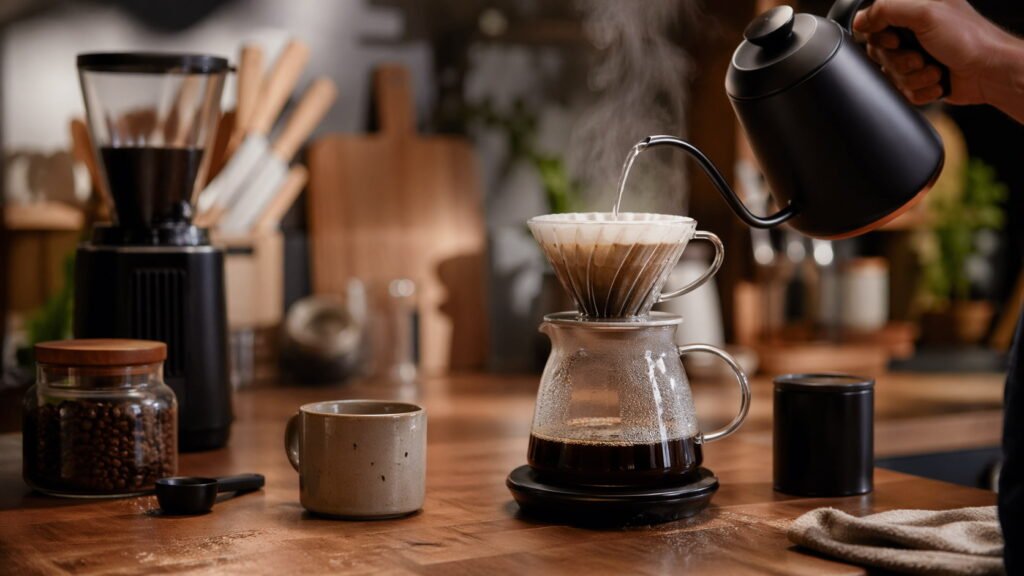
Step-by-Step: Best Way to Brew Coffee at Home Using Pour-Over
Pour-over is often considered the best way to brew coffee at home if you want maximum flavor control without complex equipment. Done right, it delivers a clean, balanced cup that highlights the beans’ true character.
What You’ll Need
- Pour-over dripper (e.g., V60-style)
- Paper filter
- Fresh coffee beans
- Grinder
- Kettle (preferably gooseneck)
- Scale (recommended)
Step 1: Measure and Grind
- Ratio: 1:16 (e.g., 20g coffee → 320ml water)
- Grind size: Medium-fine (like table salt)
Consistency here sets the foundation for a balanced cup.
Step 2: Rinse the Filter
- Pour hot water through the filter
- Removes paper taste
- Preheats your brewing setup
Discard rinse water before brewing.
Step 3: Bloom the Coffee
- Add coffee grounds
- Pour 2–3x the coffee weight in water (e.g., 40–60ml for 20g)
- Let it sit for 30–45 seconds
Why it matters: Releases trapped gas for more even extraction
Step 4: Controlled Pouring
- Pour slowly in circular motions
- Avoid pouring directly on the filter edges
- Maintain a steady flow—not too fast, not too slow
Step 5: Finish and Wait
- Total brew time: 2.5–3 minutes
- Let water fully drain before removing the dripper
Pro Tips for Better Results
- Keep your pour steady to avoid uneven extraction
- Use filtered water for cleaner taste
- Adjust grind size if brew time is too fast or slow
What to expect in your cup:
- Clean mouthfeel
- Bright acidity
- Clear, layered flavors
How to Brew Café-Quality Coffee at Home Without Expensive Gear
You don’t need a high-end espresso machine to make exceptional coffee. The best way to brew coffee at home often comes down to smart upgrades and good habits, not price tags.
Budget Tools That Actually Make a Difference
Focus on tools that directly impact extraction and consistency:
- Burr grinder → delivers uniform grind size (huge upgrade from blade grinders)
- Digital scale → ensures accurate coffee-to-water ratios
- Gooseneck kettle → improves pouring control for even extraction
These three alone can dramatically improve your results.
Upgrades That Matter Most
If you’re deciding where to invest, prioritize in this order:
- Fresh beans + grinder (biggest flavor impact)
- Consistent measurement (scale)
- Better water control (kettle or temperature awareness)
Expensive machines won’t fix poor technique or stale coffee.
Myths About Premium Equipment
- “More expensive = better coffee” → Not necessarily
- “You need espresso gear for café quality” → Manual brewing can match or exceed it
- “Advanced tools are required” → Simple setups can outperform complex ones when used correctly
Common Brewing Mistakes That Ruin Your Coffee (And How to Fix Them)
Even small mistakes can turn good beans into disappointing coffee. Fixing these is often the fastest way to improve your brew.
Using the Wrong Grind Size
- Too fine → bitter, harsh
- Too coarse → weak, sour
Fix: Match grind size to your method and adjust gradually.
Water That’s Too Hot or Too Cold
- Too hot → over-extraction (bitter)
- Too cool → under-extraction (flat, sour)
Fix: Stay within 90–96°C (195–205°F).
Guessing Instead of Measuring
Eyeballing leads to inconsistent results.
Fix:
- Use a 1:15–1:18 ratio
- Measure both coffee and water
Stale Coffee Beans
Old beans lose aroma and taste dull or lifeless.
Fix:
- Buy smaller batches
- Use within 2–4 weeks of roasting
Poor Cleaning Habits
Residue buildup adds unwanted bitterness.
Fix:
- Rinse equipment after every use
- Deep clean weekly (especially for drip machines)
Best Way to Brew Coffee at Home Based on Your Lifestyle
The “best way” becomes much clearer when you match your brewing style to your daily routine.
For Busy Mornings
You need speed and consistency.
Best options:
- Drip coffee maker
- Pre-measured setups (grind ahead the night before)
Why: Minimal effort, reliable results
For Flavor Enthusiasts
You enjoy dialing in every detail.
Best options:
- Pour-over
- Manual brewing methods
Why: Maximum control over flavor, aroma, and balance
For Budget-Conscious Coffee Drinkers
You want great coffee without overspending.
Best options:
- French press
- Basic pour-over setup
Why: Low cost, high-quality output
For Minimalist or Small Spaces
You prefer simple setups with fewer tools.
Best options:
- French press (all-in-one)
- Compact pour-over dripper
Why: No bulky machines, easy storage
For Iced Coffee Lovers
You want smooth, refreshing coffee.
Best options:
- Cold brew
- Strong hot brew poured over ice
Why: Lower acidity and smoother taste
Flavor Control: How to Adjust Strength, Acidity, and Body
Dialing in flavor is where home brewing becomes truly rewarding. Small tweaks can transform a flat cup into something vibrant and balanced.
Adjusting Strength
Strength is about concentration—not just bitterness.
- Stronger coffee: Increase coffee dose (e.g., shift from 1:16 → 1:14)
- Weaker coffee: Use more water or less coffee
Tip: Change ratio first before touching grind size.
Controlling Acidity (Brightness)
Acidity gives coffee its lively, crisp character.
- More acidity → coarser grind + shorter brew time
- Less acidity → finer grind + longer extraction
Bean choice matters too: Light roasts naturally taste brighter.
Balancing Body (Mouthfeel)
Body refers to how heavy or light the coffee feels.
- Full-bodied: French press, metal filters
- Light-bodied: Pour-over with paper filters
Adjustment tip: Slightly finer grind increases body, but go too far and bitterness creeps in.
Essential Coffee Brewing Tools Worth Having (And What You Can Skip)
A smart setup doesn’t need to be complicated. Focus on tools that actually improve your coffee.
Must-Have Tools
These make the biggest difference:
- Burr grinder → consistent grind size
- Digital scale → precise ratios
- Kettle (ideally gooseneck) → controlled pouring
- Brewing device → French press, dripper, or drip machine
Nice-to-Have Upgrades
Helpful, but not essential:
- Thermometer (if your kettle isn’t temperature-controlled)
- Timer (or phone)
- Storage canister with airtight seal
Tools You Can Skip (At First)
- Expensive espresso machines
- Complex automated brewing systems
- Specialty gadgets with minimal impact
Hot vs Cold: Exploring Alternative Brewing Methods at Home
Hot coffee isn’t your only option. Cold brewing methods offer a completely different experience.
Cold Brew: Smooth and Low Acidity
Cold brew is steeped slowly in cold water.
Basic method:
- Coarse grind
- Ratio: 1:8 to 1:10 (concentrate)
- Brew time: 12–18 hours
Result:
- Smooth, mellow flavor
- Low acidity
- Naturally sweet profile
Iced Coffee: Bright and Refreshing
Not the same as cold brew.
How it works:
- Brew hot coffee stronger than usual
- Pour over ice immediately
Result:
- More acidity and brightness
- Faster to prepare
When to Choose Each
- Cold brew: For smooth, less acidic coffee
- Iced coffee: For quick, vibrant refreshment
Pro Tips to Consistently Brew Better Coffee at Home
Consistency separates average coffee from great coffee.
Simple Habits That Make a Big Difference
- Use filtered water for cleaner taste
- Preheat your equipment to stabilize temperature
- Keep your grinder clean for consistent results
- Store beans in an airtight container away from light
Track Your Brewing Variables
If a cup tastes amazing, recreate it.
Track:
- Grind size
- Ratio
- Brew time
- Bean type
This turns guesswork into repeatable success.
FAQ: Best Way to Brew Coffee at Home
What is the easiest brewing method for beginners?
French press or drip coffee makers are the easiest. They require minimal technique and still produce great results.
What coffee-to-water ratio is best for home brewing?
A good starting point is 1:15 to 1:18. Adjust based on how strong you prefer your coffee.
How does grind size affect coffee taste?
Finer grinds extract faster and can taste bitter, while coarser grinds extract slower and may taste weak or sour if under-extracted.
How long should I brew coffee for the best flavor?
It depends on the method: about 2–3 minutes for pour-over, 4 minutes for French press, and 25–30 seconds for espresso.
Can I make good coffee without a grinder?
Yes, but freshly ground beans produce noticeably better flavor. If possible, buy whole beans and grind just before brewing.
Why does my coffee taste bitter even with good beans?
Bitterness usually comes from over-extraction—try a coarser grind, shorter brew time, or slightly cooler water.
Final Thoughts: Finding Your Personal “Best Way” to Brew Coffee at Home
The best way to brew coffee at home isn’t about copying a single method—it’s about refining what works for you. Start simple, pay attention to the core variables, and adjust based on taste.
Great coffee comes from small, intentional improvements. Experiment with grind size, tweak your ratios, and try different brewing styles until you find your ideal cup.
For deeper brewing standards and industry-backed guidelines, refer to the Specialty Coffee Association:
https://sca.coffee/research
Now it’s your turn—pick a method, brew a cup, and start dialing in your perfect coffee at home.

Meet Suzee Amelia, the creative voice behind this space—a blog dedicated to exploring coffee culture, lifestyle insights, and everyday inspiration. With a passion for discovering rich flavors and sharing practical tips, Sophie Langford brings a thoughtful and engaging approach to every post.
