

Great coffee doesn’t have to come from a pricey espresso machine. In fact, learning how to make cafe-quality coffee at home without a machine is often simpler—and more rewarding—than most people expect.
With the right beans, a few affordable tools, and proper technique, you can brew coffee that rivals your favorite café. This guide walks you through exactly what matters: from choosing better beans to mastering flavor balance, so every cup tastes rich, smooth, and intentional.
In This Article
Why Cafe-Quality Coffee Without a Machine Is Totally Possible
Many people assume that café-level coffee requires expensive gear. That’s not entirely true. What actually separates average coffee from great coffee comes down to control and consistency.
Professional baristas rely on:
- Fresh, high-quality beans
- Precise brewing ratios
- Proper extraction techniques
None of these require a machine.
Manual brewing methods like French press, pour-over, or AeroPress give you full control over the process. In some cases, they even highlight flavors better than automatic machines.
What you’re really building isn’t just a drink—it’s a repeatable process.
The Secret Behind Cafe-Quality Coffee at Home
If you want consistently excellent results, focus on four key elements. Think of them as the foundation of every great cup.
The 4 Pillars of Great Coffee
1. Coffee Beans (Flavor Source)
Everything starts here. Fresh, well-roasted beans determine 80% of your flavor.
2. Grind Size (Extraction Control)
Too fine? Bitter. Too coarse? Weak. The right grind unlocks balance.
3. Water Quality (Hidden Game-Changer)
Coffee is over 95% water. Poor water = flat or unpleasant taste.
4. Brewing Technique (Consistency & Precision)
Timing, pouring, and ratios directly impact flavor clarity.
Why Coffee Shops Taste Better (And How to Copy It)
Cafés don’t have secret ingredients—they follow consistent systems:
- They use freshly ground beans
- They measure everything (coffee, water, time)
- They maintain ideal water temperature (around 90–96°C)
You can replicate all of this at home with simple tools.
Common Mistakes That Ruin Homemade Coffee
Avoid these early, and your coffee improves instantly:
- Using stale or low-quality beans
- Guessing measurements instead of using ratios
- Boiling water that burns the coffee
- Ignoring grind size for your brew method
Fixing just one of these can dramatically improve your cup.
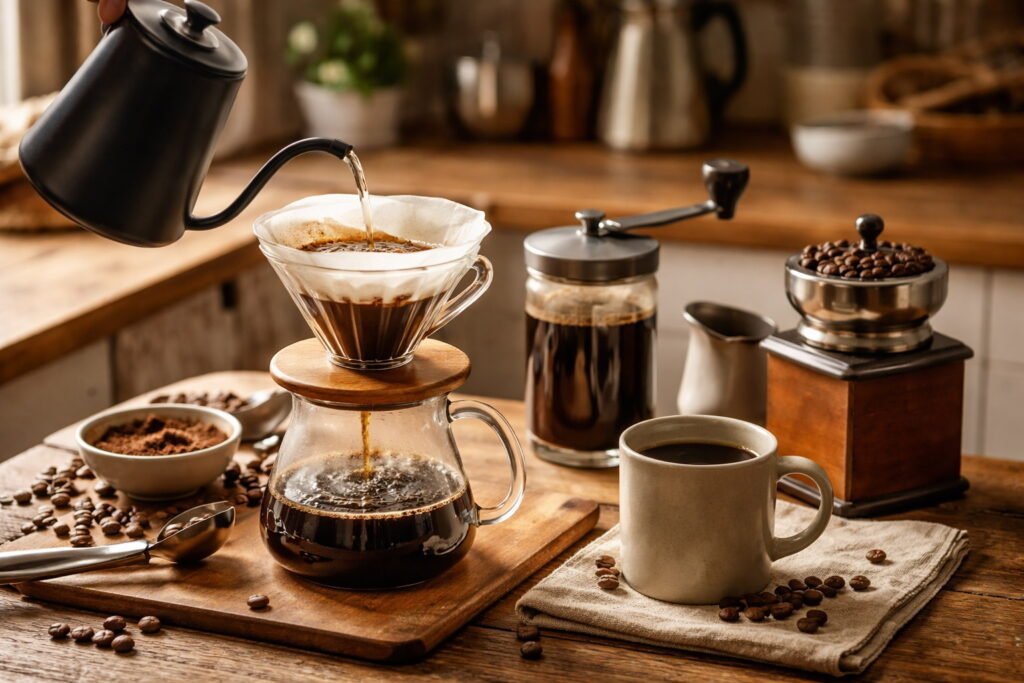
Choosing the Right Coffee Beans for Cafe-Level Flavor
If your coffee doesn’t taste great, the beans are often the problem—not your technique.
Whole Beans vs Pre-Ground: Does It Matter?
Yes—a lot.
- Whole beans retain freshness and aroma longer
- Pre-ground coffee loses flavor quickly due to oxidation
Best practice: Buy whole beans and grind just before brewing.
Understanding Roast Levels (And What They Taste Like)
Each roast level creates a different experience:
| Roast Level | Flavor Profile | Best For |
| Light Roast | Bright, fruity, acidic | Pour-over, black coffee |
| Medium Roast | Balanced, slightly sweet | Most brewing methods |
| Dark Roast | Bold, bitter, smoky | French press, milk drinks |
Tip: If you’re aiming for “cafe-style,” start with medium roast. It’s the most versatile.
How to Read Coffee Labels Like a Pro
Look beyond branding. Focus on:
- Origin (Ethiopia = fruity, Colombia = balanced, Brazil = nutty)
- Roast date (fresh within 2–4 weeks is ideal)
- Tasting notes (gives you flavor expectations)
Ignore vague terms like “premium” or “gourmet”—they don’t guarantee quality.
Best Coffee Origins for Home Brewing
- Ethiopian coffee → floral, citrusy, complex
- Colombian coffee → smooth, balanced, crowd-pleasing
- Brazilian coffee → chocolatey, nutty, low acidity
Exploring origins is one of the easiest ways to upgrade your coffee experience.
Essential Tools to Make Cafe-Quality Coffee at Home (No Machine Needed)
You don’t need a fancy espresso setup to brew incredible coffee. A few simple, well-chosen tools can deliver consistently great results.
Core Brewing Methods (Choose One to Start)
Each method offers a different flavor experience:
- French Press → Rich, full-bodied, slightly heavy mouthfeel
- Pour-Over (V60, Kalita) → Clean, bright, and nuanced
- AeroPress → Smooth, versatile, slightly espresso-like
Beginner tip: Start with a French press if you want simplicity, or pour-over if you enjoy clarity and complexity.
Must-Have Accessories (That Actually Make a Difference)
You don’t need everything—but a few tools will elevate your coffee immediately:
- Grinder (preferably burr grinder) → Consistent grind = better flavor
- Kettle (ideally gooseneck for pour-over) → Better pouring control
- Digital scale (optional but powerful) → Accurate coffee-to-water ratio
- Timer (your phone works) → Consistent extraction every time
Key takeaway: Consistency beats complexity. Even simple tools can produce amazing coffee when used properly.
Minimalist Setup vs Enthusiast Setup
| Setup Type | What You Need | Who It’s For |
| Minimalist | French press + pre-ground coffee | Quick, easy brewing |
| Intermediate | Pour-over + grinder + kettle | Better flavor control |
| Enthusiast | AeroPress + burr grinder + scale | Precision & experimentation |
Start simple. Upgrade only when you feel limited—not before.
How to Make Cafe-Quality Coffee at Home Without a Machine (Step-by-Step Methods)
Now comes the fun part—actually brewing your coffee. These methods are easy to learn but powerful when done right.
French Press Method (Rich & Full-Bodied)
Perfect for those who enjoy bold, smooth coffee with minimal effort.
What you need:
- Coarse ground coffee
- Hot water (about 92–96°C)
- French press
Steps:
- Add coffee using a 1:15 ratio (e.g., 20g coffee to 300ml water)
- Pour a small amount of water to bloom (wait 30 seconds)
- Add remaining water and stir gently
- Place the lid and wait 4 minutes
- Press slowly and serve
Pro tips:
- Use a coarse grind to avoid bitterness
- Don’t press too hard—it can create sediment
- Let coffee sit for 1 minute before drinking for better clarity
Pour-Over Method (Clean & Bright Flavor)
This is where coffee starts to taste like a specialty café.
What you need:
- Medium-fine grind
- Filter paper
- Pour-over dripper (V60 or similar)
Steps:
- Rinse the filter with hot water
- Add coffee (1:16 ratio is a great start)
- Bloom with a small pour (30–45 seconds)
- Slowly pour in circular motions
- Total brew time: 2.5–3 minutes
Pro tips:
- Pour steadily, not aggressively
- Keep water flow consistent
- Use a gooseneck kettle if possible for control
Done right, this method highlights subtle flavors like fruit, florals, and sweetness.
AeroPress Method (Versatile & Cafe-Style)
A favorite among coffee enthusiasts for its flexibility.
What you need:
- Medium-fine grind
- AeroPress
- Filter
Steps (Standard Method):
- Add coffee (1:14 ratio for stronger taste)
- Pour hot water and stir
- Wait 1–2 minutes
- Press slowly (20–30 seconds)
Want espresso-like coffee?
- Use less water and finer grind
- Press slowly for a concentrated shot
Pro tips:
- Experiment with brew time for strength
- Try inverted method for fuller extraction
- Great for both hot and iced coffee
Mastering Coffee Ratios: The Difference Between Average and Amazing
If your coffee tastes inconsistent, ratios are likely the issue.
The Golden Ratio Explained
Most great coffee falls within this range:
- 1:15 → Strong, bold
- 1:16–1:17 → Balanced (recommended)
- 1:18 → Light, more delicate
Example:
- 20g coffee + 320ml water = balanced cup
Key takeaway: Small changes in ratio create big flavor differences.
How to Adjust Coffee Strength to Your Taste
Instead of guessing, tweak intentionally:
- Too bitter? → Use more water or coarser grind
- Too weak? → Use less water or finer grind
- Too sour? → Brew longer or use hotter water
Dialing in your ratio is how you turn “good” coffee into your perfect cup.
Easy Measurement Hacks (No Scale Needed)
No scale? No problem.
- 1 tablespoon coffee ≈ 5–7g
- Standard mug (250ml) → use ~15g coffee
- Use consistent scoops for repeatable results
Still, upgrading to a scale is one of the biggest improvements you can make.
Water Matters More Than You Think
Most people focus on beans and forget the biggest ingredient: water. Since coffee is over 95% water, even great beans can taste dull with poor-quality water.
Ideal Water Temperature for Perfect Extraction
Water that’s too hot burns your coffee. Too cool, and it under-extracts.
- Optimal range: 90–96°C
- No thermometer? Let boiling water sit for 30–45 seconds before pouring
Key takeaway: Balanced heat extracts sweetness without harsh bitterness.
Tap vs Filtered Water: Does It Really Matter?
Yes—and the difference is noticeable.
- Tap water → can contain chlorine or minerals that distort flavor
- Filtered water → cleaner, smoother, more consistent
If your coffee tastes flat or slightly “off,” your water might be the reason.
How Bad Water Ruins Good Beans
Poor water can:
- Mute acidity and brightness
- Add unwanted bitterness
- Create a dull, lifeless cup
Simple upgrade: Use filtered water or bottled water with balanced mineral content.
Grinding Coffee the Right Way (Even Without a Fancy Grinder)
Grind size is one of the most overlooked factors in home brewing—and one of the most important.
Why Grind Size Is Critical for Extraction
Coffee extraction depends on how water interacts with the grounds:
- Too fine → over-extraction → bitter, harsh taste
- Too coarse → under-extraction → weak, sour taste
Perfect grind = balanced flavor, smooth finish, clear notes.
Matching Grind Size to Your Brewing Method
Each brewing style needs a specific grind:
| Brewing Method | Grind Size | Texture |
| French Press | Coarse | Like sea salt |
| Pour-Over | Medium to medium-fine | Like sand |
| AeroPress | Medium-fine | Slightly finer than sand |
Tip: If your coffee tastes wrong, adjust grind before changing anything else.
Blade vs Burr Grinder: Is It Worth Upgrading?
- Blade grinder
- Chops unevenly
- Creates inconsistent extraction
- Budget-friendly
- Burr grinder
- Produces uniform particles
- Improves clarity and balance
- Worth it for serious coffee improvement
Honest advice: A burr grinder is one of the best investments you can make for better coffee.
Pro Techniques to Elevate Your Coffee to Cafe Quality
Once your basics are solid, small technique upgrades can dramatically improve your results.
Blooming: The Step Most Beginners Skip
Fresh coffee releases gas (CO₂) when hot water hits it. Blooming allows proper extraction.
How to bloom:
- Pour a small amount of water (2–3x the coffee weight)
- Wait 30–45 seconds
- Continue brewing
Result: Better flavor clarity and less bitterness.
Stirring vs Not Stirring: What Actually Works?
- French press: Light stir helps even extraction
- Pour-over: Minimal stirring; let water flow naturally
- AeroPress: Stir briefly for consistency
Too much agitation can lead to over-extraction, so keep it gentle.
Timing Your Brew Like a Barista
Time is your invisible ingredient.
- French press → ~4 minutes
- Pour-over → ~2.5–3 minutes
- AeroPress → ~1–2 minutes
Too fast? Coffee will taste weak.
Too slow? It may taste bitter.
Small Tweaks That Make a Big Difference
- Preheat your cup and equipment → keeps temperature stable
- Use fresh beans (within 2–4 weeks of roasting)
- Store coffee in an airtight container away from light
- Adjust one variable at a time when experimenting
Final insight: Cafe-quality coffee isn’t about perfection—it’s about control and consistency.
How to Make Cafe-Style Drinks Without an Espresso Machine
You don’t need an espresso machine to enjoy your favorite café drinks. With a few simple techniques, you can recreate surprisingly authentic results at home.
DIY Latte Without a Machine (Simple & Creamy)
A latte is just espresso + steamed milk. Without a machine, you can still get close.
How to do it:
- Brew a strong coffee using AeroPress or French press (1:13 ratio)
- Heat milk (don’t boil—aim for warm, not scalding)
- Froth milk by:
- Shaking in a jar
- Using a handheld frother
- Whisking vigorously
- Pour milk over coffee and finish with foam
Result: Smooth, creamy, and very close to a café-style latte.
Simple Cappuccino-Style Coffee at Home
Cappuccino is all about balance: equal parts coffee, milk, and foam.
Quick method:
- Brew strong coffee
- Froth milk more aggressively to create thicker foam
- Pour slowly, holding back foam, then layer it on top
Tip: Texture matters more than perfection. Aim for light, airy foam.
Iced Coffee That Actually Tastes Like a Coffee Shop
Skip watered-down coffee. Try this instead:
Method:
- Brew coffee slightly stronger than usual
- Pour over ice immediately
- Add milk or syrup if desired
Pro tip: Use coffee ice cubes to avoid dilution.
Flavor Add-Ins That Upgrade Your Coffee Instantly
Want that café touch? Try:
- Vanilla extract (just a drop)
- Cinnamon or nutmeg
- Simple syrup or honey
- Chocolate syrup for mocha-style drinks
Keep it subtle. The goal is to enhance, not overpower, your coffee.
Common Mistakes That Prevent Cafe-Quality Coffee at Home
Even good beans and tools won’t save your coffee if these mistakes keep happening.
Using Stale Beans
Coffee loses flavor quickly after roasting.
- Best window: 2–4 weeks after roast date
- Store in airtight container, away from heat and light
Wrong Grind Size
One of the biggest flavor killers.
- Too fine → bitter and harsh
- Too coarse → weak and sour
Fix: Match grind size to your brewing method.
Poor Water Temperature
Boiling water can burn coffee, while lukewarm water under-extracts it.
- Ideal: just off the boil (90–96°C)
Over-Extraction vs Under-Extraction
Understanding this changes everything:
- Over-extracted → bitter, dry, unpleasant
- Under-extracted → sour, thin, sharp
Balance is the goal. Adjust grind, time, or ratio—not everything at once.
Budget vs Premium: Does Spending More Improve Your Coffee?
Better coffee doesn’t always mean spending more—but some upgrades matter a lot.
Where to Spend (High Impact)
- Fresh, quality beans
- Burr grinder (huge improvement)
- Reliable brewing device
Where You Can Save
- Fancy kettles (basic works fine)
- Expensive accessories
- Trendy gadgets
Affordable Upgrades That Actually Matter
- Switch from pre-ground to whole beans
- Use filtered water
- Add a simple digital scale
Insight: Technique beats expensive gear every time.
Quick Daily Routine for Consistently Great Coffee
Consistency is what turns good coffee into a daily habit.
Simple Workflow You Can Repeat Every Morning
- Measure coffee and water
- Heat water to proper temperature
- Grind fresh (if possible)
- Brew using your chosen method
- Taste and adjust if needed
Time-Saving Tips for Busy Mornings
- Pre-measure coffee the night before
- Use a simple method like French press
- Keep your setup organized and ready
How to Stay Consistent Without Overthinking
- Stick to one method until you master it
- Change only one variable at a time
- Take mental notes of what tastes best
Consistency creates confidence—and better coffee.
FAQ: Making Cafe-Quality Coffee at Home Without a Machine
Can I make espresso without a machine?
Not true espresso, but you can get close using AeroPress with a fine grind and strong ratio.
What’s the easiest method for beginners?
French press is the simplest and most forgiving starting point.
How do I make my coffee taste less bitter?
Use a coarser grind, slightly cooler water, or increase your water ratio.
What grind size should I use for different methods?
Coarse for French press, medium for pour-over, medium-fine for AeroPress.
How long should I brew coffee?
Around 4 minutes for French press, 2.5–3 minutes for pour-over, and 1–2 minutes for AeroPress.
How should I store coffee beans for freshness?
Keep them in an airtight container, away from light, heat, and moisture.
For deeper brewing standards and coffee science, you can explore the Specialty Coffee Association (SCA) guidelines here:
https://sca.coffee/research
Your Next Step to Better Coffee Starts Today
You don’t need expensive machines or complicated setups to brew incredible coffee. Focus on fresh beans, proper ratios, and simple techniques, and you’ll already be ahead of most home brewers.
Start with one method, refine your process, and taste the difference with each cup.
Your perfect cafe-quality coffee at home is just a few small adjustments away—so go brew your next cup and make it better than the last. ☕

Meet Suzee Amelia, the creative voice behind this space—a blog dedicated to exploring coffee culture, lifestyle insights, and everyday inspiration. With a passion for discovering rich flavors and sharing practical tips, Sophie Langford brings a thoughtful and engaging approach to every post.
