

Cold brew coffee at home easy recipe—it sounds almost too good to be true, but it’s one of the simplest ways to make café-quality coffee without expensive gear. With just coffee, water, and a little patience, you can create a smooth, low-acid drink that tastes rich, refreshing, and endlessly customizable.
This guide breaks everything down step by step, from choosing the right beans to mastering the perfect brew ratio. Expect practical tips, real-world brewing advice, and clear instructions so your first batch turns out just right.
In This Article
Why Cold Brew Coffee Is Taking Over Home Kitchens
Cold brew isn’t just a trend—it solves real problems that traditional hot brewing can’t.
The biggest reason people switch is flavor. Cold brewing extracts coffee slowly using room temperature or cold water, which results in a smoother, naturally sweet taste. Bitterness and sharp acidity are noticeably reduced, making it easier to drink black.
Convenience is another major factor. Once brewed, cold brew can sit in your fridge for days, ready whenever you need it. That makes it perfect for busy mornings or hot afternoons when you don’t want to wait.
Key benefits of cold brew coffee at home:
- Low acidity – gentler on the stomach
- Smooth, bold flavor – no harsh bitterness
- Batch brewing – make once, enjoy for days
- Versatile – drink it black, with milk, or flavored
Cold brew also gives you full control. Strength, flavor, and dilution can all be adjusted easily, which is something coffee shop drinks rarely offer.
What Makes Cold Brew Different from Iced Coffee?
Cold brew and iced coffee may look similar in a glass, but the brewing process—and the taste—are completely different.
Brewing Method
- Cold Brew: Steeped in cold or room temperature water for 12–24 hours
- Iced Coffee: Brewed hot, then cooled down with ice
That difference in temperature changes everything about extraction.
Flavor Profile
Cold brew tends to be:
- Smoother
- Less acidic
- Slightly sweet and chocolatey
Iced coffee usually tastes:
- Brighter and more acidic
- More aromatic
- Sometimes diluted from melting ice
Strength and Texture
Cold brew is often made as a concentrate, meaning it’s stronger and meant to be diluted with water, milk, or ice. Iced coffee is typically ready to drink right away.
When to Choose Each
- Go with cold brew if you want a smooth, mellow, low-acid drink
- Choose iced coffee if you prefer a brighter, more traditional coffee flavor
Understanding this difference helps you dial in expectations before you start brewing at home.
Cold Brew Coffee at Home Easy Recipe (Step-by-Step Guide)
Making cold brew is less about technique and more about getting the basics right. Follow this process, and you’ll get consistently great results.
Ingredients
- Coarsely ground coffee
- Cold or room temperature filtered water
Basic ratio (starter-friendly):
- 1 cup coffee : 4 cups water (for concentrate)
Tools You Need
You don’t need fancy equipment to start.
Minimal setup:
- A large jar or pitcher
- A spoon for stirring
- A strainer or filter (cloth, paper, or fine mesh)
Optional upgrades:
- French press (built-in filter)
- Dedicated cold brew maker
- Burr grinder for fresh grinding
Step-by-Step Brewing Process
Grind Your Coffee Beans
Use a coarse grind, similar to breadcrumbs. Fine grounds can lead to over-extraction and bitterness.
Mix Coffee and Water
Add coffee to your container, then pour in water slowly. Stir gently to make sure all grounds are fully saturated.
Let It Steep
Cover and let the mixture sit:
- 12–16 hours for a lighter brew
- 18–24 hours for a stronger, richer concentrate
Room temperature works faster, while fridge brewing produces a slightly cleaner taste.
Strain the Coffee
Filter out the grounds using:
- Cheesecloth for a clean finish
- Paper filter for extra clarity
- French press for convenience
Take your time here—rushing can leave sediment in your brew.
What You’ll Get
The result is a cold brew concentrate—strong, smooth, and ready to dilute.
To serve:
- Mix with water (1:1 ratio) for balance
- Add milk for a creamy version
- Pour over ice for a refreshing drink
Best Coffee Beans for Cold Brew Coffee at Home
The quality of your beans has a bigger impact on cold brew than most people expect. Since the brewing process is slow and gentle, flavor clarity really stands out—both the good and the bad.
Roast Level: What Works Best?
Cold brew tends to shine with:
- Medium roast → balanced, slightly sweet, smooth
- Dark roast → bold, chocolatey, low acidity
Light roasts can work, but they often taste too subtle or slightly sour in cold brew unless brewed carefully.
Flavor Profiles to Look For
When choosing beans, check the tasting notes. Cold brew enhances:
- Chocolate and cocoa tones
- Nutty flavors (almond, hazelnut)
- Caramel or brown sugar sweetness
Fruity or floral coffees can work, but they’re less forgiving and may taste muted.
Whole Beans vs Pre-Ground
Freshness matters more than anything.
- Whole beans (best choice): grind right before brewing for maximum flavor
- Pre-ground: convenient, but loses aroma quickly
If using pre-ground, make sure it’s labeled coarse grind or suitable for French press.
Budget vs Premium Beans
You don’t need expensive specialty beans to make great cold brew.
- Budget beans: great for daily batches, especially darker roasts
- Premium beans: offer more complex flavors if you enjoy experimenting
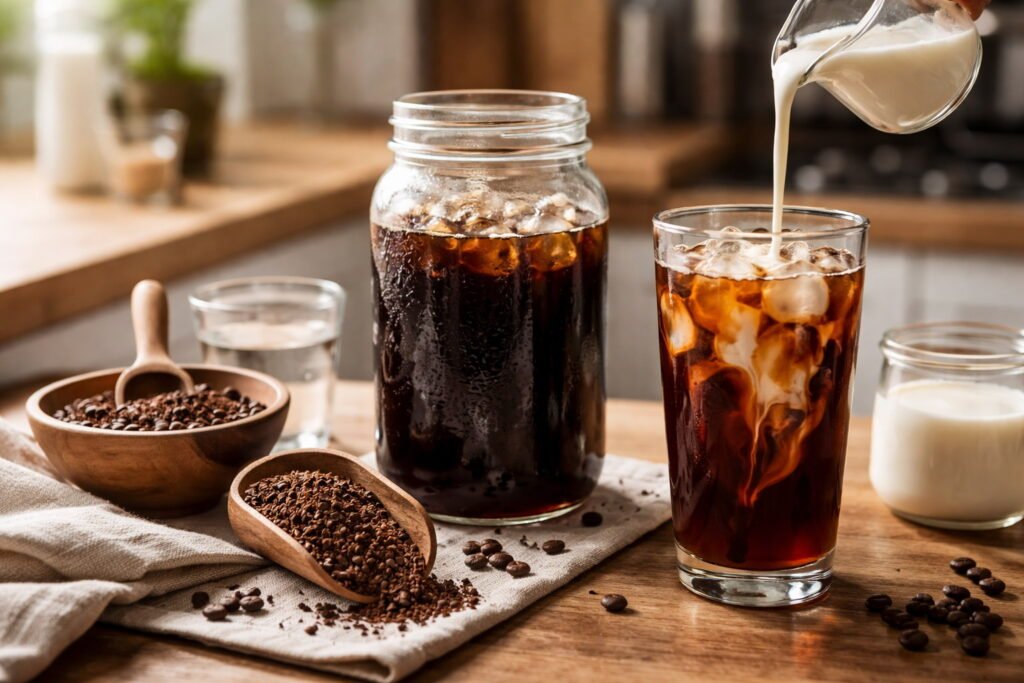
The Perfect Cold Brew Ratio (Don’t Guess Again)
Getting the ratio right is the difference between a weak, watery drink and a rich, café-style cold brew.
Understanding Ratios (Simple Breakdown)
Cold brew is usually made as a concentrate, then diluted later.
| Brew Type | Coffee : Water | Result |
| Strong concentrate | 1:4 | Bold, needs dilution |
| Standard concentrate | 1:5 | Balanced and versatile |
| Ready-to-drink | 1:8 | Lighter, no dilution needed |
How to Choose the Right Ratio
- Want flexibility? → Use 1:4 or 1:5 (dilute later)
- Want convenience? → Use 1:8 (drink immediately)
Adjusting to Your Taste
Cold brew is forgiving. Small tweaks make a big difference:
- Too strong → add water or milk
- Too weak → increase coffee next batch
- Too bitter → reduce steep time or check grind size
Common Mistakes That Ruin Cold Brew Coffee
Cold brew is simple, but a few small mistakes can ruin the final taste. Fixing these will instantly improve your results.
Using the Wrong Grind Size
A fine grind leads to:
- Over-extraction
- Muddy texture
- Bitter taste
Always aim for coarse, chunky grounds.
Over-Steeping or Under-Steeping
Timing affects both strength and flavor.
- Too short (under 10–12 hours): weak, flat taste
- Too long (over 24 hours): harsh and overly heavy
Stick to the 12–24 hour window and adjust gradually.
Poor Filtration
Rushing the straining process leaves:
- Gritty sediment
- Cloudy appearance
- Slight bitterness
Use a proper filter and take your time. A second filtration pass can make a big difference.
Using Low-Quality Water
Coffee is mostly water, so it matters more than people think.
- Tap water with strong taste → affects flavor negatively
- Filtered water → cleaner, smoother result
Ignoring Coffee Freshness
Old beans produce dull, lifeless cold brew.
- Use beans within 2–4 weeks of roasting
- Store them in an airtight container
How to Customize Your Cold Brew Coffee at Home
Once you’ve nailed the basic cold brew coffee at home easy recipe, customization is where things get fun. Small tweaks can completely change the flavor, strength, and overall experience.
Adjusting Strength and Dilution
Cold brew concentrate is meant to be flexible.
- Prefer bold and intense → use less water when diluting
- Want something lighter → add more water or ice
- Looking for balance → start with a 1:1 ratio (coffee : water or milk)
Taste as you go. There’s no fixed rule—your preference is what matters.
Sweeteners and Flavor Add-Ins
Cold brew naturally tastes smoother, so it pairs well with subtle sweetness.
Try adding:
- Simple syrup (blends better than sugar in cold drinks)
- Vanilla extract for a café-style touch
- Cinnamon sticks during steeping for warmth
- Honey or maple syrup for natural sweetness
For best results, add flavors after brewing unless you’re experimenting with infused batches.
Milk vs Non-Dairy Options
Milk transforms cold brew into a creamy, dessert-like drink.
- Whole milk → rich and smooth
- Oat milk → naturally sweet and balanced
- Almond milk → lighter with a nutty finish
- Coconut milk → tropical and slightly creamy
Each option changes the texture and taste, so try a few and see what fits your style.
Turning Cold Brew Into Café-Style Drinks
With a good base, you can recreate popular coffee shop drinks at home:
- Add milk + vanilla → vanilla cold brew
- Add cream + a touch of sugar → sweet cream cold brew
- Mix with chocolate syrup → mocha cold brew
Easy Cold Brew Variations You Can Try
A single batch of cold brew can become multiple drinks with just a few ingredients. These variations are simple, quick, and perfect for daily rotation.
Vanilla Cold Brew
Smooth and slightly sweet.
- Cold brew concentrate
- Water or milk
- ½ tsp vanilla extract
- Optional: simple syrup
Sweet Cream Cold Brew
Rich and indulgent, similar to coffee shop favorites.
- Cold brew + ice
- Mix of milk and cream (about 3:1 ratio)
- Light sweetener
Whisk or shake the cream mixture for a silky texture.
Mocha Cold Brew
Great for chocolate lovers.
- Cold brew
- Milk
- 1–2 tsp chocolate syrup or cocoa mix
Stir well to fully dissolve the chocolate.
Coconut Cold Brew Twist
Light, refreshing, and slightly tropical.
- Cold brew
- Coconut milk or coconut water
- Ice
This variation works especially well on hot days.
How Long to Steep Cold Brew (And Why It Matters)
Steeping time is one of the most important factors in cold brew. It directly affects strength, smoothness, and overall flavor balance.
Ideal Steeping Time
- 12–16 hours → lighter body, smoother taste
- 18–24 hours → stronger, deeper flavor
Most people prefer the 16–18 hour range as a sweet spot.
Short vs Long Steep: What Changes?
- Short steep → mild, slightly tea-like
- Long steep → bold, heavy, more intense
Going beyond 24 hours usually doesn’t improve flavor—it often introduces unwanted bitterness.
Room Temperature vs Fridge Brewing
Both methods work, but they produce slightly different results.
- Room temperature: faster extraction, fuller body
- Fridge: slower extraction, cleaner and smoother taste
If you’re just starting out, room temperature is easier and more consistent.
Finding Your Perfect Brew Time
There’s no single “correct” answer. The best approach is to experiment:
- Start with 16 hours
- Taste and adjust next batch
- Keep notes on what you like
Storage Tips: Keep Your Cold Brew Fresh Longer
A well-made batch of cold brew deserves proper storage. Done right, you’ll keep that smooth flavor intact for days.
How Long Does Cold Brew Last?
- Concentrate: up to 7–10 days in the fridge
- Diluted cold brew: best within 2–3 days
Flavor starts to fade before it actually spoils, so fresher is always better.
Best Containers for Storage
Choose containers that protect flavor and freshness:
- Glass jars or bottles → best for preserving taste
- Airtight lids → prevent odor absorption from the fridge
- Avoid plastic (if possible) → can affect flavor over time
Signs Your Cold Brew Has Gone Bad
Cold brew doesn’t spoil quickly, but it can degrade.
Watch for:
- Sour or off smell
- Cloudiness that wasn’t there before
- Flat, dull taste
If anything seems off, it’s better to brew a fresh batch.
Budget vs Premium: Do You Need Special Equipment?
One of the best things about the cold brew coffee at home easy recipe is how little you actually need to get started.
DIY Method (Jar Setup)
The simplest approach works surprisingly well:
- Large jar or pitcher
- Spoon for mixing
- Basic filter or cloth
Best for: beginners and budget-conscious brewers
French Press Method
A step up in convenience.
- Built-in plunger makes filtering easy
- Less mess compared to cloth or paper filters
Best for: daily use with minimal cleanup
Dedicated Cold Brew Makers
Designed specifically for cold brewing:
- Built-in filtration systems
- Sleek design and easy pouring
- Consistent results
Best for: frequent cold brew drinkers who want convenience
Is Premium Equipment Worth It?
Not necessarily.
- Taste difference is minimal if your technique is good
- Convenience and ease-of-use are the main upgrades
Cold Brew Coffee at Home vs Coffee Shop: Is It Worth It?
Making cold brew at home isn’t just about flavor—it’s also about value and control.
Cost Comparison
- Coffee shop cold brew → often $3–$5 per cup
- Homemade cold brew → significantly cheaper per serving
A single batch at home can yield multiple servings for the price of one café drink.
Taste and Customization
At home, you control everything:
- Strength and dilution
- Bean selection
- Sweetness and add-ins
Coffee shops offer consistency, but home brewing offers personalization.
Convenience vs Effort
- Coffee shop → instant, no effort
- Home cold brew → requires planning (steeping time)
Once you build the habit, cold brew becomes one of the most convenient coffee methods available.
Pro Tips to Make Your Cold Brew Taste Like a Café
Small details can elevate your cold brew from good to exceptional.
Use Filtered Water
Water quality directly impacts taste. Clean, filtered water produces a smoother, clearer brew.
Grind Fresh Whenever Possible
Freshly ground beans retain more aroma and flavor. Pre-ground coffee works, but freshness makes a noticeable difference.
Experiment with Ratios and Time
There’s no universal “perfect” recipe.
- Adjust coffee-to-water ratio
- Test different steep times
- Keep track of what you like
Chill Before Serving
Cold brew tastes best when properly chilled.
- Store in the fridge before serving
- Use ice without over-diluting (large cubes help)
Double Filter for Clarity
For a cleaner cup:
- Strain once with a mesh filter
- Strain again with paper or cloth
This removes fine particles and improves texture.
Frequently Asked Questions About Cold Brew Coffee at Home
Can I use regular ground coffee for cold brew?
Yes, but coarse grind is strongly recommended. Fine grounds can lead to bitterness and a muddy texture.
Why is my cold brew bitter or too strong?
Bitterness usually comes from over-steeping or using a grind that’s too fine. Try reducing brew time or switching to a coarser grind.
Do I need a cold brew maker?
No. A simple jar and filter work perfectly. Dedicated brewers are convenient but not essential.
Can I heat cold brew coffee?
Yes. Cold brew concentrate can be heated for a smoother, low-acid hot coffee experience.
How much caffeine is in cold brew?
Cold brew is often higher in caffeine when undiluted. Once diluted, it’s similar to regular coffee depending on the ratio.
Master Your Cold Brew Coffee at Home Easy Recipe
Cold brew is one of the easiest ways to upgrade your daily coffee routine. With just a few ingredients and a bit of patience, you get a smooth, refreshing drink that rivals any café.
The real advantage is control—you decide the strength, flavor, and style. Once you understand the basics, every batch becomes an opportunity to refine and experiment.
For deeper brewing standards and coffee insights, you can explore resources from the Specialty Coffee Association:
https://sca.coffee
Start with a simple batch today, tweak one variable at a time, and turn your kitchen into your favorite coffee spot.

Meet Suzee Amelia, the creative voice behind this space—a blog dedicated to exploring coffee culture, lifestyle insights, and everyday inspiration. With a passion for discovering rich flavors and sharing practical tips, Sophie Langford brings a thoughtful and engaging approach to every post.
