
Getting started with coffee brewing basics for beginners at home can feel confusing at first—but it doesn’t have to be. With just a few simple principles, you can turn ordinary beans into a rich, satisfying cup that rivals your favorite café.
This guide breaks everything down into clear, practical steps. You’ll learn what actually matters in coffee brewing, how to choose beginner-friendly equipment, and how to avoid the mistakes that ruin most first attempts. By the end, you’ll have the confidence to brew consistently good coffee—without expensive gear or complicated techniques.
In This Article
Coffee Brewing Basics for Beginners: Where to Start Without Feeling Overwhelmed
The world of home coffee brewing can look intimidating. Fancy tools, complex methods, and endless opinions often make beginners think they need to master everything at once.
You don’t.
Great coffee starts with just three fundamentals:
- Coffee beans
- Water
- Brewing method
Everything else is just refinement.
What You Actually Need (and What You Don’t)
A common beginner mistake is overbuying equipment. In reality, you can make excellent coffee with minimal tools.
Start with:
- Fresh coffee (whole bean or pre-ground)
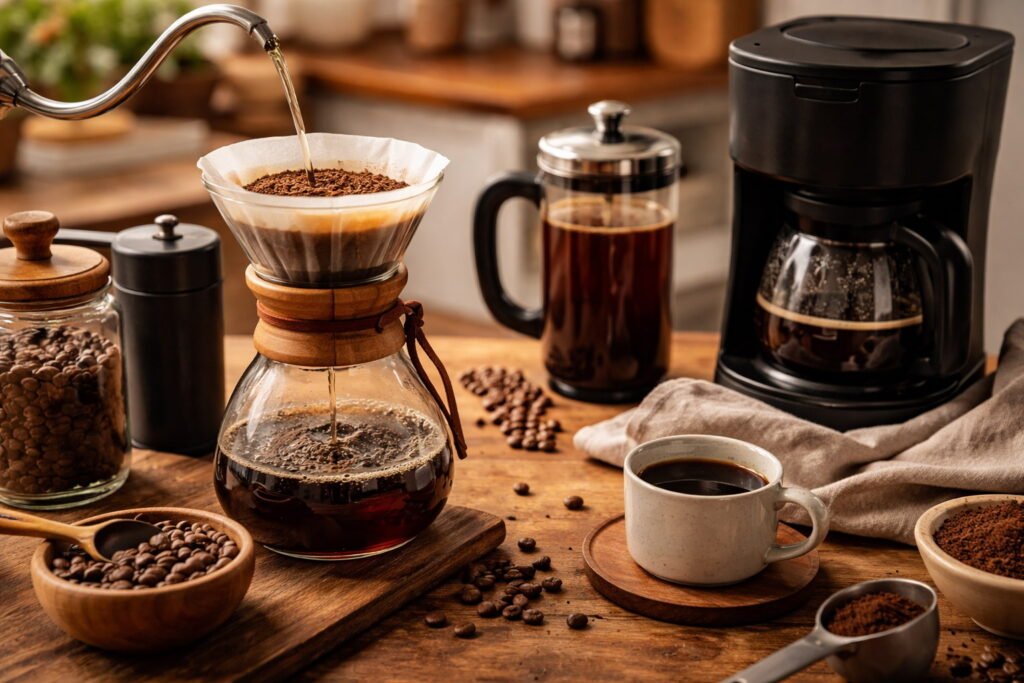
- A simple brewing device (like a French press or drip machine)
- Clean water
- A basic measuring method (spoon or scale)
Skip for now:
- Expensive grinders
- Advanced espresso machines
- Specialty accessories you don’t fully understand yet
Understanding Coffee Brewing Basics: What Really Affects Taste?
If your coffee tastes too bitter, too sour, or just “off,” the issue usually comes down to a few core variables. Master these, and you’ll instantly improve your results.
Coffee-to-Water Ratio (Your Flavor Foundation)
The ratio determines how strong or weak your coffee tastes.
- Standard starting point: 1:15 to 1:18
- Example: 20g coffee → 300–360ml water
Stronger coffee: use more coffee
Lighter coffee: use more water
Tip: A small digital scale can dramatically improve consistency.
Grind Size: The Hidden Game-Changer
Grind size controls how fast water extracts flavor from coffee.
- Coarse grind → slower extraction (French press)
- Medium grind → balanced extraction (drip, pour-over)
- Fine grind → faster extraction (espresso)
Wrong grind = bad taste
- Too fine → bitter, harsh
- Too coarse → weak, sour
Water Quality and Temperature
Water makes up over 95% of your coffee, so it matters more than most beginners realize.
- Use filtered water if possible
- Ideal temperature: 90–96°C (195–205°F)
Boiling water can burn the coffee, while cooler water leads to under-extraction.
Brew Time and Extraction
Extraction is how water pulls flavor from coffee grounds.
- Under-extracted coffee → sour, thin
- Over-extracted coffee → bitter, dry
Each method has its sweet spot:
- French press: ~4 minutes
- Pour-over: ~2.5–3 minutes
- Drip machine: ~5 minutes
Essential Coffee Brewing Equipment for Beginners at Home
You don’t need a full coffee bar setup to brew great coffee. The right beginner-friendly tools can keep things simple while still delivering excellent results.
Must-Have vs Nice-to-Have Tools
Must-have:
- Brewing device
- Coffee (fresh is best)
- Water
- Basic measuring tool
Nice-to-have (upgrade later):
- Burr grinder
- Digital scale
- Gooseneck kettle
- Thermometer
Beginner-Friendly Brewing Methods
Each method offers a different experience. The best choice depends on your lifestyle and taste preference.
French Press (Simple & Full-Bodied)
- Easy to use and forgiving
- Produces rich, heavy coffee
- Ideal for beginners who want bold flavor
Pour-Over (Clean & Flavorful)
- More control over brewing
- Produces bright, clean cups
- Requires a bit more attention and technique
Drip Coffee Maker (Convenient & Consistent)
- Set-it-and-forget-it brewing
- Great for busy mornings
- Consistent but less customizable
AeroPress (Versatile & Beginner-Friendly)
- Quick brewing (under 2 minutes)
- Can mimic espresso-style or regular coffee
- Compact and travel-friendly
Budget vs Premium Setup
You can start brewing great coffee for very little.
| Setup Type | What You Get | Who It’s For |
| Budget | French press + pre-ground coffee | Beginners testing the waters |
| Mid-range | Pour-over + manual grinder | Coffee enthusiasts |
| Premium | Burr grinder + multiple brewers | Hobbyists and perfectionists |
Coffee Beans 101: How to Choose the Right Beans for Your First Brew
Great brewing starts long before water hits the coffee. Choosing the right beans can make the difference between a flat, forgettable cup and one that feels surprisingly good even with basic equipment.
Arabica vs Robusta (Keep It Simple)
Most beginners will encounter two main types:
- Arabica → smoother, ավելի complex flavors (chocolate, fruit, floral notes)
- Robusta → stronger, more bitter, higher caffeine
Best choice for beginners: Start with Arabica. It’s more forgiving and generally tastes better without needing perfect technique.
Roast Levels and Flavor Impact
Roast level shapes the personality of your coffee.
- Light roast → bright, acidic, fruity
- Medium roast → balanced, slightly sweet (ideal for beginners)
- Dark roast → bold, smoky, bitter
If you’re unsure where to start, go with a medium roast. It gives you a balanced flavor that’s easier to dial in.
Whole Beans vs Pre-Ground
- Whole beans → fresher, better flavor, more control
- Pre-ground → convenient, but loses aroma faster
Beginner tip: If you don’t have a grinder yet, buy small batches of pre-ground coffee and use them within 1–2 weeks.
Freshness Matters More Than You Think
Coffee is best within 2–4 weeks after roasting.
Look for:
- Roast date (not just expiration date)
- Airtight packaging
Grind Size Guide: The Secret Behind Better Coffee Brewing at Home
Grind size is one of the fastest ways to fix bad coffee. Many beginners struggle not because of the method—but because the grind doesn’t match it.
Matching Grind Size to Brewing Method
Here’s a simple guide:
| Brewing Method | Grind Size | Texture |
| French press | Coarse | Like sea salt |
| Drip machine | Medium | Like sand |
| Pour-over | Medium | Slightly finer than drip |
| AeroPress | Medium-fine | Between sand and sugar |
| Espresso | Fine | Like powdered sugar |
Visualizing Grind Sizes (Without Overthinking It)
- Coarse → chunky, uneven particles
- Medium → smooth, balanced texture
- Fine → soft, powdery feel
If your coffee tastes off, adjusting grind size is often the fastest fix.
Common Beginner Mistakes with Grinding
Avoid these, and you’ll already be ahead:
- Using one grind size for every method
- Buying pre-ground coffee that doesn’t match your brewer
- Grinding too far in advance (loses aroma quickly)
Quick fix rule:
- Bitter coffee? → go coarser
- Sour coffee? → go finer
Step-by-Step Coffee Brewing Basics Using 3 Easy Methods
Now let’s turn theory into action. These beginner-friendly methods are simple, reliable, and produce great results without complicated tools.
French Press (Full-Bodied & Forgiving)
Perfect for beginners who want a rich, bold cup.
What you need:
- Coarse coffee grounds
- Hot water (just off boil)
- French press
Steps:
- Add coffee (1:15 ratio)
- Pour a small amount of water and let it bloom for 30 seconds
- Add remaining water
- Stir gently
- Wait 4 minutes
- Press slowly and serve
Taste profile: Rich, heavy, slightly textured
Pour-Over (Clean & Balanced)
Great if you enjoy clarity and control.
What you need:
- Medium grind coffee
- Filter + dripper
- Hot water
Steps:
- Rinse the paper filter (removes paper taste)
- Add coffee (1:16 ratio)
- Pour a small amount of water (bloom for 30–45 seconds)
- Slowly pour in circles
- Finish brew in 2.5–3 minutes
Taste profile: Clean, bright, nuanced
Drip Coffee Maker (Convenient & Consistent)
Best for effortless daily coffee.
What you need:
- Medium grind coffee
- Machine + filter
- Water reservoir
Steps:
- Add coffee (follow ~1:16 ratio)
- Fill water tank
- Start machine
- Let it brew automatically
Taste profile: Balanced, smooth, easy-drinking
Common Coffee Brewing Mistakes Beginners Should Avoid
Even with good beans and decent equipment, a few small mistakes can ruin your cup. The good news? These are easy to fix once you know what to watch for.
Using Water That’s Too Hot (or Too Cold)
Boiling water straight off the kettle can scorch your coffee, leading to harsh bitterness. On the other hand, water that’s too cool won’t extract enough flavor.
Fix: Let boiling water sit for about 30–60 seconds before pouring.
Guessing the Coffee-to-Water Ratio
Eyeballing measurements often leads to inconsistent results—sometimes too strong, sometimes too weak.
Fix:
- Stick to a 1:15–1:18 ratio
- Use a simple scale or measuring spoon for consistency
Ignoring Grind Size
Using the wrong grind size is one of the fastest ways to ruin your brew.
- Too fine → bitter and over-extracted
- Too coarse → sour and under-extracted
Fix: Match your grind to your brewing method (and adjust based on taste).
Poor Coffee Storage Habits
Leaving coffee exposed to air, light, and moisture quickly degrades flavor.
Fix:
- Store coffee in an airtight container
- Keep it in a cool, dark place
- Avoid the fridge (it introduces moisture and odors)
Forgetting to Clean Your Equipment
Old coffee oils and residue build up over time, causing stale or off flavors.
Fix:
- Rinse after every use
- Deep clean weekly (especially for French press and drip machines)
Coffee Brewing Tips to Instantly Improve Your Home Coffee
Once you’ve got the basics down, a few simple tweaks can take your coffee from “good enough” to seriously enjoyable.
Use a Scale for Better Accuracy
Measuring by eye works… until it doesn’t.
A small digital scale helps you:
- Keep your ratios consistent
- Repeat great results
- Adjust recipes with precision
Even a basic scale can make a noticeable difference.
Don’t Skip the Blooming Step
Blooming releases trapped gases from freshly roasted coffee.
How to do it:
- Pour a small amount of water over the grounds
- Wait 30–45 seconds before continuing
Why it matters:
It improves extraction and enhances flavor clarity.
Preheat Your Equipment
Cold equipment can lower your brew temperature, affecting extraction.
Quick habit:
- Rinse your French press, dripper, or mug with hot water before brewing
Adjust One Variable at a Time
When your coffee tastes off, avoid changing everything at once.
Instead:
- Adjust grind size, or
- Adjust ratio, or
- Adjust brew time
This helps you understand what actually improves the taste.
Taste With Intention
Don’t just drink your coffee—analyze it.
Ask yourself:
- Is it too bitter?
- Too sour?
- Too weak?
This simple habit trains your palate and speeds up your learning.
Comparing Popular Brewing Methods: Which One Fits Your Lifestyle?
Not all brewing methods are created equal. The best choice depends on your routine, taste preference, and how involved you want to be.
Quick Comparison Table
| Method | Taste Profile | Brew Time | Ease of Use | Cleanup |
| French Press | Rich, full-bodied | ~4 minutes | Easy | Medium |
| Pour-Over | Clean, bright | ~3 minutes | Moderate | Easy |
| Drip Machine | Smooth, balanced | ~5 minutes | Very easy | Easy |
| AeroPress | Versatile, strong | ~2 minutes | Easy | Very easy |
Which Brewing Method Matches You?
If you want simplicity and bold flavor:
→ Go with French press
If you enjoy control and experimenting:
→ Try pour-over
If you need convenience every morning:
→ Choose a drip coffee maker
If you want flexibility and speed:
→ Use an AeroPress
A Practical Recommendation for Beginners
Start with a method that fits your daily routine—not just what looks “cool” online.
- Busy mornings → drip machine
- Relaxed weekends → pour-over
- Strong coffee lovers → French press
How to Store Coffee Properly for Better Brewing Results
Even the best beans lose their magic if stored incorrectly. Proper storage protects the flavors you worked hard to extract.
The Four Enemies of Fresh Coffee
Coffee degrades quickly when exposed to:
- Air → oxidizes and flattens flavor
- Light → breaks down aromatic compounds
- Moisture → introduces staleness and odors
- Heat → speeds up deterioration
Best Storage Practices
Keep things simple and effective:
- Use an airtight container (preferably opaque)
- Store in a cool, dark cupboard
- Buy coffee in small batches (1–2 weeks supply)
The Fridge/Freezer Myth
It sounds logical, but storing coffee in the fridge often does more harm than good.
- Coffee absorbs surrounding odors
- Condensation introduces moisture
Exception: Freezing can work only if coffee is vacuum-sealed and unopened.
Coffee Brewing Basics at Home: Building Your Daily Routine
Consistency is what turns random good cups into a reliable daily habit.
Create a Simple Coffee Ritual
A repeatable routine removes guesswork and improves results.
Example workflow:
- Measure coffee
- Heat water
- Brew using your chosen method
- Taste and adjust if needed
This only takes a few extra minutes—but dramatically improves quality.
Stay Consistent With Your Variables
Once you find a brew you enjoy, lock in the key factors:
- Same ratio
- Same grind size
- Same brew time
From there, you can experiment slowly without losing your baseline.
Scaling Your Brew for Multiple Cups
Making coffee for more than one person? Keep your ratio consistent.
- 1 cup → 15g coffee : 240ml water
- 2 cups → 30g coffee : 480ml water
Avoid: Guessing larger quantities—it often leads to weak or uneven extraction.
Beginner-Friendly Coffee Recipes to Try After You Master the Basics
Once you’re comfortable with brewing, these easy recipes add variety without complexity.
Simple Iced Coffee (Smooth & Refreshing)
How to make:
- Brew coffee slightly stronger than usual
- Let it cool
- Pour over ice
Tip: Use large ice cubes to avoid dilution.
Milk-Based Coffee (No Espresso Machine Needed)
Craving something creamy?
Steps:
- Brew strong coffee (French press or AeroPress works best)
- Heat milk separately
- Froth using a jar or handheld frother
- Combine and enjoy
Result: A latte-style drink without expensive equipment.
Strong Coffee for an Energy Boost
When you need a stronger kick:
- Use a 1:12–1:14 ratio
- Choose a medium-dark or dark roast
- Adjust grind slightly finer for more extraction
FAQ: Coffee Brewing Basics for Beginners
What is the best brewing method for beginners at home?
French press and drip coffee makers are the easiest to start with. They require minimal technique and produce consistent results.
How much coffee should I use per cup?
A good starting point is a 1:15 to 1:18 ratio. That’s about 15–18 grams of coffee for every 250 ml of water.
Why does my coffee taste bitter or sour?
Bitter coffee usually means over-extraction (too fine grind or too long brew time). Sour coffee often means under-extraction (too coarse grind or too short brew time).
Can I use tap water for brewing coffee?
Yes, but filtered water is better. Clean-tasting water leads to cleaner, more balanced coffee.
How long should I brew coffee?
It depends on the method: French press ~4 minutes, pour-over ~2.5–3 minutes, drip machine ~5 minutes.
How should I store coffee beans after opening?
Keep them in an airtight container in a cool, dark place. Avoid the fridge to prevent moisture and odor contamination.
Learn More About Coffee Standards and Brewing Science
If you want to go deeper into coffee brewing standards and best practices, the Specialty Coffee Association (SCA) provides research-backed resources:
👉 https://sca.coffee
Mastering coffee brewing basics for beginners at home doesn’t require expensive tools or complicated techniques—just attention to detail and a willingness to experiment.
Start simple. Stay consistent. Adjust one variable at a time.
Then brew another cup—and make it even better. ☕

Meet Suzee Amelia, the creative voice behind this space—a blog dedicated to exploring coffee culture, lifestyle insights, and everyday inspiration. With a passion for discovering rich flavors and sharing practical tips, Sophie Langford brings a thoughtful and engaging approach to every post.
