

Brewing great coffee at home doesn’t have to be complicated. With the right easy home coffee brewing tips for beginners, you can turn basic ingredients into a cup that rivals your favorite café—without expensive gear or barista training.
This guide breaks everything down into simple, practical steps. You’ll learn how to control flavor, choose the right tools, and avoid common mistakes—so every cup you brew actually tastes better, not just “good enough.”
In This Article
Why Learning Easy Home Coffee Brewing Matters (More Than You Think)
Making coffee at home isn’t just about convenience—it’s about control, quality, and experience.
Buying coffee daily might seem harmless, but it adds up quickly. Brewing at home cuts costs dramatically while giving you full control over strength, flavor, and freshness.
More importantly, home brewing lets you customize your coffee exactly how you like it. Prefer a bold, rich cup? You can adjust your grind and ratio. Want something smooth and light? That’s within reach too.
There’s also a growing global shift toward home coffee culture. More people are exploring brewing methods, experimenting with beans, and turning their kitchens into mini coffee labs. The best part? You don’t need to be an expert to get started.
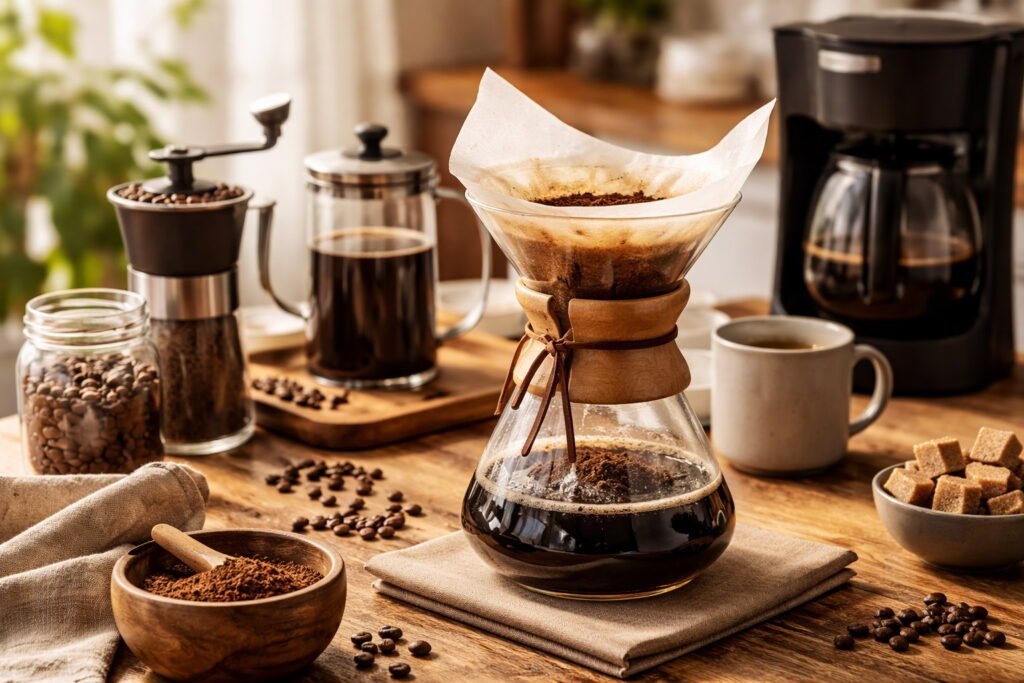
Easy Home Coffee Brewing Tips for Beginners: Start with the Right Mindset
Before you think about equipment or beans, get this straight: great coffee is about consistency, not complexity.
Many beginners assume they need expensive machines or advanced techniques. That’s not true. Some of the best coffee comes from simple methods done correctly.
Here’s the mindset that will set you up for success:
- Start simple – Master one brewing method before trying others
- Focus on repeatability – Use the same measurements and process each time
- Accept small adjustments – Tiny changes in grind size or ratio can transform your coffee
Common beginner mistakes often come from overthinking or rushing:
- Using random measurements (instead of a consistent ratio)
- Ignoring grind size differences
- Brewing with water that’s too hot or too cold
The 4 Basics of Coffee Brewing Every Beginner Should Know
Understanding a few core principles will instantly improve your coffee. These are the foundations behind every brewing method.
Coffee-to-Water Ratio (The Golden Rule)
This is the backbone of all brewing.
A good starting point:
- 1:15 to 1:18 ratio (1 gram of coffee to 15–18 ml of water)
Stronger coffee? Use less water.
Lighter coffee? Add more water.
Consistency matters more than precision at the beginning.
Grind Size Basics (Fine vs Coarse)
Grind size directly affects how your coffee tastes.
- Coarse grind → slower extraction → smoother, less bitter (great for French press)
- Medium grind → balanced extraction (perfect for drip coffee)
- Fine grind → faster extraction → stronger, more intense (used for espresso)
If your coffee tastes off, adjusting grind size is often the fastest fix.
Water Temperature (Small Detail, Big Impact)
Water that’s too hot can burn your coffee. Too cool, and it won’t extract properly.
Ideal range:
- 90–96°C (195–205°F)
If you don’t have a thermometer, just let boiling water sit for about 30 seconds before pouring.
Brew Time and Extraction
Brewing isn’t just pouring water—it’s about timing.
- Too short → under-extracted (sour, weak)
- Too long → over-extracted (bitter, harsh)
Each method has its own sweet spot, but the goal is always the same:
balanced flavor with no overpowering bitterness or sourness
Must-Have Tools for Easy Home Coffee Brewing (Beginner-Friendly Setup)
You don’t need a fancy setup to make great coffee. A simple, well-chosen toolkit is more than enough to get consistent, delicious results.
Essential Tools (Start Here)
- Brewing device (pour over, French press, or drip machine)
- Coffee scale (recommended for consistency)
- Kettle (preferably with a controlled pour spout)
- Fresh coffee beans or quality ground coffee
Nice-to-Have Upgrades
- Burr grinder – delivers consistent grind size
- Thermometer – helps dial in water temperature
- Timer – useful for tracking brew time
Manual vs Electric Tools (Quick Comparison)
| Feature | Manual Brewing | Electric Brewing |
| Control | High | Moderate |
| Convenience | Moderate | High |
| Learning curve | Slightly higher | Beginner-friendly |
| Flavor potential | Excellent | Good to very good |
Choosing the Right Coffee Beans for Better Results at Home
Even with perfect technique, your coffee is only as good as the beans you use. Choosing the right beans is one of the easiest ways to improve your results instantly.
Arabica vs Robusta (What’s the Difference?)
- Arabica → smoother, more complex flavors (fruity, sweet, balanced)
- Robusta → stronger, more bitter, higher caffeine
For beginners, Arabica is usually the better starting point due to its approachable flavor profile.
Whole Beans vs Pre-Ground Coffee
- Whole beans → fresher, better flavor, more control
- Pre-ground → convenient but loses aroma quickly
If possible, buy whole beans and grind them just before brewing. That alone can dramatically improve taste.
Freshness: The Hidden Game-Changer
Coffee is best consumed within 2–4 weeks after roasting.
Signs your coffee is fresh:
- Strong, pleasant aroma
- Rich, vibrant flavor
- Slight “bloom” (bubbling) when hot water hits the grounds
Avoid stale coffee, which often tastes flat, dull, or lifeless.
3 Simple Brewing Methods Perfect for Beginners
Choosing the right brewing method can make your learning curve much smoother. These three methods are beginner-friendly, reliable, and produce great results.
Pour Over (Clean and Bright Flavor)
If you enjoy a crisp, flavorful cup with clarity, pour over is a great choice.
Why it works for beginners:
- Simple setup
- Easy to control brewing variables
- Produces clean, balanced coffee
Basic idea:
You slowly pour hot water over coffee grounds, allowing it to drip through a filter.
Flavor profile:
Light, clean, slightly bright with noticeable flavor notes
French Press (Rich and Bold Coffee)
Prefer something fuller and heavier? The French press delivers a bold, satisfying cup.
Why it’s beginner-friendly:
- No paper filters needed
- Straightforward brewing process
- Forgiving if timing isn’t perfect
Basic idea:
Coffee grounds steep in hot water, then are separated using a metal plunger.
Flavor profile:
Rich, full-bodied, slightly textured
Drip Coffee Maker (Convenience First)
For those who want simplicity and speed, a drip coffee maker is hard to beat.
Why it’s popular:
- Minimal effort required
- Consistent results
- Ideal for daily routines or multiple cups
Basic idea:
The machine automates the brewing process by heating water and dripping it over coffee grounds.
Flavor profile:
Balanced, smooth, easy to drink
Step-by-Step: Your First Easy Home Coffee Brewing Routine
Getting your first great cup is all about following a simple, repeatable routine. Once this becomes a habit, your coffee quality will improve naturally.
Measure Your Coffee and Water
Start with a reliable ratio:
- 1:16 (1 gram coffee : 16 ml water) as a balanced baseline
Example:
- 15g coffee → 240 ml water
Using a scale helps, but a tablespoon can work if you stay consistent.
Grind (or Choose the Right Grind Size)
Match your grind to your method:
- Pour over → medium grind
- French press → coarse grind
- Drip machine → medium grind
If using pre-ground coffee, check the label for brewing compatibility.
Brew with Control
Basic workflow (works for most methods):
- Heat water to 90–96°C
- Add coffee grounds to your brewer
- Pour a small amount of water first (bloom phase, 20–30 seconds)
- Continue pouring slowly and evenly
- Let it brew fully
Tip: A slow, steady pour improves extraction and flavor balance.
Taste and Adjust
This is where you improve quickly.
- Too bitter? → grind coarser or reduce brew time
- Too sour? → grind finer or increase brew time
- Too weak? → add more coffee
Small changes = big differences.
Easy Home Coffee Brewing Tips to Instantly Improve Flavor
Once you’ve got the basics down, a few small tweaks can elevate your coffee from “okay” to impressively good.
Use Filtered Water
Coffee is mostly water, so quality matters.
- Tap water with strong minerals or chlorine can distort flavor
- Filtered water gives a cleaner, more balanced cup
Don’t Skip the Bloom
The bloom releases trapped gases from fresh coffee.
- Pour a small amount of water first
- Wait 20–30 seconds before continuing
Result: Better extraction and smoother taste
Adjust Grind Size First
When something tastes off, don’t change everything at once.
Start with grind size:
- Bitter → go coarser
- Sour → go finer
This is the fastest way to fix most issues.
Keep Your Equipment Clean
Old coffee residue builds up quickly and affects flavor.
- Rinse daily
- Deep clean weekly
Clean gear = clean taste
Common Coffee Brewing Problems (And How to Fix Them Fast)
Even with a good routine, things can go wrong. The key is knowing how to fix issues quickly.
Coffee Tastes Too Bitter
Likely causes:
- Over-extraction
- Water too hot
- Grind too fine
Fix it:
- Use a coarser grind
- Slightly reduce brew time
- Let water cool a bit before brewing
Coffee Tastes Sour or Weak
Likely causes:
- Under-extraction
- Grind too coarse
- Brew time too short
Fix it:
- Use a finer grind
- Increase brew time
- Use slightly hotter water
Inconsistent Results Every Day
Likely causes:
- Guessing measurements
- Changing too many variables
- Inconsistent pouring
Fix it:
- Stick to one ratio (like 1:16)
- Use a simple routine
- Control your pour and timing
Consistency beats complexity every time.
How to Customize Your Coffee to Match Your Taste
Once your brewing is consistent, you can start shaping your coffee to match your personal preferences.
Adjust Strength and Body
- Stronger coffee → increase coffee dose or reduce water
- Lighter coffee → add more water
- Fuller body → use methods like French press
- Cleaner taste → use paper-filter methods like pour over
Add Milk, Sugar, or Syrups (The Right Way)
Enhancements should complement—not overpower—your coffee.
- Warm milk blends better than cold
- Add sugar gradually and taste as you go
- Try simple syrups for subtle flavor twists
Tip: Always taste your coffee before adding anything.
Explore Flavor Notes
Coffee isn’t just “strong” or “weak.”
You may notice:
- Chocolatey (rich, smooth)
- Fruity (bright, slightly acidic)
- Nutty (warm, comforting)
These notes depend on the beans, roast level, and brewing method.
Easy Home Coffee Brewing Tips for Saving Time in the Morning
Mornings can be rushed, but good coffee doesn’t have to suffer.
Prep the Night Before
- Measure your coffee in advance
- Fill your kettle or water tank
- Set up your brewing device
Choose Simple Brewing Methods
- Drip coffee makers for convenience
- French press for quick setup
Both reduce decision-making when you’re half-awake.
Try Batch Brewing
Make more coffee at once and store it:
- Keep in a thermal carafe
- Avoid reheating multiple times
Result: Less effort, consistent quality
Beginner-Friendly Coffee Upgrades (When You’re Ready)
Once you’re comfortable, a few upgrades can significantly improve your coffee.
Burr Grinder vs Blade Grinder
- Burr grinder → consistent grind, better flavor
- Blade grinder → uneven grind, less control
A burr grinder is one of the best investments you can make.
Better Beans vs Better Equipment
If you’re choosing where to spend:
- Upgrade beans first → biggest flavor impact
- Then consider equipment improvements
When to Upgrade Your Brewing Method
Upgrade when:
- You want more control over flavor
- You enjoy experimenting
- Your current setup feels limiting
No rush—great coffee is possible with simple tools.
FAQ: Easy Home Coffee Brewing Tips for Beginners
What is the easiest way to brew coffee at home?
The easiest method is a drip coffee maker or French press. Both require minimal effort and produce consistent results.
How much coffee should I use per cup?
A good starting point is a 1:15 to 1:18 ratio. For one cup (240 ml), use about 15 grams of coffee.
Do I need to grind my own coffee beans?
Not required, but highly recommended. Freshly ground beans provide better aroma and flavor compared to pre-ground coffee.
Why does my coffee taste bitter or sour?
Bitter coffee usually means over-extraction (too fine or too long). Sour coffee means under-extraction (too coarse or too short). Adjust grind size first.
What grind size should I use for different brewing methods?
Use coarse for French press, medium for drip or pour over, and fine for espresso.
For deeper brewing standards and coffee science, you can explore the Specialty Coffee Association’s official guidelines:
https://sca.coffee/research
Great coffee at home isn’t about perfection—it’s about learning what works for you. Start simple, stay consistent, and adjust one variable at a time.
Your next cup can always be better than the last—so grab your beans, try one of these methods, and start brewing.

Meet Suzee Amelia, the creative voice behind this space—a blog dedicated to exploring coffee culture, lifestyle insights, and everyday inspiration. With a passion for discovering rich flavors and sharing practical tips, Sophie Langford brings a thoughtful and engaging approach to every post.
