

Great coffee doesn’t require expensive gear—and the best way to make coffee at home without machine is often simpler (and more satisfying) than you think. With just a few basic ingredients and the right technique, you can brew rich, flavorful coffee that rivals your favorite café.
This guide breaks everything down step by step—from the easiest no-equipment methods to practical tips that improve taste instantly. Whether you’re working with limited tools or just want a more hands-on coffee ritual, you’ll learn how to get consistently great results.
In This Article
Why More People Are Choosing to Make Coffee Without a Machine
Manual coffee brewing is no longer just for hardcore coffee enthusiasts. More people are ditching machines in favor of simpler methods—and for good reason.
Control is the biggest advantage. Without a machine, you decide how strong, smooth, or bold your coffee turns out. Small adjustments in grind size, water temperature, or steep time can completely change the flavor.
Cost also plays a major role. A quality coffee machine can be expensive, while manual brewing requires little to no investment. In many cases, you already have everything you need in your kitchen.
There’s also a growing appreciation for the process itself. Brewing coffee manually feels more intentional. It slows things down and turns a daily habit into something enjoyable.
This approach works especially well for:
- Beginners who want to learn coffee basics
- Travelers or minimalists with limited equipment
- Anyone looking to improve flavor without upgrading gear
What You Actually Need to Make Coffee at Home Without a Machine
Making coffee without a machine is refreshingly simple. At its core, you only need three things:
- Coffee (ground or whole beans)
- Hot water
- A container (mug, jar, or pot)
That’s it. Everything else is optional—but some additions can noticeably improve your results.
Optional Tools That Make a Difference
- A spoon for stirring and breaking crust
- A strainer, cloth, or even a clean sock for filtering
- A kettle for better pouring control
- A grinder (if using whole beans)
Whole Beans vs Pre-Ground Coffee
Freshly ground coffee delivers better aroma and flavor. Grinding just before brewing preserves volatile oils that quickly fade in pre-ground coffee.
That said, pre-ground coffee still works perfectly fine, especially if convenience matters more than precision. Just try to use it within 1–2 weeks of opening.
Water Quality and Temperature Matter More Than You Think
Water makes up over 95% of your coffee, so it directly affects taste.
- Use clean, filtered water whenever possible
- Ideal brewing temperature: 90–96°C (just below boiling)
Boiling water can burn the coffee and create bitterness. Let it sit for 30–45 seconds after boiling before pouring.
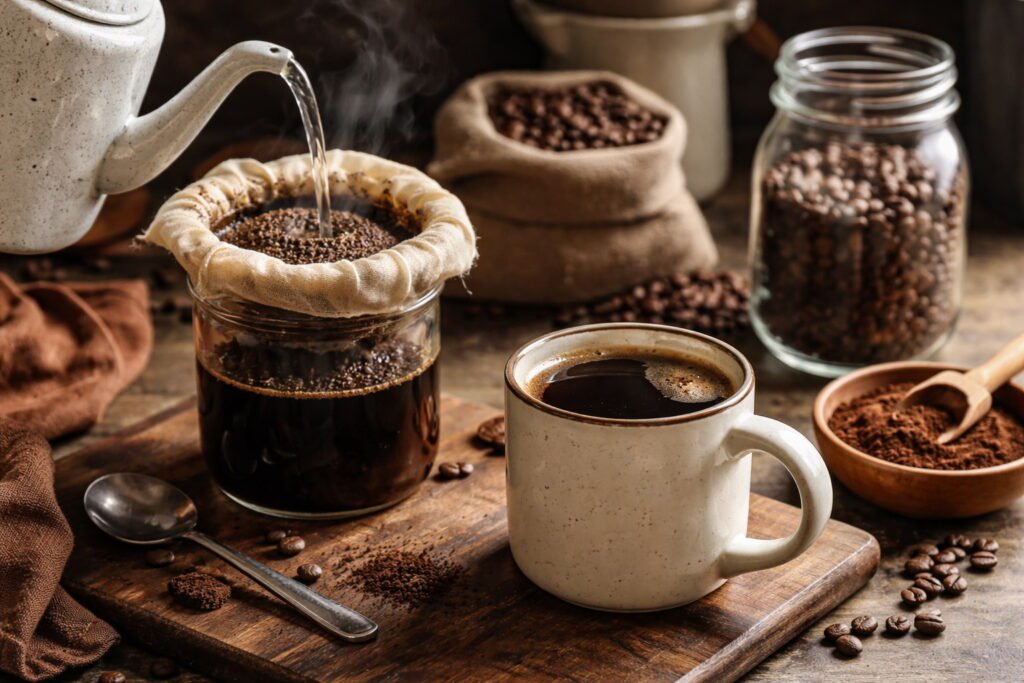
Best Way to Make Coffee at Home Without Machine (Quick Answer for Beginners)
If you want the simplest and most reliable method, this is it.
The Mug Steeping Method (No Equipment Needed)
This is the best way to make coffee at home without machine for beginners. It’s quick, forgiving, and requires zero special tools.
What You’ll Need
- 1–2 tablespoons ground coffee
- 1 cup hot water
- A mug
Step-by-Step
- Add coffee grounds directly into your mug
- Pour hot water slowly over the grounds
- Stir gently to ensure even saturation
- Let it steep for 4 minutes
- Allow grounds to settle at the bottom
- Sip slowly or pour gently into another cup
What to Expect
- Flavor: Full-bodied, slightly bold
- Texture: Some sediment at the bottom (normal)
- Strength: Easy to adjust by changing coffee amount
Pro tip: Stop drinking before the last sip to avoid the gritty layer at the bottom.
This method may not look fancy, but it delivers surprisingly good results—and it’s the perfect starting point before trying more refined techniques.
5 Proven Methods to Make Coffee Without a Machine (Compared)
Not all manual brewing methods are the same. Each one creates a different flavor, body, and overall experience. Here’s how the most effective no-machine methods compare—and when to use each.
The Classic Boiling Method (Cowboy Coffee)
This is one of the oldest ways to brew coffee—simple, bold, and surprisingly effective.
How it works: Coffee grounds are boiled directly in water, then allowed to settle before pouring.
Flavor profile:
- Strong, heavy body
- Slightly smoky or intense
- Can become bitter if overboiled
Best for: Outdoor brewing, strong coffee lovers, no-filter situations
Pros:
- No tools required
- Fast and reliable
Cons:
- Less control over extraction
- Sediment is unavoidable
The Pour-Over Hack Without Equipment
No dripper? No problem. You can recreate a pour-over using everyday items.
How it works: Hot water is slowly poured over coffee grounds held in a cloth or improvised filter.
Flavor profile:
- Clean and smooth
- Brighter acidity
- Less bitterness
Best for: Those who prefer a lighter, café-style cup
Pros:
- Cleaner taste than immersion methods
- More control over brewing
Cons:
- Requires a makeshift filter
- Slightly more effort
French Press Style Without a French Press
You can mimic immersion brewing without the actual device.
How it works: Coffee steeps in hot water, then grounds are separated manually by careful pouring or straining.
Flavor profile:
- Rich and full-bodied
- Balanced strength
- Slightly oily texture
Best for: People who enjoy deep, bold flavors
Pros:
- Excellent flavor extraction
- Easy to scale up
Cons:
- Needs careful pouring
- Some sediment may remain
The Mug Steeping Method (Tea-Style Coffee)
The simplest method—and the one most beginners start with.
How it works: Coffee grounds steep directly in a mug, similar to tea.
Flavor profile:
- Mild to medium body
- Smooth but less refined
- Slight sediment
Best for: Quick, no-fuss coffee
Pros:
- Fast and beginner-friendly
- No extra tools
Cons:
- Less clarity in flavor
- Grounds can interfere if not settled
Cold Brew Without Special Tools
Patience pays off with this method.
How it works: Coffee grounds steep in cold water for 12–24 hours, then filtered.
Flavor profile:
- Smooth and low acidity
- Naturally sweet
- Less bitterness
Best for: Iced coffee lovers, sensitive stomachs
Pros:
- Very forgiving method
- Can be made in batches
Cons:
- Takes time
- Requires filtering after steeping
Quick Comparison Table
| Method | Flavor | Effort Level | Brew Time | Best For |
| Cowboy Coffee | Strong, bold | Low | Fast | No tools, strong coffee |
| Pour-Over Hack | Clean, bright | Medium | Medium | Smooth, refined taste |
| French Press Style | Rich, full | Low | Medium | Balanced, bold flavor |
| Mug Steeping | Simple, mild | Very low | Fast | Beginners |
| Cold Brew | Smooth, sweet | Low | Slow | Iced coffee, low acidity |
Step-by-Step: Best Way to Make Coffee at Home Without Machine (Detailed Guide)
Once you understand the basics, consistency becomes everything. This method builds on the mug steeping technique but refines it for better flavor.
The Ideal Coffee-to-Water Ratio
A good starting point is:
- 1:15 ratio → Stronger coffee
- 1:17 ratio → Balanced, everyday cup
Example:
- 1 tablespoon coffee ≈ 7–8 grams
- 1 cup water ≈ 240 ml
Step-by-Step Brewing Process
1. Heat Your Water Properly
Bring water to a boil, then let it rest for about 30–45 seconds.
2. Add Coffee to Your Cup or Container
Use medium or coarse grounds for best results.
3. Pour a Small Amount First (Bloom Phase)
Pour just enough water to wet the grounds. Wait 30 seconds.
This releases trapped gases and improves flavor extraction.
4. Add Remaining Water Slowly
Pour in stages instead of all at once. This ensures even extraction.
5. Stir Gently
A quick stir helps all grounds interact with water.
6. Let It Steep for 4 Minutes
Adjust time depending on strength preference.
7. Settle and Pour Carefully
Let grounds sink, then drink slowly or transfer to another cup.
Common Beginner Mistakes to Avoid
- Using boiling water directly → causes bitterness
- Skipping the bloom → flat flavor
- Stirring too aggressively → over-extraction
- Letting it sit too long → harsh taste
Key takeaway: Small adjustments in time and ratio make a huge difference.
How Grind Size Affects Your Coffee (Even Without a Machine)
Grind size is one of the most overlooked factors in manual brewing—but it directly controls how your coffee tastes.
Understanding Grind Sizes
- Coarse grind → Chunky, like sea salt
- Medium grind → Similar to sand
- Fine grind → Powdery, like flour
Matching Grind Size to Your Method
- Cowboy coffee → Coarse
- Mug steeping → Medium
- Pour-over hack → Medium-fine
- Cold brew → Extra coarse
Using the wrong grind size can completely ruin your cup.
How to Fix Bad-Tasting Coffee
If your coffee tastes off, grind size is usually the culprit.
- Too bitter?
→ Grind is too fine or steep time too long - Too weak or sour?
→ Grind is too coarse or brew time too short
Pro Insight: Extraction Balance
Coffee brewing is all about extracting the right compounds.
- Under-extraction → sour, thin
- Over-extraction → bitter, harsh
- Balanced extraction → smooth, flavorful
Grind size + time = control. Once you understand this, your coffee improves instantly—even without a machine.
How to Make Your Coffee Taste Better Without Equipment
Great coffee isn’t about gear—it’s about technique. A few small adjustments can dramatically improve flavor, even if you’re brewing in a simple mug.
Master the “Bloom” for Better Flavor
Fresh coffee releases gas (CO₂) when it meets hot water. Skipping this step traps flavor.
How to do it:
- Pour a small amount of hot water over the grounds
- Wait 30–45 seconds before continuing
Result: smoother, more aromatic coffee with better extraction.
Use the Right Water Temperature
Water that’s too hot burns coffee. Too cool, and it won’t extract properly.
- Ideal range: 90–96°C
- No thermometer? Let boiling water sit briefly before pouring
Key takeaway: Temperature control = cleaner, less bitter coffee.
Simple Add-Ins That Actually Work
Forget sugary overloads. These subtle tweaks enhance flavor naturally:
- A pinch of salt → reduces bitterness
- Cinnamon → adds warmth and complexity
- Sugar timing matters → add early for better integration
Small changes, big difference.
Adjust Strength Without Ruining Balance
Stronger doesn’t always mean better. Instead of dumping more coffee:
- Increase brew time slightly
- Use a finer grind (if possible)
For lighter coffee:
- Add hot water after brewing (bypass method)
This keeps flavor balanced instead of overpowering.
Choosing the Right Coffee Beans for No-Machine Brewing
Your beans matter just as much as your method. The right choice can make even the simplest brewing technique taste exceptional.
Best Roast Levels for Manual Brewing
- Light roast
- Bright, acidic, fruity
- Works well with pour-over style
- Medium roast
- Balanced, smooth, slightly sweet
- Best all-around choice
- Dark roast
- Bold, smoky, low acidity
- Ideal for strong, immersion methods
Recommendation: Start with medium roast for consistency and balance.
Pre-Ground vs Freshly Ground Coffee
Fresh grinding unlocks aroma and complexity.
- Freshly ground: richer flavor, more control
- Pre-ground: convenient, still decent if fresh
If using pre-ground, store it in an airtight container and use quickly.
Budget vs Premium Beans
Expensive doesn’t always mean better—especially without precise equipment.
- Budget beans → good for daily brewing
- Premium beans → shine with proper technique
Focus on freshness over price. That alone can transform your cup.
Flavor Profiles That Work Best Without a Machine
Certain flavor notes are more forgiving in manual brewing:
- Chocolatey and nutty → smooth and balanced
- Caramel and brown sugar → naturally sweet
- Low-acid profiles → easier to control
Highly acidic or floral coffees can be harder to extract properly without tools.
Common Mistakes When Making Coffee Without a Machine
Even simple methods can go wrong. Avoid these common mistakes to instantly improve your results.
Using Boiling Water Incorrectly
Pouring water straight off the boil can scorch your coffee.
Fix: Let it cool slightly before brewing.
Wrong Coffee-to-Water Ratio
Eyeballing measurements often leads to inconsistent taste.
Fix: Stick to a basic ratio (like 1:15) and adjust gradually.
Over-Steeping or Under-Extracting
Timing affects everything.
- Too long → bitter and heavy
- Too short → weak and sour
Fix: Aim for 4 minutes, then tweak based on taste.
Ignoring Sediment and Filtering
Unfiltered coffee can taste muddy if not handled properly.
Fix:
- Let grounds settle before drinking
- Pour slowly to leave sediment behind
Not Paying Attention to Grind Size
Grind size controls extraction speed.
Fix: Match grind size to your method (coarse for immersion, finer for quick brewing).
Is Making Coffee Without a Machine Worth It?
Absolutely—if you value simplicity, control, and flavor.
Manual brewing strips coffee down to its essentials. No buttons, no presets—just you, your ingredients, and your technique. That level of control lets you fine-tune strength, body, and taste in a way most basic machines can’t.
Taste vs Coffee Machines
- Manual methods → more control, often richer flavor
- Basic drip machines → consistent, but sometimes flat
High-end machines can compete, but at a much higher cost.
Cost vs Convenience
- No-machine brewing → low cost, minimal setup
- Machines → higher upfront cost, easier routine
If convenience is your top priority, machines win.
If flavor and flexibility matter more, manual brewing is hard to beat.
Who Should Choose Manual Brewing?
Best for:
- Beginners learning coffee fundamentals
- Budget-conscious coffee drinkers
- Travelers or minimalists
Less ideal for:
- Those who want one-button convenience
- Busy mornings with no time to experiment
Verdict: For most people, learning the best way to make coffee at home without machine is a skill worth having—even if you eventually use a machine later.
Quick Brewing Ratios Cheat Sheet (Save This Section)
Getting the ratio right is the fastest way to improve your coffee.
Standard Ratios
| Strength Level | Coffee-to-Water Ratio | Taste Result |
| Strong | 1:15 | Bold, intense |
| Balanced | 1:16–1:17 | Smooth, well-rounded |
| Light | 1:18 | Mild, ավելի subtle |
Easy Measurement Hacks (No Scale Needed)
- 1 tablespoon coffee ≈ 7–8 grams
- 1 cup water ≈ 240 ml
Quick formula:
- 1 cup water → 1 to 1.5 tablespoons coffee
Adjusting Without Guesswork
- Too strong? → Add hot water after brewing
- Too weak? → Increase coffee or steep slightly longer
Consistency beats perfection. Stick to one ratio, then tweak gradually.
FAQ: Making Coffee at Home Without a Machine
Can you make good coffee without a coffee maker?
Yes. With the right ratio, temperature, and timing, manual methods can produce coffee that’s just as flavorful—sometimes even better.
What is the easiest way to make coffee at home without a machine?
The mug steeping method is the simplest. Just add coffee grounds, pour hot water, wait 4 minutes, and let the grounds settle.
How do you filter coffee without a filter?
You can use a clean cloth, paper towel, or simply let the grounds settle and pour carefully. Each method reduces sediment differently.
Why does my coffee taste bitter or too strong?
Bitterness usually comes from water that’s too hot, a grind that’s too fine, or over-steeping. Adjust one variable at a time to fix it.
What grind size is best for no-machine coffee brewing?
Medium to coarse works best for most methods. Finer grinds can lead to over-extraction and bitterness.
How long should coffee steep without a machine?
Around 4 minutes is a great starting point. Adjust slightly depending on your taste preference.
Learn More About Coffee Standards and Brewing Science
If you want to go deeper into coffee quality and brewing guidelines, check out the Specialty Coffee Association (SCA) standards:
https://sca.coffee/research
This resource explains extraction, ratios, and best practices used by professionals worldwide.
You don’t need expensive gear to make exceptional coffee. Start with the simple methods in this guide, experiment with ratios and grind size, and refine your process over time.
Now it’s your turn—brew a cup using one of these methods today and taste the difference for yourself.

Meet Suzee Amelia, the creative voice behind this space—a blog dedicated to exploring coffee culture, lifestyle insights, and everyday inspiration. With a passion for discovering rich flavors and sharing practical tips, Sophie Langford brings a thoughtful and engaging approach to every post.
