
Choosing between pour over vs drip coffee at home can feel surprisingly complicated. Both methods brew great coffee, but they deliver very different experiences in terms of flavor, control, and convenience.
This guide breaks it all down in a practical, no-nonsense way. You’ll learn how each method works, how they affect taste, and which one actually fits your daily routine. Expect clear comparisons, real coffee brewing insights, and tips you can apply immediately—whether you’re just starting or refining your home setup.
In This Article
Pour Over vs Drip Coffee at Home: What Actually Sets Them Apart?
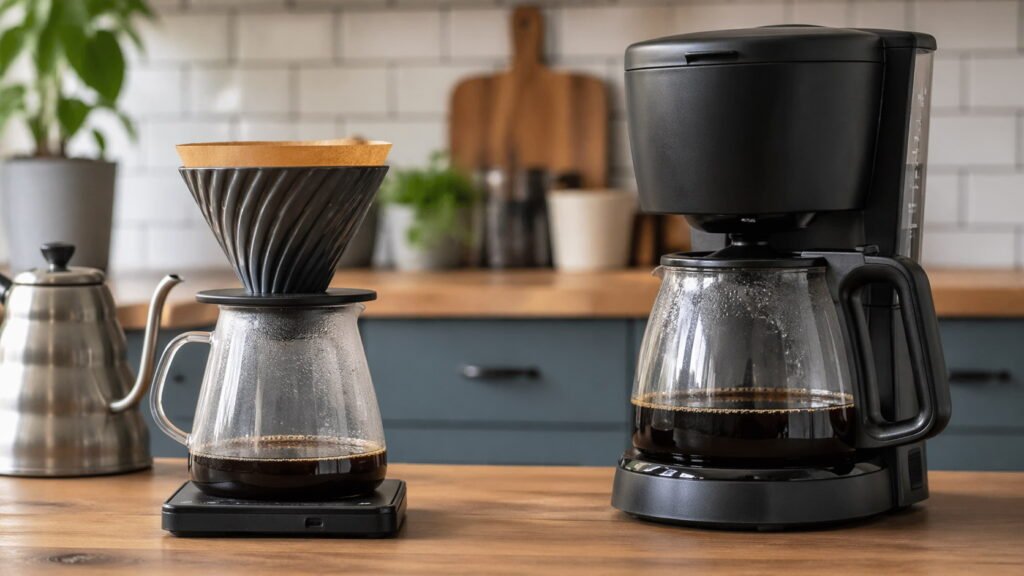
At a glance, both pour over and drip coffee seem similar—they use hot water passing through coffee grounds and a filter. The difference lies in who’s in control.
Pour over coffee is fully manual. You control everything:
- Water temperature
- Pour speed
- Brewing time
- Saturation of the coffee bed
Drip coffee, on the other hand, is automated. A machine handles the process:
- Heats water
- Distributes it over grounds
- Controls flow and timing
That core difference shapes everything else—flavor, consistency, effort, and even how much you enjoy the brewing process.
The Core Brewing Difference: Manual Precision vs Automated Convenience
How Pour Over Brewing Works
Pour over is all about intentional brewing. Hot water is poured in stages over freshly ground coffee, usually in a circular motion.
A typical workflow looks like this:
- Heat water to 90–96°C (195–205°F)
- Add coffee (medium grind, like sea salt)
- Pour a small amount to “bloom” (release gases)
- Continue pouring slowly in controlled pulses
The result depends heavily on your technique. Even small changes—like pouring too fast—can affect extraction.
What you gain:
- Full control over extraction
- Ability to fine-tune flavor
- A more hands-on, ritual-like experience
How Drip Coffee Machines Work
Drip machines simplify everything. You add water and coffee, press a button, and the machine takes over.
Most machines:
- Heat water to a preset temperature
- Spray or drip water over the grounds
- Brew directly into a carafe
Higher-end models improve water distribution and temperature stability, but the core idea remains the same—automation over control.
What you gain:
- Minimal effort
- Consistent results
- Ability to brew multiple cups at once
Why This Difference Matters in Your Cup
The brewing process directly affects extraction, which determines how your coffee tastes.
- Uneven pouring in pour over can lead to channeling (water bypassing grounds)
- Poor-quality drip machines may brew at too low a temperature, causing weak coffee
Flavor Showdown: Does Pour Over Really Taste Better Than Drip Coffee?
This is where opinions get strong—but the answer depends on what you value in a cup.
Clarity vs Body: A Side-by-Side Look
| Aspect | Pour Over | Drip Coffee |
| Flavor clarity | Bright, clean, well-defined | Balanced but less distinct |
| Body | Light to medium | Medium to full |
| Complexity | High (especially with good beans) | Moderate |
Pour over highlights subtle notes—floral, citrus, berry—especially with light roast, single-origin beans.
Drip coffee tends to produce a more rounded, heavier cup that works well for daily drinking.
The Role of Filters (It Matters More Than You Think)
Filter type plays a huge role in flavor:
- Paper filters (common in pour over):
Remove oils → cleaner, brighter taste - Metal filters (some drip machines):
Allow oils through → fuller body, heavier mouthfeel
This is one reason pour over often tastes more “refined,” while drip feels more “classic.”
Bean Quality Changes Everything
No brewing method can fix bad beans.
Pour over tends to amplify both good and bad qualities, making it ideal for:
- Freshly roasted beans
- Single-origin coffees
Drip machines are more forgiving and can make average beans taste decent.
Ease of Use: Which Brewing Method Fits Your Morning Routine?
Choosing between pour over vs drip coffee at home often comes down to how much effort you want to invest—especially first thing in the morning.
Pour Over: Simple Tools, Skill-Based Results
Pour over looks minimal, but it requires attention and practice.
What makes it challenging:
- You need to control pouring technique
- Timing and flow rate matter
- Small mistakes affect flavor noticeably
Beginners often run into:
- Pouring too quickly (under-extraction → sour taste)
- Uneven saturation (weak, inconsistent cup)
- Skipping the bloom phase
That said, once you learn the basics, it becomes a satisfying ritual rather than a chore.
Best for:
People who enjoy the process and don’t mind spending a few focused minutes brewing.
Drip Coffee: Effortless and Predictable
Drip machines are built for convenience. Add water, add coffee, press a button—that’s it.
Why it’s easier:
- No technique required
- Consistent brewing cycle
- Minimal supervision
Even if your grind or ratio isn’t perfect, you’ll still get a drinkable cup.
The downside? Less room to improve or experiment.
Best for:
Busy mornings, households, or anyone who wants coffee without thinking about it.
Quick Comparison
- Pour over: Hands-on, rewarding, skill-based
- Drip coffee: Hands-off, reliable, beginner-friendly
Time Breakdown: From Grind to Cup
Time isn’t just about total minutes—it’s about how involved you need to be during those minutes.
Pour Over: Short but Focused
Typical brew timeline:
- Setup (grind + prep): 1–2 minutes
- Brewing: 2–3 minutes
- Total: ~3–5 minutes
You’re actively involved the entire time. No stepping away.
Drip Coffee: Longer, but Hands-Free
Typical brew timeline:
- Setup: 1–2 minutes
- Brewing: 5–10 minutes (depending on machine size)
- Total: ~6–12 minutes
The key difference? You can walk away and do something else.
Side-by-Side Time Comparison
| Factor | Pour Over | Drip Coffee |
| Total time | Faster overall | Slightly longer |
| Hands-on time | High | Very low |
| Multitasking | Not ideal | Easy |
What Matters More: Speed or Attention?
Pour over is technically faster—but demands your full focus.
Drip coffee takes longer—but gives you your time back.
Equipment Comparison: Pour Over Gear vs Drip Coffee Makers
Your brewing setup influences not just cost, but also flexibility and long-term satisfaction.
Essential Pour Over Equipment
You don’t need much—but each tool matters.
Core gear:
- Dripper (like V60, Kalita-style)
- Paper filters
- Gooseneck kettle (for controlled pouring)
- Burr grinder (for consistent grind size)
- Scale (for accurate ratios)
Optional upgrades:
- Thermometer or temperature-controlled kettle
- Timer (or phone)
Why it matters:
Each piece contributes to precision, which directly affects flavor.
Drip Coffee Machine Setup
Drip machines combine everything into one unit.
What you need:
- Coffee maker
- Paper or reusable filter
- Grinder (recommended for freshness)
Higher-end machines may include:
- Programmable timers
- Built-in grinders
- Temperature control features
Cost and Flexibility Comparison
| Category | Pour Over Setup | Drip Coffee Machine |
| Entry cost | Low to moderate | Moderate to high |
| Upgrade flexibility | High (modular gear) | Limited (replace machine) |
| Portability | Very portable | Not portable |
| Lifespan | Long (no electronics) | Depends on machine quality |
Which Setup Makes More Sense?
- Choose pour over if you want a flexible, long-term setup you can refine over time
- Choose drip coffee if you prefer an all-in-one solution with minimal decision-making
Cost Per Cup: Which One Is More Budget-Friendly at Home?
Brewing at home is already cheaper than café coffee, but pour over vs drip coffee at home still comes with different long-term costs.
Upfront Investment
- Pour over setup:
You can start simple and upgrade over time. A basic dripper and filters are inexpensive, while a good grinder and kettle add to the total. - Drip coffee machine:
Entry-level machines are affordable, but high-quality models with proper temperature control can get pricey.
Reality check:
A well-built drip machine often costs more upfront than a basic pour over setup.
Ongoing Costs That Add Up
Both methods share some recurring expenses, but the details differ.
Pour over ongoing costs:
- Paper filters
- Coffee beans
- Occasional kettle or grinder upgrades
Drip coffee ongoing costs:
- Filters (paper or reusable)
- Electricity usage
- Descaling solutions and maintenance
Hidden Costs Most People Miss
- Cheap drip machines may need replacing every few years
- Poor grinders waste coffee through inconsistent extraction
- Using more coffee to “fix” weak drip brews increases cost per cup
So, Which Is Cheaper?
- Pour over: Lower long-term cost, especially with durable gear
- Drip coffee: Slightly higher over time due to maintenance and machine lifespan
Pour Over vs Drip Coffee at Home: Control Over Brewing Variables
Control is where pour over truly separates itself.
What You Can Control with Pour Over
Every variable is in your hands:
- Water temperature (ideal: 90–96°C)
- Pour speed and pattern
- Brew time
- Coffee-to-water ratio (commonly 1:15 to 1:17)
- Grind size adjustments
This level of control allows you to dial in flavor precisely.
What Drip Coffee Controls for You
Drip machines handle most variables automatically:
- Pre-set water temperature
- Fixed flow rate
- Standardized brew time
Higher-end machines improve accuracy, but you’re still limited compared to manual brewing.
Why Control Actually Matters
Control isn’t just for coffee geeks—it directly impacts taste.
- Slightly hotter water → better extraction of sweetness
- Slower pour → more body and depth
- Adjusted grind size → balanced acidity and bitterness
With drip machines, you’re mostly locked into one brewing profile.
Who Benefits Most from Control?
- Coffee enthusiasts exploring different beans
- Anyone chasing specific flavor notes (fruit, chocolate, floral)
- People who enjoy experimenting
Consistency vs Customization: What Do You Value More?
This is the real decision point for most home brewers.
Drip Coffee: Built for Consistency
Once you find a setup that works, drip machines deliver the same result every time.
Advantages:
- Repeatable flavor
- No skill required after setup
- Great for multiple cups or households
Consistency is the reason many people stick with drip coffee long-term.
Pour Over: Endless Customization (With Some Variability)
Pour over gives you freedom—but also introduces variability.
What changes from brew to brew:
- Pouring technique
- Timing precision
- Grind consistency
Even small differences can shift flavor.
Consistency vs Creativity in Real Life
- Want the same cup every morning? → Drip coffee
- Want to explore and refine flavor? → Pour over
Neither is better—it depends on your priorities.
A Balanced Perspective
Many experienced home brewers use both:
- Drip coffee for convenience and volume
- Pour over for slow mornings and better beans
Best Coffee Beans for Pour Over and Drip Brewing
The brewing method matters—but your beans make the biggest difference in the final cup. Choosing the right roast and origin can elevate both pour over and drip coffee at home.
Roast Level: What Works Best for Each Method
- Pour over:
Shines with light to medium roasts- Highlights acidity, floral, and fruity notes
- Ideal for single-origin beans
- Drip coffee:
Works best with medium to dark roasts- Produces a balanced, fuller-bodied cup
- More forgiving with less precise extraction
Single-Origin vs Blends
- Pour over:
Best with single-origin beans (Ethiopia, Kenya, Colombia)
→ Brings out unique tasting notes and complexity - Drip coffee:
Blends perform well
→ Designed for consistency and balance
Grind Size Matters More Than You Think
- Pour over grind: Medium to medium-coarse (like sea salt)
- Drip coffee grind: Medium (like regular sand)
Grinding too fine leads to bitterness. Too coarse results in weak, sour coffee.
Quick Bean Pairing Guide
| Brewing Method | Best Roast Level | Bean Type | Flavor Outcome |
| Pour Over | Light–Medium | Single-Origin | Bright, complex, clean |
| Drip Coffee | Medium–Dark | Blends or Origin | Smooth, balanced, rich |
Common Mistakes That Ruin Both Brewing Methods
Even great equipment can’t fix poor technique. Avoid these common pitfalls to improve your coffee immediately.
Using the Wrong Coffee-to-Water Ratio
A weak or overly strong cup often comes down to ratio.
- Ideal starting point: 1:15 to 1:17
(e.g., 20g coffee → 300–340ml water)
Incorrect Water Temperature
- Too hot → bitter, over-extracted coffee
- Too cool → sour, under-extracted coffee
Sweet spot: 90–96°C (195–205°F)
Grinding Inconsistently
Blade grinders create uneven particles, leading to mixed extraction.
Fix: Use a burr grinder for consistent results.
Ignoring Freshness
Coffee loses flavor quickly after grinding.
- Use beans within 2–4 weeks of roast date
- Grind just before brewing
Skipping Basic Technique (Especially for Pour Over)
- No bloom phase → flat flavor
- Uneven pouring → weak extraction
Pour Over vs Drip Coffee at Home: Which One Is Better for Beginners?
If you’re just starting, the “best” method depends on how you want to learn.
Why Beginners Often Start with Drip Coffee
- Simple, no technique required
- Consistent results right away
- Easier to brew multiple cups
It removes complexity and helps you understand basic coffee preferences first.
When Pour Over Makes Sense for Beginners
Pour over is beginner-friendly if you’re willing to learn.
- Great for understanding extraction
- Helps you taste differences between beans
- Builds strong brewing habits early
A Smart Path for New Home Brewers
- Start with drip for convenience
- Transition to pour over when curious about flavor
Who Should Choose Pour Over (and Who Shouldn’t)
Pour Over Is Perfect For:
- Flavor-focused coffee drinkers
- People who enjoy slow, mindful routines
- Anyone exploring specialty coffee
Pour Over Might Not Be Ideal If:
- You’re always in a rush
- You need multiple cups quickly
- You prefer zero-effort brewing
Reality check:
Pour over rewards patience—but it’s not built for speed or volume.
Who Should Choose Drip Coffee (and Who Shouldn’t)
Drip Coffee Is Ideal For:
- Busy mornings and tight schedules
- Households or shared coffee drinkers
- People who prioritize consistency
Drip Coffee Falls Short If:
- You want full control over flavor
- You enjoy experimenting with brewing
- You’re chasing high-end specialty results
Reality check:
Drip coffee is practical—but less exciting for coffee enthusiasts.
FAQ: Pour Over vs Drip Coffee at Home
Is pour over coffee stronger than drip coffee?
Not necessarily. Strength depends on the coffee-to-water ratio. Pour over often tastes stronger due to clarity, not higher caffeine.
Does drip coffee use more coffee grounds?
It can, especially in large batches. Poor extraction may lead people to add more coffee to compensate.
What grind size is best for pour over vs drip coffee?
Pour over works best with medium to medium-coarse grind. Drip coffee typically uses a medium grind for balanced extraction.
Can you get café-quality coffee with a drip machine?
Yes—if you use fresh beans and a high-quality machine that brews at proper temperature and saturation.
How long should pour over brewing take?
Around 2.5 to 3.5 minutes. Faster brews may taste sour; slower brews can become bitter.
How should I store coffee beans for better flavor?
Keep them in an airtight container, away from light, heat, and moisture. Avoid storing in the fridge.
For deeper brewing standards and best practices, refer to the Specialty Coffee Association guidelines:
https://sca.coffee/research/coffee-standards
Final Thoughts: Which Brewing Method Should You Choose?
Choosing between pour over vs drip coffee at home comes down to one simple question: Do you value control or convenience more?
- Go with pour over if you want to explore flavor, refine your technique, and enjoy the brewing process
- Choose drip coffee if you want reliable, no-fuss coffee every single day
Many home brewers end up using both—and that’s often the best approach.
Try this: Brew the same beans using both methods this week. Taste the difference. Adjust your grind, ratio, and technique. That hands-on experience will teach you more than any guide.
Your perfect cup isn’t about the method—it’s about how you use it.

Meet Suzee Amelia, the creative voice behind this space—a blog dedicated to exploring coffee culture, lifestyle insights, and everyday inspiration. With a passion for discovering rich flavors and sharing practical tips, Sophie Langford brings a thoughtful and engaging approach to every post.
