
Brewing great coffee at home often comes down to one key choice: french press vs pour over at home. Both methods are simple, affordable, and capable of producing café-quality coffee—but they deliver very different experiences in the cup.
This guide breaks down everything you need to know, from flavor differences and brewing techniques to equipment costs and ease of use. Whether you’re chasing bold, full-bodied coffee or a clean, nuanced cup, you’ll learn exactly which method fits your routine—and how to get the best results from each.
In This Article
Why This Comparison Matters for Home Coffee Lovers
Manual brewing has exploded in popularity, especially for people who want more control over taste without investing in expensive machines. French press and pour over are often the first two methods people try—but choosing between them isn’t just about preference.
It affects:
- Flavor profile (rich and heavy vs clean and bright)
- Brewing consistency (forgiving vs precision-based)
- Daily convenience (quick routine vs hands-on ritual)
- Cost over time (one-time gear vs recurring filters)
A mismatch here can lead to frustration—like weak coffee from a pour over done incorrectly, or muddy flavors from a poorly executed French press.
The goal isn’t to find the “better” method—it’s to find the right one for your taste and lifestyle.
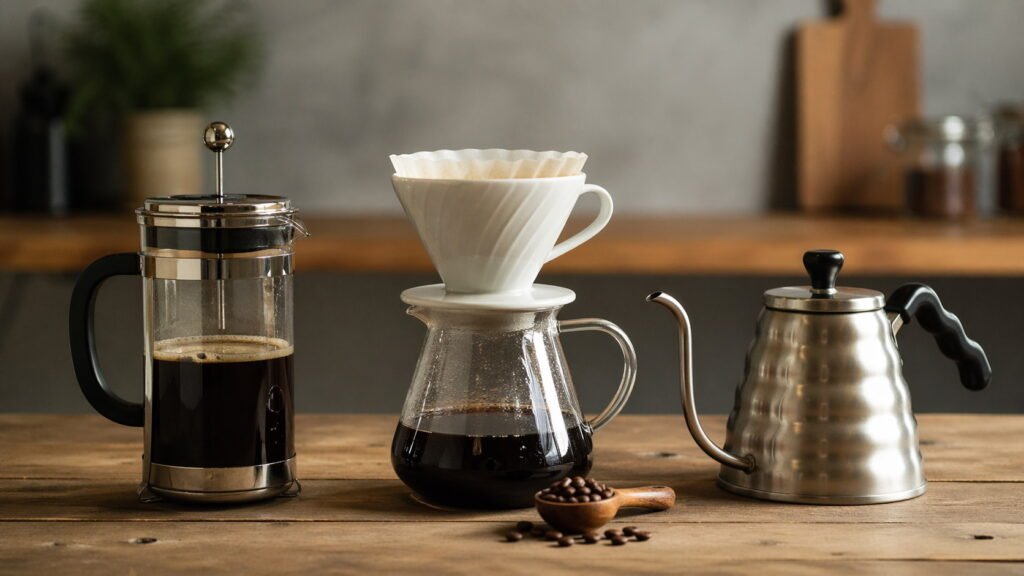
French Press vs Pour Over at Home: Quick Comparison Snapshot
If you want a fast answer before diving deeper, this side-by-side breakdown highlights the key differences:
| Feature | French Press | Pour Over |
| Brewing Style | Immersion | Percolation |
| Grind Size | Coarse | Medium to medium-fine |
| Brew Time | 4–5 minutes | 2–4 minutes |
| Flavor | Bold, rich, full-bodied | Clean, bright, nuanced |
| Ease of Use | Very beginner-friendly | Requires technique |
| Equipment Cost | Low (one-time purchase) | Moderate (filters + tools) |
| Cleanup | Slightly messy (coffee grounds) | Easier (discard filter) |
Understanding the French Press Method
How Immersion Brewing Works
French press uses a method called immersion brewing, where coffee grounds are fully submerged in water for several minutes. This allows for maximum extraction of oils and soluble compounds, resulting in a richer cup.
Instead of water passing through the grounds, everything steeps together—similar to making tea.
What You Need to Get Started
A basic French press setup is refreshingly simple:
- French press brewer (glass or stainless steel)
- Coarse-ground coffee (important for avoiding over-extraction)
- Hot water (around 90–96°C / 195–205°F)
- Spoon or stirrer
No paper filters, no specialized kettle—just a straightforward setup.
Why It’s So Beginner-Friendly
French press is often recommended for beginners because it’s forgiving and consistent. Minor mistakes in pouring or timing won’t completely ruin your cup.
Key advantages:
- Minimal technique required
- Stable brew time (around 4 minutes)
- Harder to mess up compared to pour over
That said, it’s not completely foolproof. Using the wrong grind size or leaving the coffee too long can lead to bitterness or heavy sediment.
Best for: Coffee drinkers who enjoy bold flavors and want a low-effort brewing method at home.
Understanding the Pour Over Method
How Percolation Brewing Works
Pour over relies on percolation brewing, where hot water passes through coffee grounds and a filter, extracting flavors as it flows into your cup.
Unlike French press, this method separates water from grounds almost immediately. The result is a cup that highlights clarity, brightness, and subtle flavor notes—especially in high-quality beans.
Essential Gear for Pour Over Brewing
Pour over requires a bit more setup, but each tool plays a role in consistency:
- Dripper (like a cone or flat-bottom brewer)
- Paper or reusable filter
- Medium to medium-fine ground coffee
- Gooseneck kettle (for controlled pouring)
- Scale (optional but highly recommended)
A gooseneck kettle isn’t mandatory, but it dramatically improves control, especially during the bloom and main pour.
Why Precision Matters More Here
Pour over gives you full control over variables like:
- Water flow rate
- Pour pattern
- Brew time
- Extraction balance
That control is powerful—but it also means small mistakes can noticeably affect taste.
Common beginner challenges include uneven pouring, channeling (water flowing too quickly through certain spots), and inconsistent extraction.
Best for: Coffee drinkers who enjoy experimenting and want to unlock the full flavor complexity of their beans.
Flavor Showdown: French Press vs Pour Over Taste Differences
Body vs Clarity—The Core Difference
The biggest contrast between french press vs pour over at home comes down to how the coffee feels and tastes.
- French press produces a full-bodied, heavier cup with more oils and fine particles
- Pour over creates a clean, crisp cup with brighter, more defined notes
Paper filters used in pour over trap oils and sediment, while French press lets them pass through—completely changing the texture.
How Each Method Highlights Coffee Beans
Different brewing styles bring out different characteristics:
- French press enhances:
- Chocolatey, nutty, and deep flavors
- Lower acidity
- Rich mouthfeel
- Pour over enhances:
- Floral, fruity, and acidic notes
- Layered complexity
- Clean finish
Example: A light roast Ethiopian coffee will taste vibrant and tea-like in pour over, but more muted and heavier in a French press.
Oils, Sediment, and Mouthfeel Explained
French press coffee contains natural coffee oils and micro-fines, which contribute to:
- Thicker texture
- Longer-lasting aftertaste
- Slight sediment at the bottom of the cup
Pour over, by contrast, delivers:
- Crisp mouthfeel
- No sediment
- A more “transparent” flavor profile
Key takeaway:
- Prefer bold, rich, and intense → French press
- Prefer clean, bright, and nuanced → Pour over
Brewing Control & Skill Level: Which One Is Easier?
Learning Curve Comparison
French press is straightforward. Once you understand the basics—coarse grind, hot water, 4-minute steep—you’re set.
Pour over has a steeper learning curve because it involves active brewing:
- Timing your pours
- Controlling water flow
- Maintaining even extraction
Even small inconsistencies can change the final taste.
Margin for Error
- French press: Wide margin for error
- Slightly off timing? Still drinkable
- Uneven pour? Doesn’t matter much
- Pour over: Narrow margin
- Pour too fast → under-extracted (sour, weak)
- Pour too slow → over-extracted (bitter, harsh)
Consistency in Daily Brewing
Consistency depends on how repeatable your method is:
- French press delivers reliable results with minimal effort
- Pour over can be extremely consistent—but only if you control variables carefully (often with a scale and timer)
Bottom line:
- Choose French press if you want easy, repeatable coffee with little effort
- Choose pour over if you enjoy precision and refining your brewing technique over time
Step-by-Step: Brewing Coffee with a French Press at Home
A great French press brew is all about balance and timing. Get those right, and you’ll consistently produce a rich, satisfying cup.
Ideal Brew Ratio and Setup
Start with a simple, reliable ratio:
- Coffee-to-water ratio: 1:15 (e.g., 20g coffee to 300ml water)
- Grind size: Coarse (similar to sea salt)
- Water temperature: 90–96°C (just off boil)
Brewing Method That Works Every Time
Follow this process for a clean, full-bodied cup:
- Add ground coffee to the French press
- Pour in a small amount of hot water (just enough to saturate grounds)
- Let it bloom for 30–45 seconds
- Pour the remaining water evenly
- Gently stir once to ensure all grounds are wet
- Place the lid on (don’t press yet)
- Let it steep for 4 minutes
- Slowly press the plunger down
- Pour immediately to avoid over-extraction
Common Mistakes to Avoid
Even a simple method can go wrong if you overlook the basics:
- Using fine grind → leads to bitterness and muddy texture
- Letting it sit too long → over-extracted, harsh flavors
- Pressing too fast → stirs up sediment and creates uneven extraction
Pro tip: After pressing, transfer coffee to another container if you’re not drinking it right away. This prevents it from becoming overly bitter.
Step-by-Step: Brewing Pour Over Coffee Like a Pro
Pour over rewards precision. Once you dial in your technique, it becomes one of the most satisfying ways to brew coffee at home.
Core Brew Variables to Get Right
- Coffee-to-water ratio: 1:16–1:17
- Grind size: Medium to medium-fine (like sand)
- Water temperature: 92–96°C
- Total brew time: 2.5–3 minutes
The Pour Over Process Explained
Consistency comes from controlling your pour and timing:
- Place filter in dripper and rinse with hot water (removes paper taste)
- Add ground coffee and level the bed
- Start timer and pour just enough water to saturate grounds
- Let it bloom for 30–45 seconds (gas release phase)
- Begin slow, circular pours from center outward
- Maintain a steady flow—avoid pouring too aggressively
- Keep water level consistent until you reach your target weight
- Allow water to fully drain
Tips for Even Extraction
Small adjustments make a big difference:
- Use a gooseneck kettle for controlled pouring
- Pour in pulses rather than all at once
- Keep the coffee bed flat to avoid channeling
- Watch brew time closely—too fast or too slow affects taste
Pro tip: If your coffee tastes sour, grind finer or pour slower. If it tastes bitter, grind coarser or speed up your pour.
Equipment Cost & Setup: Budget vs Precision Brewing
Choosing between french press vs pour over at home often comes down to how much you want to invest upfront—and over time.
Initial Setup Cost Comparison
| Equipment | French Press | Pour Over |
| Brewer | Low-cost, all-in-one | Dripper required |
| Filters | None | Ongoing paper filters (or reusable) |
| Kettle | Basic kettle works | Gooseneck preferred |
| Scale (optional) | Not necessary | Highly recommended |
French press wins on simplicity and affordability, especially for beginners.
Long-Term Cost Considerations
- French press: One-time purchase, minimal ongoing cost
- Pour over: Recurring filter costs (unless using reusable filters)
Reusable metal filters can reduce cost, but they slightly change flavor by allowing more oils through.
Value vs Experience
- French press offers excellent value with minimal gear
- Pour over offers precision and customization, but requires more tools
Bottom line:
- Tight budget or minimalist setup → French press
- Willing to invest in better control and flavor clarity → Pour over
Cleanup & Convenience: Daily Use Comparison
Brewing great coffee is one thing—cleaning up afterward is another. This is where your daily routine can tip the scale in the french press vs pour over at home debate.
How Easy Is Cleanup?
- French press:
- Requires scooping out wet coffee grounds
- Fine sediment can stick to the mesh filter
- Needs a thorough rinse to avoid buildup
- Pour over:
- Simply discard the used filter and grounds
- Quick rinse of the dripper
- Minimal residue left behind
Pour over clearly wins for convenience, especially if you’re rushing in the morning.
Time & Effort Comparison
- French press: Slightly more effort post-brew
- Pour over: Faster cleanup, but more attention during brewing
Key insight:
- Prefer hands-off brewing but don’t mind cleanup → French press
- Prefer quick cleanup but more active brewing → Pour over
French Press vs Pour Over at Home: Best Beans for Each Method
Choosing the right beans can dramatically improve your results. Each method highlights different characteristics.
Best Beans for French Press
French press works best with beans that emphasize depth and richness:
- Medium to dark roasts
- Flavor notes like chocolate, nuts, caramel
- Beans with lower acidity
The immersion process amplifies body, making these flavors feel fuller and more satisfying.
Best Beans for Pour Over
Pour over shines when using beans with complex and delicate profiles:
- Light to medium roasts
- Fruity, floral, or citrus notes
- Single-origin coffees (Ethiopia, Kenya, Colombia)
The clean filtration allows subtle flavors to stand out clearly.
Grind Size Matters More Than You Think
- French press → Coarse grind (prevents over-extraction)
- Pour over → Medium grind (balances flow and extraction)
Using the wrong grind size is one of the fastest ways to ruin an otherwise good coffee.
Common Mistakes That Ruin Your Brew (and How to Fix Them)
Even high-quality beans won’t save a poorly executed brew. These are the most common issues—and how to correct them.
Over-Extraction vs Under-Extraction
- Over-extracted coffee → bitter, harsh
- Fix: Use coarser grind, shorten brew time
- Under-extracted coffee → sour, weak
- Fix: Use finer grind, extend brew time
Water Temperature Problems
- Too hot → burns coffee, increases bitterness
- Too cool → weak extraction
Ideal range: 90–96°C for both methods
Inconsistent Technique
- Uneven pouring (pour over) → channeling and weak spots
- Poor stirring or timing (French press) → uneven extraction
Simple fix: Control variables—use a timer, measure your coffee, and stay consistent.
Who Should Choose French Press?
French press is perfect for those who want great coffee without complexity.
You’ll Love It If You:
- Prefer bold, full-bodied coffee
- Want a low-cost, simple setup
- Don’t want to fuss over pouring technique
- Brew multiple cups at once
Where It Shines
- Morning routines where speed matters
- Casual coffee drinkers
- Anyone who values ease over precision
Who Should Choose Pour Over?
Pour over is ideal for people who enjoy the process as much as the result.
You’ll Love It If You:
- Appreciate clean, nuanced flavors
- Enjoy experimenting with brew variables
- Want to highlight high-quality beans
- Don’t mind a bit of technique
Where It Excels
- Slow, mindful brewing sessions
- Tasting specialty or single-origin coffee
- Fine-tuning flavor profiles
Final Verdict: French Press vs Pour Over at Home
Choosing between french press vs pour over at home comes down to your priorities.
- Go with French press if you want rich flavor, simplicity, and consistency
- Choose pour over if you want clarity, control, and a more refined cup
Many coffee lovers eventually use both—French press for convenience, pour over for when they want something special.
FAQ: French Press vs Pour Over at Home
Is French press stronger than pour over?
French press often tastes stronger due to its heavier body and oils, but actual caffeine content depends more on coffee-to-water ratio than the method itself.
Which method has more caffeine?
Caffeine levels are similar if you use the same ratio. Slight differences come from brew time and extraction efficiency.
Do I need a gooseneck kettle for pour over?
Not strictly, but it helps control water flow and improves consistency, especially for beginners.
Can beginners use pour over easily?
Yes, but expect a learning curve. Early brews may be inconsistent until you master pouring technique and timing.
What grind size is best for each method?
Use coarse grind for French press and medium to medium-fine for pour over to ensure proper extraction.
How long should I brew coffee in a French press?
Around 4 minutes is ideal. Going longer can lead to bitterness.
For deeper brewing standards and coffee best practices, refer to the Specialty Coffee Association’s official guidelines:
https://sca.coffee/research/protocols-best-practices
Great coffee at home isn’t about choosing the “perfect” method—it’s about finding what works for you. Try both, tweak your technique, and pay attention to how small changes affect flavor. Your ideal cup is closer than you think.

Meet Suzee Amelia, the creative voice behind this space—a blog dedicated to exploring coffee culture, lifestyle insights, and everyday inspiration. With a passion for discovering rich flavors and sharing practical tips, Sophie Langford brings a thoughtful and engaging approach to every post.
