

Making easy café-style coffee at home isn’t just possible—it’s surprisingly simple once you understand a few key techniques. You don’t need a barista-level espresso machine or expensive gear to create rich, creamy, coffee shop–quality drinks in your own kitchen.
This guide breaks everything down into practical steps: how to choose the right beans, dial in your grind and ratios, and use simple tools to brew like a pro. You’ll learn the foundations first—because once those are right, every method and recipe becomes easier (and tastes dramatically better).
In This Article
Why “Café-Style Coffee at Home” Is Easier Than You Think
Café-style coffee often feels like something only professionals can make. In reality, most coffee shops rely on consistency, not complexity.
What defines café-style coffee?
- Balanced flavor (not too bitter, not too weak)
- Smooth texture (especially in milk-based drinks)
- Clean presentation (layering, foam, clarity)
None of these require fancy equipment. They come from controlling a few variables that are completely manageable at home.
The biggest myth: You need an espresso machine.
Truth is, methods like French press, pour over, and even instant coffee upgrades can produce café-level results when done properly.
Focus on these 3 core elements:
- Beans: Freshness and roast level shape the flavor
- Technique: How you brew affects extraction
- Ratios: The difference between weak and perfect coffee
Once these are in place, your coffee instantly improves—no expensive setup required.
The Foundations of Easy Café-Style Coffee at Home
Before jumping into brewing methods and recipes, it’s worth locking in the fundamentals. Small adjustments here create the biggest improvements in taste.
Choosing the Right Coffee Beans
Fresh beans make a noticeable difference. Coffee starts losing flavor within weeks after roasting.
- Whole beans: Best for flavor and aroma (grind just before brewing)
- Pre-ground coffee: Convenient, but loses freshness faster
- Roast levels:
- Light roast: Bright, fruity, more acidic
- Medium roast: Balanced, slightly sweet
- Dark roast: Bold, bitter, chocolatey
Tip: For café-style drinks like lattes or mochas, medium to dark roasts work best because they cut through milk.
Grind Size Explained (And Why It Matters)
Grind size controls how fast water extracts flavor from coffee.
| Method | Grind Size | Texture Reference |
| French Press | Coarse | Sea salt |
| Pour Over | Medium | Sand |
| AeroPress | Medium-Fine | Table salt |
| Moka Pot | Fine | Sugar (not powdery) |
Too fine → bitter coffee
Too coarse → weak, sour coffee
Getting this right is one of the fastest ways to improve your results.
Water Quality and Temperature Basics
Coffee is over 95% water, so it matters more than most people think.
- Use filtered water if possible
- Ideal temperature: 90–96°C (just below boiling)
- Boiling water can burn coffee and create bitterness
Quick hack: Let boiling water sit for 30–45 seconds before pouring.
The Simple Ratio Rule (Coffee-to-Water Cheat Sheet)
If your coffee tastes off, the ratio is often the problem.
Standard starting ratio:
- 1:15 to 1:18 (coffee to water)
Examples:
- 15g coffee → 225–270ml water
- 20g coffee → 300–360ml water
Stronger coffee? Use less water
Lighter coffee? Use more water
Consistency here is what separates average coffee from café-quality results.
Essential Tools for Easy Café-Style Coffee at Home (Budget to Pro)
You don’t need a fully stocked coffee bar to make great coffee. A few smart choices go a long way.
No-Equipment Methods (Yes, Really)
Even without gear, you can still brew decent coffee.
- Cup brewing method:
- Add ground coffee to a cup
- Pour hot water
- Wait 4 minutes, then gently stir and sip
- Jar shake for milk foam:
- Shake warm milk in a jar
- Creates quick, simple foam for lattes
Best for: beginners or ultra-low budget setups
Entry-Level Gear That Actually Matters
If you’re ready to upgrade slightly, these tools deliver the biggest impact.
- French Press
- Rich, full-bodied coffee
- Forgiving and easy to use
- Pour Over Dripper
- Cleaner, brighter flavor
- More control over brewing
- Basic Kettle
- Helps control pouring and temperature
Key takeaway: These tools improve consistency more than complexity.
Optional Upgrades (Nice to Have, Not Required)
Once you’re comfortable, a few additions can elevate your experience.
- Manual or electric grinder
- Fresh grind = better flavor instantly
- Milk frother
- Makes café-style drinks easier and more consistent
- Scale
- Helps nail ratios every time
What Actually Makes a Difference (And What Doesn’t)
Worth it:
- Fresh coffee beans
- Correct grind size
- Consistent ratios
Less important than you think:
- Expensive machines
- Fancy accessories
- Trendy gadgets
Great coffee comes from control, not cost.
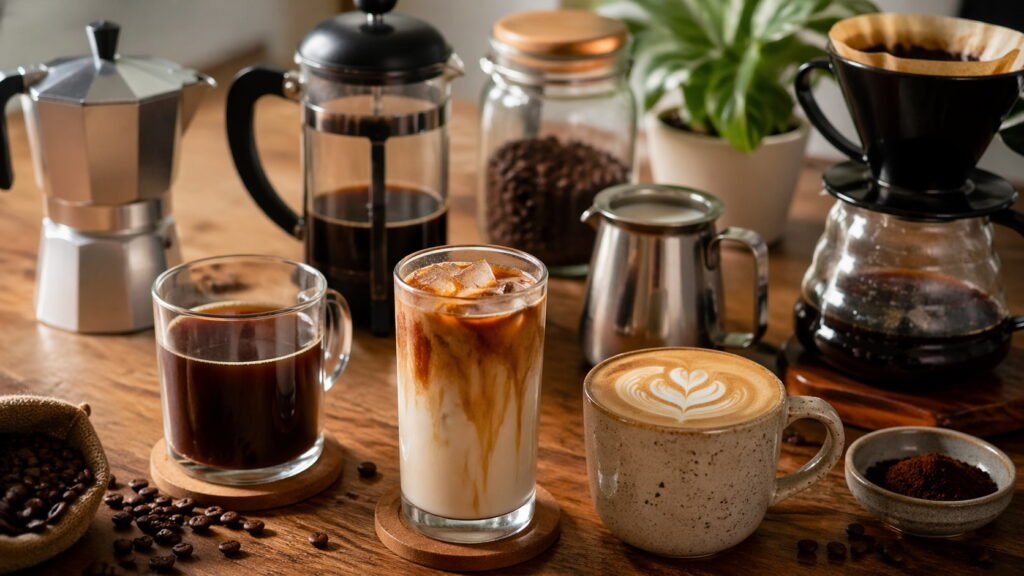
Easy Café-Style Coffee at Home Methods Anyone Can Master
Great coffee doesn’t come from complexity—it comes from choosing the right method and doing it well. These easy café-style coffee at home methods are beginner-friendly but powerful enough to deliver café-level results.
French Press (Rich & Full-Bodied)
If you love bold, slightly heavy coffee with deep flavor, this is your go-to.
How to brew:
- Add coarse ground coffee (1:15 ratio)
- Pour hot water (90–96°C)
- Stir gently, place the lid on
- Wait 4 minutes, then press slowly
Flavor profile: Full-bodied, rich, slightly oily
Pro tip:
Skim off the top crust before pressing for a cleaner taste.
Pour Over (Clean & Bright)
Pour over coffee highlights clarity and subtle flavors—perfect for lighter roasts.
How to brew:
- Use medium grind
- Place filter and rinse with hot water
- Add coffee, then pour a small amount to bloom (30–45 seconds)
- Slowly pour in circles until you reach your ratio
Flavor profile: Clean, crisp, nuanced
Common mistake:
Pouring too fast leads to uneven extraction and flat taste.
AeroPress (Smooth & Versatile)
A favorite among coffee enthusiasts for a reason—it’s fast, flexible, and forgiving.
How to brew:
- Use medium-fine grind
- Add coffee + hot water
- Stir and steep for 1–2 minutes
- Press slowly
Flavor profile: Smooth, balanced, low bitterness
Bonus:
You can create a strong, espresso-style base for milk drinks.
Moka Pot (Stovetop Espresso Vibes)
Want something close to espresso without a machine? This delivers intensity.
How to brew:
- Fill bottom chamber with water
- Add fine grind coffee (don’t tamp)
- Heat on low to medium heat
- Remove once it starts bubbling
Flavor profile: Strong, bold, slightly smoky
Pro tip:
Control heat carefully—too high and it turns bitter fast.
Instant Coffee Upgrade Hack
Instant coffee gets a bad reputation, but with a few tweaks, it can taste surprisingly good.
How to upgrade it:
- Dissolve coffee in a small amount of hot water first
- Add warm milk instead of just water
- Stir in sugar or syrup while hot
Flavor profile: Light but customizable
Quick win:
Add a pinch of cinnamon or cocoa powder for depth.
Easy Café-Style Coffee at Home Recipes You’ll Actually Crave
Once your base coffee is solid, turning it into café-style drinks is simple. These recipes focus on flavor, texture, and presentation—just like your favorite coffee shop.
Creamy Café Latte (No Espresso Machine Needed)
Ingredients:
- Strong brewed coffee (AeroPress or Moka pot works best)
- Milk (any type)
- Optional: sugar or syrup
Steps:
- Brew a concentrated coffee
- Heat milk (not boiling)
- Froth using a jar, whisk, or French press
- Combine coffee + milk (1:2 ratio)
Result: Smooth, creamy, balanced
Tip:
Whole milk creates the best foam texture, but oat milk works well too.
Iced Vanilla Latte (Coffee Shop Favorite)
Ingredients:
- Cold brewed or cooled coffee
- Milk
- Vanilla syrup
- Ice
Steps:
- Fill a glass with ice
- Add vanilla syrup
- Pour coffee, then milk on top
Flavor profile: Sweet, refreshing, slightly creamy
Pro tip:
Use coffee ice cubes to avoid dilution.
Homemade Caramel Macchiato
A layered drink that looks as good as it tastes.
Ingredients:
- Milk
- Strong coffee
- Vanilla syrup
- Caramel sauce
Steps:
- Add vanilla syrup + milk first
- Slowly pour coffee over the top
- Drizzle caramel on top
Key detail:
Pouring slowly creates that signature layered look.
Mocha Coffee (Chocolate Lover’s Pick)
Ingredients:
- Brewed coffee
- Cocoa powder or chocolate syrup
- Milk
- Sugar (optional)
Steps:
- Mix cocoa with a bit of hot water to dissolve
- Add coffee and stir
- Pour in warm milk
Flavor profile: Rich, chocolatey, slightly sweet
Upgrade tip:
Use dark chocolate for a deeper, less sugary taste.
Café-Style Cold Brew
Perfect for hot days and smooth coffee lovers.
Ingredients:
- Coarse ground coffee
- Cold water
Steps:
- Mix coffee and water (1:5 ratio for concentrate)
- Steep for 12–24 hours in the fridge
- Strain and dilute when serving
Flavor profile: Smooth, low acidity, naturally sweet
Storage tip:
Keeps fresh in the fridge for up to 5–7 days.
How to Froth Milk at Home Like a Barista (Without Fancy Tools)
Milk texture is what separates “coffee” from café-style coffee at home. The good news? You don’t need a steam wand.
Manual Shaking Method (Simplest Option)
How it works:
- Pour warm milk into a jar
- Shake vigorously for 15–30 seconds
- Let bubbles settle slightly
Best for: Quick lattes and iced drinks
French Press Frothing Hack
Surprisingly effective and consistent.
Steps:
- Add warm milk to the French press
- Pump the plunger up and down rapidly
- Stop once it becomes thick and foamy
Result: Creamy microfoam similar to café quality
Hot Foam vs Cold Foam
Understanding the difference helps match the drink.
- Hot foam: Best for lattes, cappuccinos, mochas
- Cold foam: Ideal for iced coffee and cold brew
Tip:
Cold foam works best with low-fat milk, while hot foam shines with whole milk.
Best Milk Types for Frothing
- Whole milk: Creamiest, easiest to foam
- Low-fat milk: More foam, less creamy
- Oat milk: Great balance, barista favorite alternative
- Almond milk: Lighter, slightly nutty flavor
Flavor Boosters That Instantly Upgrade Your Coffee
Once your brew is dialed in, small additions can transform it into something that tastes like it came straight from a café menu. The key is balance—enhancing, not overpowering.
Syrups (Vanilla, Caramel, Hazelnut)
Syrups add sweetness and aroma without grit.
- Vanilla: Smooth, subtle sweetness—great for lattes
- Caramel: Rich and slightly buttery—pairs well with strong coffee
- Hazelnut: Nutty depth—works beautifully in iced drinks
How to use:
Add syrup before milk so it blends evenly with the coffee.
Spices That Add Depth Without Sugar
Spices can elevate flavor without extra calories.
- Cinnamon: Warm, slightly sweet
- Nutmeg: Aromatic and bold (use lightly)
- Cocoa powder: Adds bitterness and chocolate notes
Pro tip:
Sprinkle spices on top of foam for aroma, or mix into hot coffee for deeper flavor.
Sweeteners (More Than Just Sugar)
Different sweeteners change both taste and texture.
- White sugar: Clean sweetness
- Brown sugar: Adds molasses depth
- Honey: Floral and smooth
- Maple syrup: Subtle caramel-like flavor
Tip:
Always add sweeteners while the coffee is hot so they dissolve properly.
When and How to Add for Best Results
Timing matters more than most people think.
- Add sweeteners and syrups first → better integration
- Add milk after coffee → preserves layering and texture
- Finish with toppings last → enhances presentation
Common Mistakes That Ruin Café-Style Coffee at Home
Even good beans and tools won’t save a cup if a few key mistakes slip in. Fixing these is often the fastest way to improve your coffee.
Wrong Grind Size
Using the wrong grind throws off extraction completely.
- Too fine → over-extracted, bitter
- Too coarse → under-extracted, weak or sour
Fix: Match grind size to your brewing method (as covered earlier).
Water Too Hot or Too Cold
Temperature directly impacts flavor balance.
- Too hot → burns coffee, harsh bitterness
- Too cool → flat, underdeveloped taste
Sweet spot:
90–96°C for most methods
Poor Coffee-to-Water Ratio
Eyeballing measurements leads to inconsistent results.
- Too much coffee → overpowering and muddy
- Too little → watery and dull
Fix:
Stick to a consistent ratio (1:15–1:18) and adjust slightly to taste.
Over-Extraction vs Under-Extraction (Simplified)
Understanding this concept changes everything.
- Over-extraction:
- Taste: Bitter, dry, harsh
- Cause: Too fine grind, long brew time
- Under-extraction:
- Taste: Sour, thin, weak
- Cause: Too coarse grind, short brew time
Quick fix rule:
If it tastes bitter → shorten brew or go coarser
If it tastes sour → extend brew or go finer
Time-Saving Hacks for Busy Mornings
You don’t need 15 minutes to make great coffee. With a few smart strategies, easy café-style coffee at home can fit into even the busiest routine.
Pre-Ground vs Fresh Grind (Realistic Trade-Offs)
Fresh grinding is ideal, but not always practical.
- Fresh grind: Best flavor, more control
- Pre-ground: Faster, more convenient
Smart compromise:
Use pre-ground during weekdays, fresh grind when you have time.
Make-Ahead Cold Brew
One batch can last almost a week.
- Brew a concentrate (1:5 ratio)
- Store in the fridge
- Dilute with water or milk when serving
Result:
Ready-to-drink coffee in under 30 seconds.
Batch Brewing for Multiple Servings
Save time by brewing once, not repeatedly.
- Use a larger French press or pour over
- Store extra coffee in a thermal container
Tip:
Avoid reheating on direct heat—it kills flavor. Use a thermos instead.
The 2-Minute Café-Style Routine
When time is tight, keep it simple and repeatable.
Example routine:
- Use strong instant or AeroPress coffee
- Heat milk in the microwave (30–45 seconds)
- Shake in a jar for foam
- Add syrup and combine
Total time: ~2 minutes
Result: Surprisingly close to café quality
How to Customize Your Coffee Like a Café Menu
Once you understand the basics, the real fun begins—building drinks that match your exact taste. Café-style coffee at home becomes far more satisfying when you can tweak it like a barista.
Adjusting Strength and Body
Not all coffee should taste the same. Small changes create completely different experiences.
- Stronger coffee: Use a tighter ratio (e.g., 1:14) or brew a concentrate
- Lighter coffee: Add more water or milk
- Fuller body: Choose French press or Moka pot
- Cleaner cup: Use pour over
Tip:
Strength and bitterness aren’t the same—adjust ratio before blaming the beans.
Sweetness Levels and Flavor Layering
Café drinks feel “premium” because flavors are layered, not dumped in.
- Start with a base sweetener (syrup, sugar, honey)
- Add secondary notes (vanilla + caramel, chocolate + hazelnut)
- Keep it balanced—one dominant flavor, one supporting
Example combo:
Vanilla latte + light caramel drizzle = simple but café-quality
Creating Your Signature Drink
Instead of copying menus, build your own go-to recipe.
Ask yourself:
- Do you prefer hot or iced?
- More coffee-forward or creamy?
- Sweet, bitter, or balanced?
Then lock in:
- Your brewing method
- Your milk type
- Your favorite flavor combo
Result:
A repeatable drink that feels like “your café at home.”
Seasonal Variations (Keep It Interesting Year-Round)
Rotating flavors keeps your routine fresh.
- Hot drinks (rainy or cooler days): mocha, cinnamon latte
- Iced drinks (hot weather): iced vanilla latte, cold brew
- Seasonal twists:
- Add pumpkin spice or nutmeg for cozy flavors
- Use citrus zest or tonic for refreshing summer coffee
Easy Café-Style Coffee at Home on a Budget
Great coffee doesn’t have to be expensive. Smart choices can give you 80–90% of café quality at a fraction of the cost.
Cheapest Methods with the Best Results
- French press: Affordable, reliable, rich flavor
- Pour over: Low cost, high clarity
- Instant coffee (upgraded): Cheapest and fastest option
Best value pick:
French press hits the sweet spot between cost and quality.
Where to Save vs Where to Invest
Knowing where your money matters makes a big difference.
Save on:
- Fancy machines
- Branded accessories
- Trendy gadgets
Invest in:
- Fresh coffee beans
- A basic grinder (if possible)
- A consistent brewing method
Key takeaway:
Flavor comes from ingredients and technique, not price tags.
Cost Comparison: Café vs Homemade
| Type of Coffee | Café Price (Avg) | Homemade Cost |
| Latte | $3–5 | <$1 |
| Iced Coffee | $3–4 | ~$0.50 |
| Cold Brew | $4–6 | ~$1 |
Even modest home brewing can save hundreds per year while giving you more control over taste.
FAQ: Easy Café-Style Coffee at Home
Can I make café-style coffee without a machine?
Yes. Methods like French press, AeroPress, and Moka pot can produce rich, café-quality coffee when paired with the right grind size and ratios.
What is the easiest method for beginners?
French press is the most forgiving. It requires minimal technique and still delivers strong, consistent results.
How do I make my coffee taste like Starbucks at home?
Use medium to dark roast beans, add flavored syrups (like vanilla or caramel), and focus on creamy milk texture for that signature profile.
What milk is best for frothing?
Whole milk creates the creamiest foam. Oat milk is the best plant-based option for texture and balance.
How long does homemade cold brew last?
Stored in the fridge, cold brew concentrate stays fresh for about 5–7 days.
Why does my coffee taste bitter or weak?
Bitter coffee usually comes from over-extraction (too fine grind or long brew time). Weak coffee often means under-extraction or too much water.
What grind size should I use for different methods?
Coarse for French press, medium for pour over, medium-fine for AeroPress, and fine for Moka pot. Matching grind size to method is essential for proper extraction.
Turning Your Kitchen Into Your Favorite Coffee Spot
Café-style coffee isn’t just about taste—it’s about the experience.
Small details make a big difference:
- Use a clear glass for iced drinks to show layers
- Pour milk slowly for that café-style look
- Add a light dusting of cocoa or cinnamon on foam
Create a simple routine you enjoy. Maybe it’s your quiet morning pour over, or a quick iced latte before work. Over time, it becomes something you look forward to—not just another task.
For deeper brewing standards and guidance, you can explore resources from the Specialty Coffee Association:
https://sca.coffee/research
Start with one method, try one recipe, and tweak it to your taste. With a bit of practice, your easy café-style coffee at home won’t just match your favorite coffee shop—it might even beat it.

Meet Suzee Amelia, the creative voice behind this space—a blog dedicated to exploring coffee culture, lifestyle insights, and everyday inspiration. With a passion for discovering rich flavors and sharing practical tips, Sophie Langford brings a thoughtful and engaging approach to every post.
