
Cinnamon toast crunch iced coffee caffeine content is one of the most searched questions right now—and for good reason. This cereal-inspired drink looks indulgent and sweet, but many people want to know: how much caffeine are you actually getting?
This guide breaks it down clearly. You’ll learn how caffeine levels vary depending on how the drink is made, what factors influence strength, and how to adjust it to match your energy needs. Whether you’re ordering from a coffee shop or making it at home, you’ll walk away knowing exactly what’s in your cup.
In This Article
Why Everyone’s Talking About Cinnamon Toast Crunch Iced Coffee
Dessert-style coffee has taken over menus and social feeds, and cinnamon toast crunch iced coffee sits right at the center of the trend. Inspired by the nostalgic flavor of cinnamon-sugar cereal milk, this drink blends sweet spice, creamy texture, and cold coffee refreshment.
Part of its popularity comes from how customizable it is. Coffee chains offer their own versions using flavored syrups, while home baristas recreate it using cereal-infused milk or cinnamon blends. TikTok and YouTube recipes have only accelerated its rise.
What makes it especially interesting is the contrast between its dessert-like taste and its functional caffeine kick. It feels like a treat, but it still delivers the alertness people expect from coffee.
Cinnamon Toast Crunch Iced Coffee Caffeine Content: The Quick Answer
The caffeine content in cinnamon toast crunch iced coffee depends entirely on the coffee base used. The flavor itself—cinnamon, sugar, or cereal milk—does not contain caffeine.
Here’s a realistic range based on common preparation styles:
- Brewed iced coffee (12–16 oz): ~120–200 mg caffeine
- Cold brew version (12–16 oz): ~150–250 mg caffeine
- Espresso-based iced latte (1–2 shots): ~65–130 mg caffeine
Key takeaway:
The stronger the base coffee, the higher the caffeine—regardless of how sweet or creamy the drink tastes.
A large cold brew-based version will usually deliver the highest caffeine punch, while an iced latte version tends to be smoother and lower in caffeine.
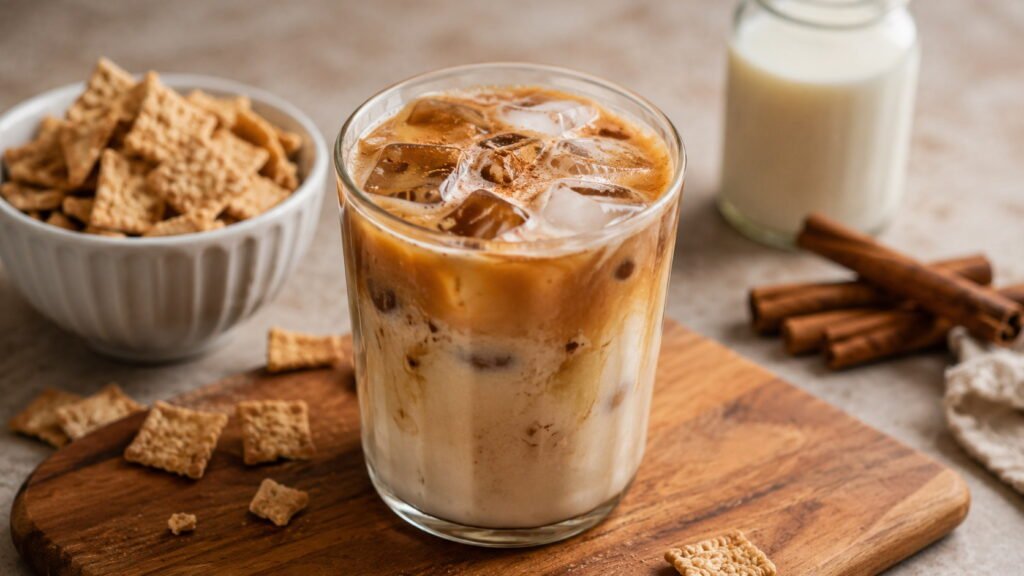
What Actually Determines Caffeine in Cinnamon Toast Crunch Iced Coffee
Understanding caffeine levels gets much easier when you know what’s driving them. Several variables quietly influence how strong your drink ends up.
Coffee Base Type Matters More Than Anything
Different brewing methods extract caffeine at different levels:
- Cold brew: Steeped for 12–24 hours, often more concentrated
- Iced coffee: Hot brewed then chilled, moderate caffeine
- Espresso: Short, intense extraction, lower volume but concentrated shots
Cold brew typically leads to higher caffeine content per serving, especially when served undiluted.
Serving Size Changes Everything
A small iced coffee might feel light, but sizing up can double your intake quickly.
- 12 oz vs 20 oz isn’t just more liquid—it’s often more coffee concentrate
- Larger drinks may include extra espresso shots or stronger dilution ratios
Bean Type and Roast Level
Most specialty coffee uses Arabica beans, which are smoother but slightly lower in caffeine than Robusta. Still, roast level plays a role too:
- Light roast: Slightly higher caffeine retention
- Dark roast: Bolder flavor, marginally less caffeine by weight
Brew Strength and Dilution
Ice, milk, and syrups dilute caffeine—but only to a point.
- More ice = less liquid coffee per sip
- More milk = smoother taste, lower caffeine concentration
- Strong brew ratios (like cold brew concentrate) can significantly increase caffeine
Practical insight:
A creamy, dessert-style drink can still be highly caffeinated if the base coffee is strong enough.
Caffeine Breakdown by Popular Versions (Store vs Homemade)
Cinnamon toast crunch iced coffee isn’t a standardized drink, which means caffeine levels can swing quite a bit depending on where—or how—you get it.
Coffee Shop Versions
Most cafés don’t list this drink by name, but it’s usually built as a flavored iced coffee or latte with cinnamon syrup and creamy milk. Here’s what you can expect:
- Flavored iced coffee (medium): ~150–220 mg caffeine
- Cold brew with cinnamon flavor (medium): ~180–260 mg caffeine
- Iced latte (1–2 espresso shots): ~65–130 mg caffeine
Baristas often add extra syrup or toppings, but caffeine only increases if:
- Extra espresso shots are added
- A stronger base (like cold brew) is used
Tip: Ask what base they’re using. A “cinnamon iced coffee” and a “cinnamon cold brew” can taste similar—but have very different caffeine levels.
Homemade Versions
Making it at home gives you full control, which is ideal if you’re managing caffeine intake.
- Instant coffee base (1–2 tsp): ~60–100 mg caffeine
- Cold brew concentrate (½ cup diluted): ~150–250 mg caffeine
- Espresso (1–2 shots): ~65–130 mg caffeine
Homemade recipes often trend stronger because people use:
- Concentrated cold brew
- Double espresso shots
- Less dilution from ice or milk
Practical insight:
A homemade version can easily exceed café caffeine levels if you’re not measuring your coffee base.
Cinnamon Toast Crunch Iced Coffee Caffeine Content vs Other Drinks
Understanding how this drink compares helps you gauge whether it’s a light pick-me-up or a full caffeine hit.
Here’s a side-by-side comparison:
| Drink Type | Typical Serving | Caffeine (mg) |
| Cinnamon Toast Crunch Iced Coffee (cold brew base) | 16 oz | 180–250 |
| Cinnamon Toast Crunch Iced Latte | 16 oz | 65–130 |
| Regular Iced Coffee | 16 oz | 120–200 |
| Cold Brew Coffee | 16 oz | 150–250 |
| Energy Drink | 16 oz | 150–200 |
What stands out:
- A cold brew-based version can rival—or exceed—energy drinks
- Latte versions are significantly milder
- Flavor doesn’t indicate strength; the base coffee does
Key takeaway:
If your cinnamon toast crunch iced coffee uses cold brew, expect a strong caffeine kick similar to premium iced coffee or higher.
Does the “Cinnamon Toast Crunch” Flavor Change Caffeine Levels?
This is one of the biggest misconceptions.
The “cinnamon toast crunch” part—whether it comes from syrup, spices, or cereal milk—adds zero caffeine. It only affects flavor and sweetness.
Here’s what’s actually happening:
- Cinnamon syrup: Adds sweetness and spice, no caffeine
- Cereal-infused milk: Brings nostalgic flavor, still caffeine-free
- Brown sugar or vanilla additions: Enhance taste, not strength
The confusion comes from how rich the drink feels. A sweeter, creamier coffee often tastes stronger or heavier, which leads people to assume it contains more caffeine.
Reality check:
Caffeine is entirely determined by the coffee base—not the flavor profile.
That means you can:
- Enjoy the same cinnamon toast crunch flavor in a low-caffeine latte
- Or turn it into a high-caffeine cold brew powerhouse
The flavor stays the same. The caffeine is completely up to you.
How to Control the Caffeine in Your Cinnamon Toast Crunch Iced Coffee
One of the best things about cinnamon toast crunch iced coffee is how flexible it is. You can enjoy the same cozy, sweet flavor while dialing caffeine up or down depending on your needs.
Choose the Right Coffee Base
Your base determines most of the caffeine content:
- Low caffeine: Decaf iced coffee or a single espresso shot
- Moderate caffeine: Regular brewed iced coffee
- High caffeine: Cold brew or double espresso
If you’re sensitive to caffeine, switching to half-caf (a mix of decaf and regular beans) is an easy middle ground.
Adjust Coffee-to-Milk Ratio
More milk doesn’t just make the drink creamier—it also reduces caffeine concentration per sip.
- Increase milk for a smoother, lighter drink
- Reduce coffee volume slightly if you want a gentler effect
- Use ice strategically to dilute strength without losing flavor
Limit Espresso Shots and Concentrates
Extra shots are the fastest way to spike caffeine.
- Stick to one shot (~65 mg) for a lighter boost
- Avoid stacking shots unless you need the extra kick
- Dilute cold brew concentrate properly (often 1:1 with water or milk)
Go Flavor-First, Not Coffee-Heavy
Boosting cinnamon flavor doesn’t require more coffee:
- Add ground cinnamon or cinnamon syrup
- Use cereal milk infusion for richness
- Try brown sugar or vanilla for depth
Key takeaway:
You don’t need more caffeine to get a stronger cinnamon toast crunch flavor—just smarter ingredient choices.
Homemade Recipe + Caffeine Customization Guide
Making cinnamon toast crunch iced coffee at home lets you control both flavor and caffeine with precision.
Simple Base Recipe (Balanced Version)
Ingredients:
- 1 cup iced coffee or cold brew (adjust strength as needed)
- ½ cup milk (dairy or plant-based)
- 1–2 tbsp cinnamon syrup or brown sugar syrup
- Ice
- Pinch of ground cinnamon
Steps:
- Fill a glass with ice
- Pour in your coffee base
- Add milk and syrup
- Stir well and finish with a light sprinkle of cinnamon
High-Caffeine Version (For a Strong Boost)
- Use cold brew concentrate instead of regular iced coffee
- Reduce milk slightly to keep intensity
- Optional: add a single espresso shot for an extra kick
Estimated caffeine: 200–300 mg depending on strength
Low-Caffeine or Decaf Version
- Use decaf iced coffee or half-caf blend
- Increase milk ratio for smoothness
- Keep cinnamon and sweeteners for full flavor
Estimated caffeine: 5–50 mg
Optional: Cereal Milk Infusion
For a more authentic “cinnamon toast crunch” taste:
- Soak a handful of cinnamon cereal in milk for 10–15 minutes
- Strain out the cereal
- Use the infused milk in your recipe
This adds richness and nostalgia—without affecting caffeine at all.
Pro tip:
Use medium grind coffee for iced brewing if making from scratch—it balances extraction and avoids bitterness.
Is Cinnamon Toast Crunch Iced Coffee High in Caffeine?
The answer depends entirely on how it’s made—but it can easily fall into the moderate to high caffeine range.
Putting It Into Perspective
- Low caffeine: Under 80 mg (light boost)
- Moderate caffeine: 80–150 mg (standard coffee range)
- High caffeine: 150–300+ mg (strong, long-lasting energy)
A cinnamon toast crunch iced coffee made with cold brew often lands in the high category, while latte-based versions stay moderate.
Who It’s Best For
- Students or busy professionals: Great for sustained focus (especially cold brew versions)
- Casual coffee drinkers: Latte-style versions offer flavor without overwhelming caffeine
- Caffeine-sensitive individuals: Best to stick with decaf or half-caf versions
Daily Intake Awareness
Most health guidelines suggest staying under ~400 mg of caffeine per day for healthy adults. One strong version of this drink could already provide half or more of that limit.
Bottom line:
Cinnamon toast crunch iced coffee can be as light or as strong as you make it—but cold brew versions deserve a bit of respect if you’re watching your caffeine intake.
Hidden Factors That Can Spike Your Caffeine Intake
Even when you think you’ve ordered or made a “normal” cinnamon toast crunch iced coffee, a few sneaky factors can push caffeine much higher than expected.
Extra Espresso Shots (Often Added Automatically)
Some coffee shop builds include:
- Double shots by default in larger sizes
- Add-on shots for stronger flavor
Each additional shot adds roughly 60–70 mg of caffeine, which stacks quickly.
Concentrated Cold Brew
Cold brew is often served in one of two ways:
- Ready-to-drink (diluted)
- Concentrate (meant to be mixed 1:1)
Using concentrate without proper dilution can double your caffeine intake without changing the taste dramatically.
Larger Cup Sizes = More Coffee Base
Upsizing isn’t just more ice and milk. Many shops increase:
- Coffee volume
- Espresso shots
- Strength of the base
A large drink can contain 50–100% more caffeine than a small.
Layered or “Double Base” Drinks
Some custom recipes combine:
- Cold brew + espresso
- Iced coffee + espresso shot
These hybrid builds create a flavor-packed drink—but also a serious caffeine hit.
Quick reality check:
A sweet, dessert-style drink can quietly deliver as much caffeine as two standard coffees if you’re not paying attention.
Pro Tips for Balancing Flavor Without Overdoing Caffeine
Getting that signature cinnamon toast crunch flavor doesn’t require pushing caffeine to the limit. A few smart tweaks can keep things delicious and balanced.
Build Flavor Through Ingredients, Not Coffee Strength
- Use cinnamon syrup + a pinch of real cinnamon for layered spice
- Add brown sugar syrup for that toasted sweetness
- Try vanilla extract to round out the profile
Choose the Right Milk for Texture
Milk plays a big role in how “dessert-like” the drink feels:
- Whole milk: Creamy and rich
- Oat milk: Naturally sweet, enhances cereal vibe
- Almond milk: Lighter, slightly nutty
A richer milk can make a lower-caffeine drink feel just as satisfying.
Keep Your Brew Smooth, Not Bitter
Over-extraction leads to harsh flavors, which people often try to fix by adding more syrup.
- Use a medium grind for iced brewing
- Aim for a balanced brew ratio (around 1:15 coffee-to-water)
- Avoid over-steeping cold brew beyond 24 hours
Pro tip:
A smoother coffee base means you won’t need extra sugar—or extra caffeine—to enjoy the drink.
FAQ: Cinnamon Toast Crunch Iced Coffee Caffeine Content
How much caffeine is in cinnamon toast crunch iced coffee?
It typically ranges from 65 mg to 250 mg depending on whether it’s made with espresso, iced coffee, or cold brew.
Is cinnamon toast crunch iced coffee stronger than regular iced coffee?
It can be, especially if made with cold brew or extra espresso shots, but the flavor itself doesn’t increase caffeine.
Can I make cinnamon toast crunch iced coffee caffeine-free?
Yes, using decaf coffee or espresso allows you to enjoy the same flavor with little to no caffeine.
Does the cold brew version have more caffeine?
In most cases, yes. Cold brew is more concentrated and often contains higher caffeine per serving.
What grind size is best for making iced coffee at home?
A medium grind works well for hot-brewed iced coffee, while a coarse grind is ideal for cold brew to prevent over-extraction.
Does adding milk reduce caffeine?
Milk doesn’t remove caffeine, but it dilutes the concentration, making each sip less intense.
Enjoy the Flavor Without the Jitters
Cinnamon toast crunch iced coffee hits that perfect balance between nostalgic sweetness and refreshing coffee—but the caffeine content can vary more than most people expect. Once you understand how the base, brew method, and customization affect strength, you’re in full control.
If you want a bold energy boost, go for cold brew. Prefer something smoother and lighter? Stick with a single-shot iced latte or even a half-caf version. The flavor stays indulgent either way.
For deeper insight into safe caffeine intake and how it affects your body, check this resource from the FDA:
https://www.fda.gov/food/food-additives-petitions/spilling-beans-how-much-caffeine-too-much
Now it’s your turn—experiment with your own version, tweak the caffeine to your comfort level, and build a cinnamon toast crunch iced coffee that tastes exactly how you like it.

Meet Suzee Amelia, the creative voice behind this space—a blog dedicated to exploring coffee culture, lifestyle insights, and everyday inspiration. With a passion for discovering rich flavors and sharing practical tips, Sophie Langford brings a thoughtful and engaging approach to every post.
