

Homemade powdered coffee creamer without coconut oil is one of the easiest ways to upgrade your daily coffee while keeping full control over ingredients, sweetness, and flavor. Whether you avoid coconut products because of allergies, taste preferences, or dietary reasons, you can still make a rich, creamy powdered creamer at home with simple pantry staples.
This guide walks through everything you need to know, from choosing the best milk powders to creating custom flavors that dissolve smoothly in hot coffee. You’ll also learn how to avoid chalky texture, prevent clumping, and store homemade coffee creamer for long-lasting freshness.
In This Article
Why Make Homemade Powdered Coffee Creamer Without Coconut Oil?
Store-bought coffee creamers often contain long ingredient lists packed with artificial flavors, stabilizers, hydrogenated oils, and excess sugar. Making your own powdered coffee creamer gives you complete control over what goes into your cup.
Skipping coconut oil also opens the door to cleaner flavor profiles. Coconut can overpower delicate coffee notes, especially in lighter roasts or specialty beans with fruity and floral characteristics.
Reasons Many Coffee Drinkers Avoid Coconut Oil
Coconut oil is popular in DIY creamers because it adds richness and helps create a silky texture. Still, it’s not ideal for everyone.
Common reasons people look for coconut-free coffee creamer include:
- Coconut allergies or sensitivities
- Strong coconut flavor interfering with coffee taste
- Preference for lower saturated fat options
- Keto fatigue from overly oily coffee drinks
- Better compatibility with dairy or oat-based creamers
A homemade powdered coffee creamer without coconut oil can still taste creamy and balanced without leaving an oily film on the surface of your coffee.
Benefits of Homemade Powdered Coffee Creamer
Homemade versions offer more flexibility than commercial creamers, especially if you enjoy experimenting with coffee recipes.
Key advantages include:
- Adjustable sweetness levels
- Fewer preservatives and additives
- Lower cost per serving
- Better flavor customization
- Easier control over allergens and dietary needs
- Shelf-stable convenience for travel or office coffee
Many homemade blends also pair better with freshly brewed coffee because they don’t mask the natural flavor of the beans.
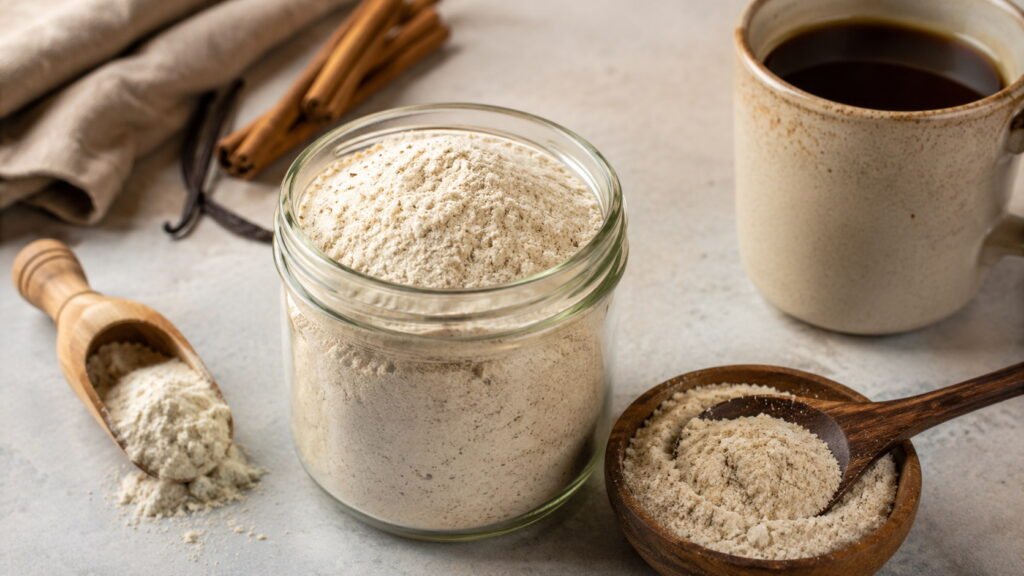
Powdered Creamer Works Surprisingly Well for Daily Coffee
Liquid creamers spoil quickly and often need refrigeration. Powdered creamer is far more convenient if you drink coffee at work, travel frequently, or like quick morning routines.
A good homemade powdered blend should:
- Dissolve quickly
- Add body without heaviness
- Complement coffee instead of overpowering it
- Stay fresh for weeks when stored properly
That balance is easier to achieve than most people think.
What Makes a Good Homemade Powdered Coffee Creamer?
Not all DIY creamers turn out smooth and satisfying. Some become gritty, overly sweet, or clump instantly in hot coffee. A successful homemade powdered coffee creamer without coconut oil depends on a few important factors.
Creaminess Without Oily Texture
The secret to a creamy powdered creamer is choosing ingredients that mimic the mouthfeel of traditional cream without relying on oil.
Milk powders and non-dairy cream alternatives naturally contain proteins and carbohydrates that soften coffee bitterness while creating a fuller texture.
The best creaminess usually comes from:
- Whole milk powder
- Oat milk powder
- Cashew milk powder
- Heavy cream powder
- Soy milk powder
Oat milk powder is especially popular because it produces a naturally smooth finish that blends beautifully with medium and dark roast coffee.
Sweetness Should Support the Coffee Flavor
Many commercial creamers taste more like dessert than coffee enhancement. Homemade blends allow you to keep sweetness balanced.
A lightly sweetened powdered creamer works best because:
- It highlights natural coffee notes
- It prevents flavor fatigue
- It pairs with flavored syrups more easily
- It works for both hot and iced coffee
Powdered sugar dissolves easily, but alternatives like monk fruit or maple sugar can create more complex flavor profiles.
Dissolvability Matters More Than Most People Realize
Nobody wants floating powder chunks in their morning brew.
Fine texture is critical for smooth mixing, especially if you use:
- French press coffee
- Pour-over brews
- Espresso-based drinks
- Instant coffee
Using finely ground ingredients and mixing thoroughly helps prevent separation. Sifting ingredients before storing also improves consistency.
Shelf Stability Keeps Homemade Creamer Practical
One major advantage of powdered coffee creamer is long storage life. Dry ingredients remain stable much longer than liquid creamers when protected from moisture.
For the best shelf life:
- Store in airtight containers
- Keep away from heat and humidity
- Use dry measuring spoons
- Avoid refrigeration unless your kitchen is extremely warm
Properly stored homemade powdered coffee creamer without coconut oil can often stay fresh for several weeks.
Essential Ingredients for Homemade Powdered Coffee Creamer Without Coconut Oil
The ingredients you choose directly affect texture, flavor, sweetness, and how well the creamer dissolves into coffee. Simple combinations often work better than complicated recipes.
Best Base Ingredients for Creamy Texture
The base ingredient creates the body of the creamer. Dairy and non-dairy options both work well depending on your preference.
| Ingredient | Flavor Profile | Creaminess Level | Best For |
| Whole milk powder | Rich and neutral | High | Traditional creamy coffee |
| Oat milk powder | Mild and slightly sweet | High | Dairy-free smoothness |
| Almond milk powder | Nutty and light | Medium | Lighter coffee styles |
| Soy milk powder | Creamy and balanced | Medium-High | High-protein blends |
| Heavy cream powder | Extra rich | Very High | Latte-style coffee |
Whole milk powder remains one of the easiest ingredients to work with because it dissolves reliably and enhances body without overpowering flavor.
Sweeteners That Blend Well in Powdered Creamer
Sweeteners should dissolve quickly and complement coffee rather than dominate it.
Popular options include:
- Powdered sugar for classic sweetness
- Monk fruit sweetener for low-carb recipes
- Coconut sugar for caramel notes
- Maple sugar for warm sweetness
- Stevia blends for sugar-free versions
Finely powdered sweeteners work best because coarse sugars can settle at the bottom of your cup.
Flavor Enhancers That Improve Homemade Creamer
Small additions can dramatically improve the taste of homemade powdered coffee creamer without coconut oil.
Flavor boosters worth trying:
- Vanilla powder
- Cinnamon
- Cocoa powder
- Espresso powder
- Freeze-dried caramel powder
- Nutmeg
- Malted milk powder
Vanilla and cinnamon pair especially well with medium roast coffees that feature chocolate or nutty tasting notes.
Ingredients That Help Prevent Clumping
Powdered mixtures naturally absorb moisture over time. A few optional ingredients can improve texture and shelf stability.
Helpful anti-clumping additions include:
- Cornstarch
- Arrowroot powder
- Tapioca starch
Only a small amount is needed. Too much starch can create a chalky mouthfeel in coffee.
Choosing Ingredients Based on Your Coffee Style
Different creamers pair better with different coffees.
- Light roasts: Use mild creamers like oat or almond milk powder
- Medium roasts: Vanilla, maple, and cinnamon blends work beautifully
- Dark roasts: Rich dairy powders and mocha flavors complement bold bitterness
- Espresso drinks: Heavy cream powder creates café-style richness
Matching your homemade creamer to your favorite roast style makes a noticeable difference in the final cup.
Easy Homemade Powdered Coffee Creamer Without Coconut Oil Recipe
Making homemade powdered coffee creamer without coconut oil takes only a few minutes, and the ingredient list is surprisingly simple. This base recipe creates a smooth, lightly sweetened creamer that works well in both drip coffee and espresso drinks.
Simple Homemade Powdered Coffee Creamer Recipe
Ingredients
- 1 cup whole milk powder or oat milk powder
- ½ cup powdered sugar
- 2 tablespoons heavy cream powder (optional for extra richness)
- 1 teaspoon vanilla powder
- 1 tablespoon cornstarch or arrowroot powder
Optional Add-Ins
- ½ teaspoon cinnamon
- 1 teaspoon cocoa powder
- Pinch of nutmeg
- Espresso powder for mocha blends
Step-by-Step Instructions
Mix the Dry Ingredients Thoroughly
Add all ingredients to a large mixing bowl. Whisk until the mixture looks evenly combined and free from visible lumps.
A fine mesh sieve helps create a smoother texture if your milk powder tends to clump.
Blend for Ultra-Smooth Texture
For café-style consistency, pulse the mixture in a blender or food processor for 10–15 seconds.
This step:
- Breaks apart tiny clumps
- Improves dissolvability
- Creates a finer powdered texture
Avoid over-processing, especially with dairy powders, because heat can affect freshness.
Store in an Airtight Container
Transfer the creamer into:
- Glass mason jars
- Airtight spice containers
- Vacuum-sealed food containers
Store in a cool, dry pantry away from steam or humidity.
How Much Creamer to Use Per Cup
Start with:
- 1 to 2 tablespoons per 8-ounce cup of coffee
Adjust depending on:
- Coffee strength
- Roast level
- Desired sweetness
- Brew method
Dark roast coffee typically needs slightly more creamer to soften bitterness.
Tips for the Smoothest Cup
Homemade powdered coffee creamer without coconut oil dissolves best in very hot coffee.
For smoother mixing:
- Add creamer before pouring coffee
- Stir immediately
- Use freshly brewed coffee above 175°F
- Shake iced coffee vigorously after adding creamer
How Long Does Homemade Powdered Creamer Last?
Shelf life depends on ingredients and storage conditions.
| Ingredient Type | Approximate Shelf Life |
| Dairy-based creamer | 3–4 weeks |
| Non-dairy oat or almond powder | 1–2 months |
| Sugar-free blends | 3–4 weeks |
| Vacuum-sealed containers | Often longer |
Moisture is the biggest enemy. Once clumping starts, freshness declines quickly.
Dairy-Free Alternatives That Still Taste Creamy
One of the biggest challenges when making homemade powdered coffee creamer without coconut oil is achieving a creamy texture without relying on dairy fat or coconut richness.
Fortunately, several dairy-free powders create a surprisingly smooth and satisfying cup.
Oat Milk Powder Creates the Most Balanced Texture
Oat milk powder has become a favorite among coffee drinkers because it blends smoothly and naturally complements coffee flavor.
Benefits of oat milk powder include:
- Mild flavor that doesn’t overpower beans
- Naturally creamy texture
- Excellent dissolvability
- Slight sweetness without extra sugar
Medium roast coffees with chocolate or caramel notes pair especially well with oat-based creamers.
Almond Milk Powder Works Best for Light Coffee Drinks
Almond milk powder creates a lighter body and slightly nutty finish.
This option works well if you:
- Prefer lighter coffee
- Drink pour-over coffee
- Enjoy flavored creamers
- Want lower-calorie options
The downside is slightly thinner texture compared to oat or dairy powders.
Soy Milk Powder Adds Protein and Body
Soy milk powder creates a fuller mouthfeel than almond milk while remaining dairy-free.
Many homemade coffee enthusiasts use soy powder because it:
- Dissolves fairly well
- Creates balanced creaminess
- Adds protein
- Works nicely in hot coffee drinks
Flavor can be slightly bean-forward, so vanilla or cinnamon helps soften the profile.
Cashew Milk Powder for Rich Specialty Coffee
Cashew milk powder isn’t as common, but it produces excellent texture in homemade powdered coffee creamer.
It tends to:
- Taste richer than almond powder
- Blend smoothly into espresso
- Create subtle buttery notes
- Work beautifully in flavored creamers
This option pairs especially well with darker roasts and mocha recipes.
Comparing the Best Dairy-Free Powder Options
| Milk Powder | Texture | Flavor Strength | Best Coffee Pairing |
| Oat milk powder | Creamy | Mild | Medium roasts |
| Almond milk powder | Light | Nutty | Light roasts |
| Soy milk powder | Medium-rich | Slightly earthy | Dark roasts |
| Cashew milk powder | Rich | Smooth and mild | Espresso drinks |
How to Make Dairy-Free Creamers Taste Richer
Without coconut oil, dairy-free creamers sometimes need a little extra help.
You can improve texture naturally with:
- Cashew powder
- Malted oat powder
- Tiny amounts of tapioca starch
- Vanilla powder
- Freeze-dried caramel powder
These additions increase body without making coffee feel oily or heavy.
Best Brewing Methods for Dairy-Free Powdered Creamers
Certain brewing styles pair especially well with homemade dairy-free creamers.
Excellent combinations include:
- French press + oat creamer
- Cold brew + vanilla almond creamer
- Espresso + cashew powder blend
- AeroPress + mocha soy creamer
Brewing method affects how noticeable texture becomes, especially in black coffee with lighter body.
Flavor Variations to Upgrade Your Powdered Coffee Creamer
One of the best parts about homemade powdered coffee creamer without coconut oil is the ability to customize flavors exactly how you like them.
Instead of artificial syrups or heavily processed creamers, you can create coffeehouse-inspired blends with pantry ingredients.
Vanilla Bean Powdered Coffee Creamer
Vanilla is classic for a reason. It softens bitterness and enhances natural sweetness in coffee beans.
Ingredients to Add
- 1 teaspoon vanilla powder
- Optional pinch of sea salt
This flavor works especially well with:
- Colombian coffee
- Medium roasts
- Breakfast blends
- Cold brew coffee
Real vanilla powder creates a cleaner flavor than imitation extracts in dry mixes.
Cinnamon Roll Coffee Creamer
Warm spices instantly make coffee feel more comforting.
Add These Ingredients
- 1 teaspoon cinnamon
- ¼ teaspoon nutmeg
- Small pinch of cloves
The result tastes similar to a bakery-style latte without overwhelming sweetness.
Pair this blend with:
- Dark roast coffee
- French press brews
- Holiday coffee drinks
Mocha Powdered Creamer for Chocolate Lovers
Chocolate and coffee naturally complement each other because they share similar roasted flavor compounds.
Mocha Additions
- 1 tablespoon cocoa powder
- 1 teaspoon espresso powder
- Extra powdered sugar if desired
Dutch-process cocoa creates smoother flavor, while natural cocoa gives brighter chocolate notes.
Brown Sugar Latte-Inspired Blend
Brown sugar flavor adds warmth and subtle caramel complexity.
To create this style:
- Use powdered brown sugar
- Add a pinch of cinnamon
- Include vanilla powder
This blend works beautifully in iced coffee because caramel notes remain noticeable even when chilled.
Sugar-Free Homemade Powdered Coffee Creamer Ideas
Low-sugar creamers can still taste satisfying with the right ingredient balance.
Popular sugar-free sweeteners include:
- Monk fruit
- Erythritol blends
- Stevia powder
- Allulose
Vanilla and cinnamon become even more important in sugar-free recipes because they enhance perceived sweetness naturally.
Seasonal Flavor Ideas Worth Trying
Rotating flavors keeps homemade coffee routines interesting throughout the year.
Fall-Inspired Flavors
- Pumpkin spice
- Maple cinnamon
- Toasted pecan
Winter Favorites
- Peppermint mocha
- Gingerbread spice
- White chocolate vanilla
Summer Coffee Blends
- Vanilla almond
- Honey cinnamon
- Light mocha for iced coffee
Creating small batches allows you to experiment without wasting ingredients.
Pro Tip: Match Flavor Profiles to Coffee Roast Levels
The best homemade powdered coffee creamer without coconut oil complements your beans instead of covering them up.
| Coffee Roast | Best Creamer Flavors |
| Light roast | Vanilla, almond, honey |
| Medium roast | Cinnamon, caramel, maple |
| Dark roast | Mocha, hazelnut, brown sugar |
| Espresso | Vanilla bean, chocolate, cashew |
Choosing flavors based on roast level creates a more balanced and café-quality cup at home.
Common Mistakes When Making Homemade Powdered Coffee Creamer
Homemade powdered coffee creamer without coconut oil is simple to make, but small ingredient or storage mistakes can ruin texture and flavor. Most problems come down to moisture, ingredient balance, or poor mixing.
Knowing what to avoid helps you create a smoother, creamier blend from the start.
Using Ingredients That Don’t Dissolve Well
Not every powdered ingredient works nicely in hot coffee.
Coarse sweeteners, low-quality milk powders, and large spice particles often leave gritty sediment at the bottom of the mug.
Ingredients that commonly cause problems include:
- Granulated sugar
- Coarse cocoa powder
- Unsifted spices
- Cheap plant-based powders with fillers
Finely powdered ingredients dissolve faster and create a cleaner mouthfeel.
Too Much Starch Creates Chalky Coffee
Cornstarch and arrowroot powder help prevent clumping, but overusing them changes the texture dramatically.
A chalky or dusty finish usually means:
- Too much thickener was added
- The creamer wasn’t blended evenly
- Ingredients absorbed excess moisture
A small amount is enough. Most homemade coffee creamer recipes only need about 1 tablespoon per batch.
Over-Sweetening Masks the Coffee Flavor
One of the biggest advantages of homemade powdered coffee creamer without coconut oil is better flavor balance.
Excess sweetener can:
- Hide coffee tasting notes
- Create syrupy aftertaste
- Reduce versatility with flavored syrups
- Make dark roasts taste flat
Start mildly sweet and adjust after testing with your preferred coffee beans.
Moisture Is the Enemy of Powdered Creamer
Humidity quickly destroys texture and shelf stability.
Common causes of clumping include:
- Using wet spoons
- Storing near the stove
- Refrigeration condensation
- Loose container lids
Airtight containers make a huge difference, especially in humid kitchens.
Why Homemade Creamer Sometimes Separates in Coffee
Separation happens when powders don’t emulsify evenly.
This usually occurs because:
- Coffee isn’t hot enough
- Powder particles are too coarse
- Fat content is uneven
- Ingredients weren’t blended thoroughly
Mixing the powder into a small splash of hot coffee first often helps create smoother consistency.
Avoid Strong Artificial Flavoring
Too much artificial vanilla or flavored extract powder can overpower the coffee itself.
Homemade creamers taste best when they enhance:
- Chocolate notes
- Nutty characteristics
- Caramel sweetness
- Roasted depth
Coffee should still taste like coffee after adding creamer.
Best Practices for Consistent Results
Professional café-style flavor comes from consistency.
Helpful habits include:
- Sifting ingredients before mixing
- Making smaller fresh batches
- Labeling storage dates
- Testing with different roast levels
- Keeping powders away from humidity
Small improvements in preparation create noticeably smoother cups.
Homemade Powdered Coffee Creamer vs Store-Bought Brands
Commercial coffee creamers are convenient, but homemade versions offer more flexibility, cleaner ingredients, and better flavor control.
The differences become even more noticeable if you drink coffee daily.
Ingredient Transparency Makes Homemade Better
Many store-bought powdered creamers contain:
- Hydrogenated oils
- Artificial flavors
- Corn syrup solids
- Preservatives
- Anti-caking chemicals
Homemade powdered coffee creamer without coconut oil uses ingredients you can actually recognize and adjust.
That means:
- Fewer additives
- Better customization
- Cleaner flavor
- Easier allergen control
Flavor Quality Is Often More Natural
Commercial creamers prioritize shelf stability over coffee flavor.
Homemade blends usually taste fresher because:
- Real vanilla can replace artificial flavoring
- Sweetness stays balanced
- Ingredients aren’t heavily processed
- Coffee flavor remains noticeable
This becomes especially important with specialty coffee beans where subtle tasting notes matter.
Store-Bought Creamers Often Taste Sweeter
Many commercial creamers are designed for mass appeal, which usually means extra sugar.
Homemade creamers allow better control over:
- Sweetness intensity
- Flavor strength
- Texture richness
- Calorie content
Coffee drinkers who prefer balanced or lightly sweet coffee usually prefer homemade options after a few batches.
Cost Comparison: Homemade vs Commercial
Homemade powdered coffee creamer can save money over time, especially for households that drink multiple cups daily.
| Type | Average Cost Per Serving | Ingredient Control |
| Store-bought powdered creamer | Medium | Low |
| Premium specialty creamer | High | Medium |
| Homemade powdered creamer | Low | Very High |
Buying ingredients in bulk reduces the cost even more.
Homemade Creamer Works Better for Specialty Diets
Finding commercial creamers without:
- Coconut oil
- Dairy
- Artificial sweeteners
- Soy
- Excess sugar
can be surprisingly difficult.
Homemade recipes solve that problem by allowing complete customization.
Convenience vs Customization
Store-bought creamers still have one clear advantage: convenience.
Homemade versions require:
- Mixing ingredients
- Proper storage
- Occasional recipe adjustments
Still, many coffee enthusiasts prefer homemade because the flavor feels more personal and less processed.
Which Option Produces Better Coffee?
That depends on your priorities.
Choose homemade powdered coffee creamer without coconut oil if you want:
- Cleaner ingredients
- Better coffee flavor balance
- Custom sweetness levels
- Specialty diet flexibility
- Unique seasonal flavors
Store-bought creamers work better for people who value speed above all else.
Best Ways to Use Homemade Powdered Coffee Creamer Beyond Coffee
Homemade powdered coffee creamer is surprisingly versatile. Once you start making custom blends, you’ll find plenty of uses beyond a morning cup of coffee.
Flavored creamers can add sweetness, spice, and creamy texture to all kinds of drinks and recipes.
Add Richness to Tea and Chai
Powdered creamer works beautifully in:
- Black tea
- Masala chai
- London fog lattes
- Matcha drinks
Vanilla and cinnamon blends pair especially well with spiced teas because they mimic café-style milk tea flavor.
Oat-based creamers also blend nicely into earthy matcha without creating heaviness.
Upgrade Homemade Hot Chocolate
Chocolate-based creamers instantly improve hot cocoa.
Try adding:
- Mocha powdered creamer
- Vanilla cream blend
- Cinnamon creamer
- Peppermint mocha mix
The powder dissolves quickly and creates smoother texture without needing separate milk or cream.
Stir Into Oatmeal for Coffeehouse Flavor
A spoonful of homemade powdered coffee creamer adds sweetness and creaminess to breakfast oats.
Best combinations include:
- Brown sugar creamer + cinnamon oats
- Vanilla creamer + berries
- Mocha creamer + banana slices
This trick works especially well for overnight oats because the powder blends while soaking.
Use in Protein Shakes and Smoothies
Coffee creamers can double as flavor boosters in blended drinks.
Popular smoothie combinations:
- Vanilla creamer + cold brew + banana
- Mocha creamer + chocolate protein powder
- Cinnamon creamer + oat smoothie
Powdered versions blend easier than thick syrups and don’t water down texture.
Add Flavor to Baking Recipes
Homemade powdered coffee creamer can enhance baked goods with subtle sweetness and coffeehouse-style flavor.
Great uses include:
- Pancake batter
- Muffins
- Coffee cakes
- Brownies
- Frosting
- Cookies
Vanilla and mocha blends are especially versatile in baking.
Make Instant Café-Style Drinks
You can also create quick café drinks by combining:
- Instant coffee
- Homemade powdered creamer
- Cocoa or spices
Store the mixture in jars for:
- Office coffee kits
- Camping trips
- Travel mugs
- Emergency caffeine setups
This method creates an easy homemade latte mix without artificial ingredients.
Creative Pairings for Different Flavor Blends
| Creamer Flavor | Best Non-Coffee Use |
| Vanilla bean | Oatmeal and tea |
| Cinnamon roll | Pancakes and chai |
| Mocha | Hot chocolate and smoothies |
| Brown sugar | Overnight oats |
| Peppermint mocha | Holiday desserts |
Making multiple small batches gives you flexibility for both drinks and recipes throughout the week.
How to Customize Homemade Powdered Coffee Creamer for Different Diets
One of the biggest advantages of homemade powdered coffee creamer without coconut oil is how easy it is to adapt for different dietary preferences. A few ingredient swaps can completely change the nutrition profile while keeping the creamer smooth and flavorful.
Keto-Friendly Powdered Coffee Creamer
Traditional powdered creamers often contain large amounts of sugar and corn syrup solids, which don’t fit well into low-carb diets.
For a keto-friendly version:
- Use heavy cream powder or full-fat milk powder
- Replace sugar with monk fruit or erythritol
- Add vanilla powder or cinnamon for flavor depth
- Avoid maltodextrin-heavy ingredients
A small amount of unsweetened cocoa powder also works well in keto mocha blends.
Low-Sugar and Diabetic-Friendly Options
Reducing sugar doesn’t mean sacrificing flavor.
Balanced sugar-free creamers rely on:
- Vanilla for perceived sweetness
- Cinnamon for warmth
- Monk fruit blends for clean taste
- Allulose for smoother texture
Stevia alone can sometimes leave bitterness, so combining sweeteners usually produces better results.
Vegan Homemade Powdered Coffee Creamer Without Coconut Oil
Creating vegan powdered creamer is easier than most people expect.
The best dairy-free combinations usually include:
- Oat milk powder
- Almond milk powder
- Soy milk powder
- Cashew milk powder
Oat and cashew blends create the creamiest texture without needing coconut oil.
For extra richness, some people add:
- Finely ground cashew powder
- Tapioca starch
- Vanilla bean powder
High-Protein Coffee Creamer Blends
Protein-enhanced creamers work well for busy mornings or post-workout coffee drinks.
Good protein additions include:
- Soy milk powder
- Unflavored whey protein
- Pea protein isolate
- Collagen peptides
Protein powders should be added carefully because too much can create grainy texture.
Nut-Free Alternatives for Allergy-Friendly Recipes
Nut allergies can make many non-dairy creamers difficult to use.
Safer alternatives include:
- Oat milk powder
- Soy milk powder
- Rice milk powder
Always double-check labels for cross-contamination if allergies are severe.
Best Ingredient Swaps by Dietary Need
| Dietary Preference | Best Base Ingredient | Recommended Sweetener |
| Keto | Heavy cream powder | Monk fruit |
| Vegan | Oat milk powder | Maple sugar or monk fruit |
| Low sugar | Whole milk powder | Allulose blend |
| Nut-free | Soy or oat powder | Powdered sugar |
| High protein | Soy powder + whey | Monk fruit |
Small Batch Testing Helps Perfect Recipes
Every milk powder behaves differently in hot coffee.
Testing small batches helps you adjust:
- Sweetness
- Creaminess
- Dissolvability
- Flavor intensity
Even tiny ingredient changes can noticeably affect the final cup.
Storage Tips for Long-Lasting Homemade Powdered Coffee Creamer
Homemade powdered coffee creamer without coconut oil stays fresh surprisingly well when stored correctly. Since there are no commercial preservatives, proper storage becomes much more important.
Moisture control is the key to maintaining flavor and texture.
Store Powdered Creamer in Airtight Containers
Exposure to air and humidity quickly causes clumping.
The best storage containers include:
- Glass mason jars
- Vacuum-sealed containers
- BPA-free airtight food jars
- Metal coffee tins with sealing lids
Clear containers help you monitor freshness and spot moisture buildup early.
Keep the Creamer Away From Heat and Steam
Many people accidentally shorten shelf life by storing creamer beside the coffee maker.
Steam exposure causes:
- Clumping
- Flavor loss
- Texture changes
- Spoilage risk
A cool pantry shelf works much better than countertop storage near hot appliances.
Pantry Storage Usually Works Best
Refrigeration is not always necessary.
In fact, refrigerators can introduce condensation if the container warms up after opening.
Room-temperature pantry storage is ideal when:
- The container is airtight
- Humidity is low
- Ingredients are completely dry
Signs Your Homemade Powdered Creamer Has Gone Bad
Fresh powdered creamer should smell mild, sweet, and clean.
Discard the mixture if you notice:
- Sour smell
- Hard moisture clumps
- Yellow discoloration
- Strange oily texture
- Off flavors in coffee
Dairy-based powders spoil faster than oat or soy blends.
Best Shelf Life Expectations
| Creamer Type | Typical Shelf Life |
| Dairy-based homemade creamer | 3–4 weeks |
| Vegan oat-based creamer | 1–2 months |
| Sugar-free blends | Around 1 month |
| Vacuum-sealed storage | Often longer |
Small batches usually taste fresher than oversized monthly batches.
Batch Size Matters More Than Most People Think
Making huge quantities sounds convenient, but freshness gradually fades after opening.
Smaller batches:
- Stay more flavorful
- Reduce waste
- Allow easier recipe adjustments
- Prevent humidity exposure over time
Most coffee drinkers find 2–3 weeks’ worth of creamer ideal.
Travel-Friendly Storage Tips
Powdered coffee creamer is excellent for:
- Camping
- Office coffee stations
- Road trips
- Flights
- Hotel coffee setups
Portable spice jars or mini screw-top containers work especially well for single-serve portions.
Frequently Asked Questions About Homemade Powdered Coffee Creamer Without Coconut Oil
Can you make homemade powdered coffee creamer completely dairy-free?
Yes. Oat milk powder, soy milk powder, almond milk powder, and cashew milk powder all work well as dairy-free alternatives. Oat milk powder usually creates the smoothest texture.
What replaces coconut oil in homemade powdered coffee creamer?
Milk powders, heavy cream powder, oat powder, and cashew powder provide creaminess without needing coconut oil. These ingredients create a smoother and less oily finish in coffee.
Why is my homemade powdered coffee creamer clumping?
Clumping usually happens because of moisture exposure. Store the creamer in an airtight container and avoid using wet spoons. Adding a small amount of cornstarch or arrowroot powder also helps reduce clumps.
Does homemade powdered coffee creamer dissolve well in iced coffee?
It dissolves best in hot coffee first. For iced drinks, mix the creamer with a small amount of hot water or hot espresso before pouring over ice.
What is the best milk powder for homemade coffee creamer?
Whole milk powder provides the richest traditional flavor, while oat milk powder is one of the best dairy-free options for smooth texture and balanced taste.
How do you make sugar-free powdered coffee creamer taste better?
Vanilla powder, cinnamon, cocoa powder, and monk fruit blends improve flavor naturally without adding sugar-heavy sweetness.
Can homemade powdered coffee creamer be used in baking?
Absolutely. It works well in pancakes, brownies, oatmeal, muffins, and homemade hot chocolate mixes.
How long does homemade powdered coffee creamer last?
Most homemade blends stay fresh for 3–8 weeks depending on ingredients, humidity, and storage conditions.
Coffee lovers who enjoy experimenting in the kitchen often discover that homemade powdered coffee creamer without coconut oil tastes fresher, cleaner, and more customizable than most store-bought options. A simple base recipe can evolve into endless flavor combinations tailored to your favorite roast style, brewing method, or dietary preference.
If you want to learn more about coffee preparation standards and brewing science, the Specialty Coffee Association offers valuable resources for home brewers and coffee enthusiasts.
Try making a small batch this week, test it with your favorite coffee beans, and experiment with flavors until you create a signature creamer blend that makes every cup feel a little more personal.

Meet Suzee Amelia, the creative voice behind this space—a blog dedicated to exploring coffee culture, lifestyle insights, and everyday inspiration. With a passion for discovering rich flavors and sharing practical tips, Sophie Langford brings a thoughtful and engaging approach to every post.
