
Chocolate covered coffee beans look like a harmless snack—but they pack a surprisingly strong punch. If you’ve ever wondered how much caffeine in chocolate covered coffee beans, the answer isn’t as simple as one number. It depends on the bean, the chocolate, and how many you eat (which is usually more than you think).
This guide breaks it all down in a practical, easy-to-understand way. You’ll learn exactly how much caffeine you’re getting per bean, how different types compare, and how quickly a small handful can turn into the equivalent of a full cup of coffee.
In This Article
The Real Question: How Much Caffeine Is in Chocolate Covered Coffee Beans?
At a glance, one chocolate covered coffee bean contains about 6–12 mg of caffeine per piece.
That might not sound like much—until you realize how easy it is to eat 10–20 beans in one sitting.
Quick caffeine estimates
- 1 bean: ~6–12 mg caffeine
- 10 beans: ~60–120 mg caffeine
- 1 ounce (28g): ~80–150 mg caffeine
Key takeaway: A small handful can equal—or exceed—a standard cup of coffee.
What makes this tricky is that there’s no universal standard. Different brands, bean types, and chocolate coatings can shift those numbers significantly. Someone eating dark chocolate espresso beans could be getting nearly double the caffeine compared to milk chocolate versions.
Chocolate covered coffee beans are popular with:
- Coffee lovers looking for a quick energy boost
- Travelers who want caffeine without brewing
- Snackers who underestimate how strong they are
That last group is where most people run into trouble.
Breaking It Down: Caffeine in Chocolate vs Coffee Beans
To understand the total caffeine, you need to look at both components: the coffee bean inside and the chocolate coating outside.
Caffeine in the coffee bean
A single roasted coffee bean typically contains:
- Arabica beans: ~5–8 mg caffeine
- Robusta beans: ~10–15 mg caffeine
Robusta beans are naturally higher in caffeine, which means snacks made with them hit harder.
Caffeine in chocolate
Chocolate also contributes a small amount of caffeine, especially darker varieties:
- Milk chocolate: ~1–2 mg per piece
- Dark chocolate: ~5–10 mg per piece (depending on cocoa %)
- White chocolate: 0 mg (no cocoa solids)
Dark chocolate also contains theobromine, a mild stimulant that enhances the overall effect.
Which contributes more?
The coffee bean does most of the heavy lifting.
- Coffee bean = major caffeine source
- Chocolate coating = bonus caffeine + flavor
Key takeaway: The bean determines strength, but the chocolate can noticeably boost the total—especially with dark chocolate.
How Much Caffeine in Chocolate Covered Coffee Beans by Type
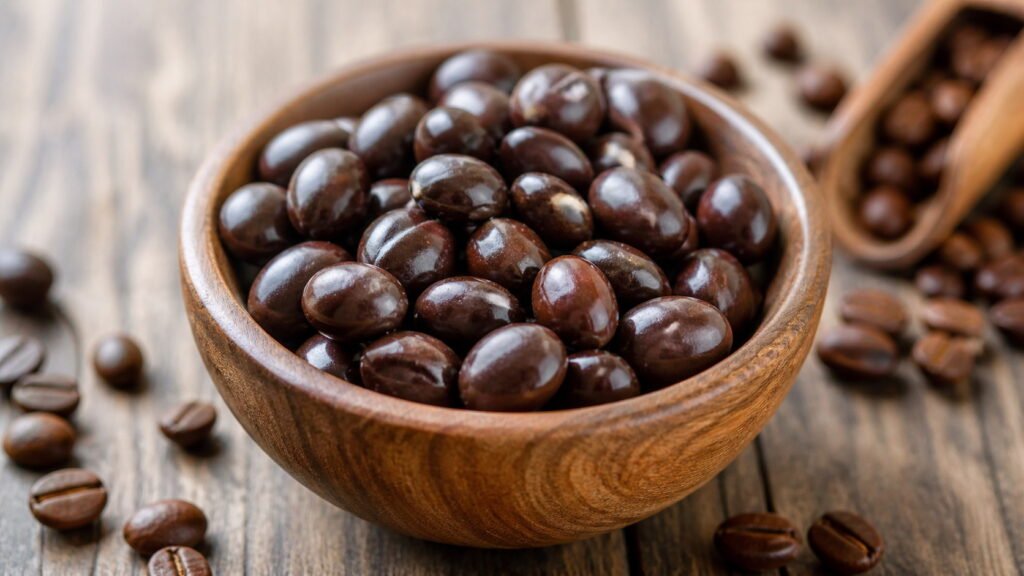
Not all chocolate covered coffee beans are created equal. The type of chocolate and the kind of bean inside can easily double—or halve—the caffeine content.
Milk chocolate covered coffee beans
- Estimated caffeine: 6–8 mg per bean
- Smoother, sweeter flavor
- Lower caffeine due to less cocoa content
These are the most beginner-friendly option and easier to snack on without going overboard—though it can still happen.
Dark chocolate covered coffee beans
- Estimated caffeine: 8–12+ mg per bean
- Rich, slightly bitter flavor
- Higher caffeine from both bean and chocolate
Dark chocolate versions are where caffeine starts adding up quickly.
Espresso beans vs regular roasted beans
“Espresso beans” sounds stronger, but here’s the reality:
- Espresso beans are simply coffee beans roasted for espresso brewing
- Caffeine content is similar to regular beans by weight
The difference comes down to:
- Bean type (Arabica vs Robusta)
- Roast level and density
Estimated caffeine comparison table
| Type | Caffeine per Bean | Caffeine per 10 Beans |
| Milk chocolate (Arabica) | 6–8 mg | 60–80 mg |
| Dark chocolate (Arabica) | 8–10 mg | 80–100 mg |
| Dark chocolate (Robusta) | 10–12+ mg | 100–120+ mg |
| White chocolate (any bean) | 5–10 mg | 50–100 mg |
Key takeaway: Dark chocolate + Robusta beans = the highest caffeine combination.
Serving Size Matters: How Quickly Caffeine Adds Up
Chocolate covered coffee beans are easy to overeat because they feel like candy. That’s exactly why caffeine intake can climb fast without you noticing.
What does a “serving” actually look like?
Most packaging lists a serving size around 1 ounce (28 grams), which is roughly:
- 15–20 beans (depending on size and coating)
Real-world caffeine scenarios
- Small handful (10 beans): ~60–120 mg caffeine
- Standard serving (1 oz): ~80–150 mg caffeine
- Two handfuls (20–30 beans): ~120–300 mg caffeine
Key takeaway: Two casual handfuls can push you close to the recommended daily caffeine limit.
How this compares to common drinks
- Brewed coffee (240 ml): ~80–100 mg
- Espresso (1 shot): ~63 mg
- Cold brew (240 ml): ~100–150 mg
Eating a small bag of chocolate covered coffee beans can easily match—or exceed—your morning coffee.
Another important detail: you don’t sip these—you snack on them quickly. That means caffeine hits your system in a shorter window, which can feel more intense.
What Affects Caffeine Levels in Chocolate Covered Coffee Beans?
Two bags of chocolate covered coffee beans can taste similar but deliver very different caffeine levels. Several variables are at play.
Bean variety: Arabica vs Robusta
- Arabica: smoother flavor, lower caffeine
- Robusta: bolder, more bitter, nearly double the caffeine
Many commercial snacks use Arabica for flavor, but some blends include Robusta for a stronger kick.
Roast level: light vs dark roast myths
A common belief is that dark roast has more caffeine. In reality:
- Light roast: slightly higher caffeine by weight
- Dark roast: slightly lower caffeine due to longer roasting
The difference is small, but it exists.
Chocolate thickness and cocoa percentage
The coating matters more than people think:
- Thick chocolate = more calories and slightly more caffeine
- Dark chocolate (70%+) = higher caffeine + theobromine
- Milk chocolate = milder effect overall
Bean size and density
Smaller, denser beans can contain more caffeine per gram, which affects total intake when measured by weight.
Brand variation
There’s no strict standard across brands. Differences can come from:
- Bean sourcing
- Roasting style
- Chocolate ratio
Key takeaway: Caffeine content isn’t fixed—brand and ingredients can shift it significantly.
Chocolate Covered Coffee Beans vs Coffee: Which Has More Caffeine?
This is where things get interesting. On a per-piece basis, coffee drinks seem stronger—but per serving, chocolate covered coffee beans can compete closely.
Side-by-side comparison
| Item | Typical Serving | Caffeine |
| Brewed coffee | 1 cup (240 ml) | 80–100 mg |
| Espresso | 1 shot (30 ml) | ~63 mg |
| Cold brew | 1 cup (240 ml) | 100–150 mg |
| Chocolate covered coffee beans | 1 oz (~15–20 beans) | 80–150 mg |
Which gives a stronger “kick”?
It depends on how you consume it:
- Coffee is sipped gradually
- Beans are eaten quickly
That difference changes how your body experiences the caffeine.
Absorption differences
- Drinking coffee → faster initial absorption
- Eating beans → slightly slower, but often more concentrated intake
The result?
Chocolate covered coffee beans can feel more intense, especially if eaten quickly on an empty stomach.
Practical takeaway
- One serving of beans = roughly one strong cup of coffee
- Multiple handfuls = easily exceed typical daily intake
Are Chocolate Covered Coffee Beans Stronger Than Energy Snacks?
They don’t look like a performance product, but chocolate covered coffee beans often deliver more caffeine per bite than many energy snacks.
How they compare
- Energy bars: ~50–100 mg caffeine per bar (if caffeinated)
- Caffeine gummies/chews: ~40–100 mg per serving
- Dark chocolate snacks: ~20–40 mg per serving
- Chocolate covered coffee beans (1 oz): ~80–150 mg
Key takeaway: Ounce for ounce, chocolate covered coffee beans can rival or outperform many “energy” products.
Why they’re easy to underestimate
- They look like candy, not a stimulant
- There’s no obvious “dose” per piece
- Flavor (especially milk chocolate) masks bitterness
Hidden caffeine risks
Casual snacking can turn into a caffeine overload without any clear stopping point. Unlike a labeled energy drink, you’re not mentally tracking intake the same way.
Practical insight: Treat them like a concentrated caffeine source—not just a sweet snack.
How Many Chocolate Covered Coffee Beans Is Too Much?
This is where awareness matters most. The question isn’t just how much caffeine in chocolate covered coffee beans, but how quickly you can cross safe limits.
Recommended daily caffeine limits
- Healthy adults: up to 400 mg per day
- Pregnant individuals: up to 200 mg per day
What that means in beans
Depending on the type:
- 30–40 beans (average): ~200–300 mg
- 40–60 beans (higher-caffeine types): ~300–400+ mg
Key takeaway: A single large snack session can hit your daily limit.
Signs you’ve had too much
- Jitters or shakiness
- Rapid heartbeat
- Anxiety or restlessness
- Trouble sleeping (even hours later)
A more practical guideline
Instead of counting milligrams:
- Stick to 10–20 beans max in one sitting
- Avoid combining with coffee or energy drinks
- Space intake across the day if needed
Small adjustments make a big difference here.
Who Should Be Careful with Chocolate Covered Coffee Beans?
Not everyone reacts to caffeine the same way. Some groups should approach these snacks with extra caution.
People sensitive to caffeine
Even a small amount can trigger:
- Anxiety
- Palpitations
- Digestive discomfort
For sensitive individuals, just 5–10 beans might feel like a full cup of coffee.
Pregnant individuals
Caffeine intake should stay below 200 mg per day, which can be reached quickly with chocolate covered coffee beans.
Teens and children
These snacks are especially misleading for younger people:
- Easy to overconsume
- Effects can be stronger due to lower body weight
Those with sleep or anxiety issues
Caffeine from beans can linger for hours. Late-day snacking can:
- Disrupt sleep cycles
- Increase stress or tension
Key takeaway: If caffeine already affects you strongly, chocolate covered coffee beans require extra moderation.
Pros and Cons of Getting Caffeine from Chocolate Covered Coffee Beans
Chocolate covered coffee beans sit in a unique spot—they’re part snack, part stimulant. That comes with some clear upsides and a few trade-offs worth paying attention to.
The upsides
- Portable energy: No brewing, no equipment, no waiting
- Fast, convenient boost: Easy to eat on the go
- Dual satisfaction: Combines caffeine with a sweet treat
- Long shelf life: More stable than brewed coffee
The downsides
- Easy to overconsume: No natural stopping point like finishing a cup
- Hidden calories: Sugar and fat add up quickly
- Inconsistent caffeine levels: Hard to track exact intake
- Stronger-than-expected effect: Especially when eaten quickly
Key takeaway: They’re incredibly convenient—but require more self-control than a cup of coffee.
Tips for Enjoying Chocolate Covered Coffee Beans Without Overdoing It
You don’t have to avoid them—just approach them with intention. A few simple habits can keep your caffeine intake in a safe, enjoyable range.
Smart portion control
- Pre-portion 10–15 beans instead of eating straight from the bag
- Use a small container rather than your hand as a guide
Time your intake
- Eat them earlier in the day to avoid sleep disruption
- Avoid combining with other caffeine sources within a short window
Choose your type wisely
- Go for milk chocolate + Arabica beans for lower caffeine
- Reserve dark chocolate + Robusta for when you actually want a stronger boost
Pair with food
Eating them alongside a snack (like nuts or a light meal) can:
- Slow caffeine absorption slightly
- Reduce the chance of jitters
Key takeaway: Treat them like a controlled caffeine source, not a mindless snack.
FAQ: Chocolate Covered Coffee Beans and Caffeine
How much caffeine is in one chocolate covered coffee bean?
Most contain around 6–12 mg of caffeine per bean, depending on the type of coffee bean and chocolate used.
How many chocolate covered coffee beans equal one cup of coffee?
A standard cup of coffee (80–100 mg caffeine) is roughly equal to 10–15 beans.
Do chocolate covered espresso beans have more caffeine?
Not necessarily. “Espresso beans” are just coffee beans roasted for espresso, so caffeine depends more on the bean type (Arabica vs Robusta) than the label.
Can you eat chocolate covered coffee beans every day?
Yes, in moderation. Staying within safe daily caffeine limits (under 400 mg for most adults) is key.
Do they give a faster caffeine boost than coffee?
They can feel more intense because they’re eaten quickly, even though absorption may be slightly slower than liquid coffee.
Do dark chocolate coffee beans have more caffeine than milk chocolate ones?
Yes. Dark chocolate adds extra caffeine and theobromine, making the overall effect stronger.
Final Takeaway: The Small Snack with a Big Caffeine Punch
Chocolate covered coffee beans might look like a simple treat, but they deliver a concentrated dose of caffeine in a very snackable form. A single handful can rival your morning coffee—and two can push you close to your daily limit.
The key is awareness. Knowing how much caffeine in chocolate covered coffee beans helps you enjoy them without crossing into uncomfortable territory.
For deeper insight into safe caffeine intake and how it affects the body, you can explore guidelines from the FDA: https://www.fda.gov/food/food-additives-petitions/spilling-beans-how-much-caffeine-too-much
Next time you grab a bag, try this: portion out a small serving, pay attention to how your body responds, and use them intentionally—whether it’s a quick pre-work boost or a mid-day pick-me-up.

Meet Suzee Amelia, the creative voice behind this space—a blog dedicated to exploring coffee culture, lifestyle insights, and everyday inspiration. With a passion for discovering rich flavors and sharing practical tips, Sophie Langford brings a thoughtful and engaging approach to every post.

1 thought on “How Much Caffeine in Chocolate Covered Coffee Beans”