

Brewing small batch coffee at home is one of the easiest ways to upgrade your daily cup without buying expensive equipment. Instead of making a full pot that loses freshness quickly, you’ll learn how to brew just enough coffee—perfectly extracted, full of flavor, and tailored to your taste.
This guide breaks everything down step by step, from choosing beans to dialing in ratios and mastering technique. Expect practical tips, real-world brewing insights, and simple adjustments that make a noticeable difference in every cup.
In This Article
Why Small Batch Coffee Brewing Is Gaining Popularity
Coffee drinkers are moving away from bulk brewing for a reason—freshness and control matter more than ever.
Small batch brewing focuses on making one or two cups at a time. That shift allows you to control every variable: grind size, water temperature, brew time, and even pouring technique. The result is a cleaner, more expressive cup.
Key reasons more people are brewing small batch coffee at home:
- Better flavor clarity – Subtle notes like citrus, chocolate, or florals stand out more
- Less waste – No more leftover coffee going stale on a hot plate
- More consistency – Easier to repeat a great cup when working in smaller quantities
- Flexible experimentation – Adjust variables without committing to a full pot
Small batch brewing also fits modern routines. Whether it’s a quiet morning ritual or a quick afternoon pick-me-up, it’s about quality over quantity.
What “Small Batch Coffee” Really Means (And Why It Matters)
“Small batch coffee” isn’t just a trendy phrase—it’s a practical brewing approach.
In a home setting, it typically means brewing 150 ml to 500 ml of coffee (about one to two cups). That smaller volume changes how extraction works, which is why technique becomes more important.
Ideal Serving Sizes and Ratios
Most small batch brews follow a simple ratio:
- 1:15 to 1:17 (coffee to water)
Example: 15g coffee → 225–255ml water
This range gives you flexibility:
- Lower ratio (1:15) = stronger, fuller body
- Higher ratio (1:17) = lighter, more delicate cup
How It Differs From Standard Brewing
Brewing a full pot often hides inconsistencies. Small batch brewing does the opposite—it reveals everything.
- Grind size becomes more critical
- Pouring technique affects extraction more noticeably
- Timing needs to be precise
That might sound intimidating, but it’s actually what makes small batch coffee so rewarding. Every small adjustment leads to a noticeable improvement.
Choosing the Right Beans for Small Batch Coffee at Home
Great small batch coffee starts with the beans. Since you’re brewing less coffee, every detail becomes more noticeable—including bean quality.
Fresh vs. Pre-Ground Coffee
Freshly ground beans make a huge difference.
- Whole beans preserve aroma and flavor longer
- Grinding just before brewing ensures optimal extraction
- Pre-ground coffee tends to taste flat and stale quickly
If you want better results instantly, upgrading to fresh beans is the fastest win.
Roast Level and Its Impact
Each roast level behaves differently in small batch brewing:
- Light roast – Bright acidity, complex flavors, requires precise brewing
- Medium roast – Balanced sweetness and body, beginner-friendly
- Dark roast – Bold, bitter notes, easier to extract but less nuanced
Small batch methods highlight subtle flavors, which is why medium to light roasts often shine the most.
Why Single-Origin Beans Work So Well
Single-origin coffee (from one region or farm) is ideal for small batch brewing.
- Cleaner, more distinct flavor profiles
- Easier to taste differences between beans
- Great for experimenting with brewing variables
When brewing small batches, you’re essentially zooming in on flavor. High-quality, single-origin beans give you something worth exploring.
Essential Equipment for Brewing Small Batch Coffee at Home
You don’t need a professional setup to brew excellent small batch coffee at home, but a few key tools make a big difference in consistency and flavor.
Minimal Setup vs. Enthusiast Gear
If you’re just getting started, keep it simple:
- Brewer (pour-over dripper, French press, or AeroPress)
- Kettle (a basic one works, but gooseneck gives more control)
- Fresh coffee beans
For more precise brewing, enthusiasts often add:
- Digital scale – Ensures accurate coffee-to-water ratios
- Burr grinder – Produces consistent grind size (critical for extraction)
- Thermometer or temperature-controlled kettle – Helps dial in flavor
Key takeaway: Consistency beats complexity. Even a simple setup can produce excellent results if you control your variables.
Best Tools for Precision Brewing
Small batch coffee magnifies small mistakes, so precision tools help you stay consistent:
- Scale with timer – Tracks both weight and brew time
- Burr grinder – Avoid blade grinders; they create uneven particles
- Gooseneck kettle – Allows slow, controlled pouring
These tools aren’t just for perfectionists—they help you repeat a great cup again and again.
Budget-Friendly vs. Premium Options
You can brew great coffee at any budget level:
| Category | Budget Option | Premium Option |
| Grinder | Manual burr grinder | Electric burr grinder |
| Kettle | Standard kettle | Gooseneck with temp control |
| Scale | Basic kitchen scale | Coffee scale with timer |
| Brewer | Plastic dripper | Ceramic or metal dripper |
Tip: Start with a good grinder first. It has the biggest impact on flavor.
Brewing Methods That Work Best for Small Batch Coffee
Not all brewing methods are equally suited for small quantities. Some shine when scaled down, while others struggle to maintain consistency.
Pour-Over (V60, Kalita Wave)
Best for: Flavor clarity and control
- Highlights subtle tasting notes
- Allows precise control over pouring and timing
- Works exceptionally well for 1–2 cups
Downside: Requires attention and practice
French Press (Small Batch Technique)
Best for: Full-bodied, rich coffee
- Simple and forgiving
- Produces a heavier mouthfeel
- Easy to scale down to one cup
Downside: Less clarity, more sediment in the cup
AeroPress
Best for: Speed and versatility
- Quick brew time (1–2 minutes)
- Extremely consistent results
- Great for experimenting with strength and ratios
Downside: Smaller capacity (ideal for single servings)
Quick Comparison
| Method | Flavor | Control | Ease of Use | Best For |
| Pour-over | Clean, bright | High | Medium | Flavor exploration |
| French press | Rich, bold | Low | Easy | Full body lovers |
| AeroPress | Balanced | Medium | Easy | Quick, consistent brews |
Insight: If your goal is to truly learn how to brew small batch coffee at home, pour-over gives the most control, while AeroPress offers the fastest path to consistency.
The Golden Ratio: Perfecting Coffee-to-Water Balance
Getting the ratio right is the foundation of great coffee. Even high-quality beans can taste off if the balance is wrong.
Understanding Brew Ratios
The “golden ratio” refers to how much coffee you use relative to water.
- 1:15 → Strong, intense flavor
- 1:16 → Balanced and versatile
- 1:17 → Lighter, more delicate
Example:
- 15g coffee + 240ml water = ~1:16 ratio
Key takeaway: Start with 1:16, then adjust based on taste.
Adjusting Ratios for Taste Preference
Small tweaks make a big difference:
- Want a stronger cup? → Use more coffee (1:15)
- Prefer something smoother? → Add more water (1:17)
- Tasting bitterness? → Slightly increase water or coarsen grind
Small batch brewing makes these adjustments easier to test quickly.
Common Ratio Mistakes in Small Batch Brewing
- Eyeballing measurements → Leads to inconsistent results
- Using too much coffee → Overwhelms subtle flavors
- Ignoring grind size → Ratio alone won’t fix poor extraction
Pro tip: Always weigh your coffee and water. Precision is what separates an average cup from a great one.
Step-by-Step: How to Brew Small Batch Coffee at Home (Pour-Over Method)
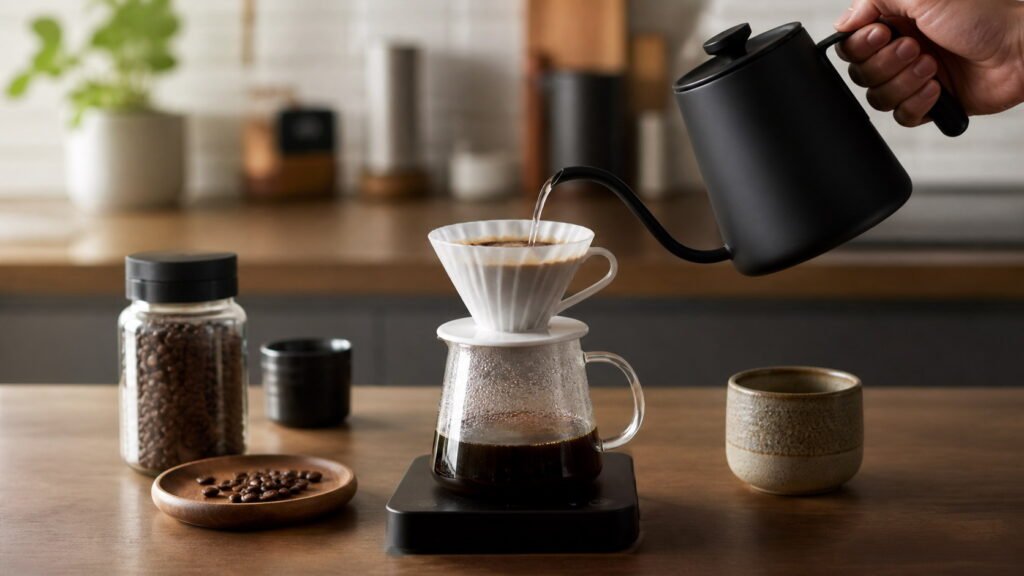
Pour-over is one of the best ways to learn how to brew small batch coffee at home because it gives you full control over every variable. Follow this method to get a clean, balanced cup.
What You’ll Need
- 15g fresh coffee beans
- 240ml hot water (around 92–96°C)
- Medium-fine grind (similar to table salt)
- Pour-over dripper + paper filter
- Scale and timer
- Gooseneck kettle (recommended)
Step-by-Step Brewing Process
1. Rinse and preheat
Place the filter in your dripper and rinse it with hot water. This removes paper taste and preheats your setup.
2. Add coffee and level the bed
Grind your beans fresh and add them to the filter. Gently shake to create an even surface.
3. Bloom (0:00–0:30)
Pour about 30–40ml of water—just enough to saturate the grounds.
Let it sit for 30 seconds.
Why it matters: This releases trapped gas and prepares the coffee for even extraction.
4. Main pour (0:30–1:30)
Slowly pour in a circular motion, bringing total water up to 150ml. Keep the flow steady, not aggressive.
5. Final pour (1:30–2:00)
Continue pouring until you reach 240ml total. Maintain a consistent pace.
6. Let it draw down (2:00–3:00)
Allow the water to fully pass through the coffee bed. Total brew time should land around 2.5–3 minutes.
What a Great Brew Looks Like
- Smooth, steady drip (not stalled or too fast)
- Flat or slightly domed coffee bed after brewing
- Aroma that’s clean and expressive
Key takeaway: Consistency in pouring and timing is more important than perfection.
Dialing in Flavor: Grind Size, Time, and Temperature
Once you’ve mastered the basics, flavor control comes down to three variables: grind size, brew time, and water temperature. Small batch coffee makes these adjustments easy to notice and refine.
How Grind Size Affects Extraction
Grind size determines how quickly water extracts flavor:
- Too fine → Over-extraction → Bitter, harsh taste
- Too coarse → Under-extraction → Sour, weak cup
- Just right → Balanced sweetness, clarity, and body
For pour-over small batches, aim for medium-fine as your starting point.
Brew Time Adjustments
Time and grind size are closely connected:
- Brew finishes too fast (<2 minutes) → Grind finer
- Brew takes too long (>3.5 minutes) → Grind coarser
Target range: 2.5 to 3 minutes for most small batch pour-overs
Temperature and Roast Level
Water temperature affects how compounds dissolve:
- 92–96°C (197–205°F) → Ideal range
- Light roasts → Use slightly hotter water (94–96°C)
- Dark roasts → Use slightly cooler water (90–93°C)
Insight: Higher temperatures extract more quickly, which can amplify bitterness if overdone.
Quick Reference Guide
| Variable | Too Low | Ideal | Too High |
| Grind size | Weak, sour | Balanced | Bitter, dry |
| Brew time | Under-extracted | Sweet spot | Over-extracted |
| Temperature | Flat flavor | Full extraction | Harsh notes |
Dialing in these variables is where small batch brewing becomes truly rewarding. One small change can completely transform your cup.
Common Mistakes When Brewing Small Batch Coffee (And How to Fix Them)
Even with great beans and equipment, a few common mistakes can hold your coffee back. The good news—each one is easy to fix once you recognize it.
Over-Extraction: Bitter, Dry Finish
What it tastes like: Harsh bitterness, lingering dryness
Common causes:
- Grind too fine
- Water too hot
- Brew time too long
How to fix it:
- Use a slightly coarser grind
- Lower water temperature by 1–2°C
- Speed up your pour slightly
Under-Extraction: Sour or Weak Coffee
What it tastes like: Sharp acidity, thin body
Common causes:
- Grind too coarse
- Not enough contact time
- Uneven saturation
How to fix it:
- Grind finer
- Extend brew time slightly
- Improve your bloom and pouring technique
Inconsistent Results Between Brews
What it feels like: One cup tastes great, the next doesn’t
Common causes:
- Eyeballing measurements
- Uneven pouring
- Inconsistent grind quality
How to fix it:
- Always use a scale
- Practice controlled, steady pouring
- Upgrade to a burr grinder if possible
Uneven Extraction
What it looks like: Channeling (water flows unevenly through grounds)
Fix it by:
- Pouring evenly in slow circles
- Making sure all grounds are saturated during bloom
- Avoiding aggressive pouring that disturbs the bed
Key takeaway: Most small batch coffee problems come down to control and consistency—not complicated techniques.
Flavor Profiling: How to Taste and Improve Your Brew
Brewing great coffee is only half the process. The other half is learning how to taste it intentionally. Small batch coffee makes this easier because subtle flavors are more noticeable.
What to Look for in Your Cup
Focus on three core elements:
- Acidity – Bright, lively notes (think citrus, berries)
- Body – The weight or texture (light, tea-like vs. rich and heavy)
- Sweetness – Natural sugars that balance bitterness and acidity
A well-brewed small batch coffee should feel balanced, with no single element overpowering the others.
How to Taste Like a Pro (Without Overthinking It)
- Let your coffee cool slightly—flavors become clearer below 60°C
- Take small sips and let the coffee coat your tongue
- Notice the aftertaste—this often reveals quality
Tip: If it tastes flat or dull, your extraction likely needs adjustment.
Keep a Simple Brewing Log
Tracking your brews helps you improve faster:
- Coffee origin and roast level
- Grind size
- Brew ratio
- Brew time
- Taste notes (bitter, sour, balanced, etc.)
You don’t need anything fancy—just consistency. Over time, patterns will emerge.
Brewing Small Batch Coffee for Different Preferences
One of the biggest advantages of learning how to brew small batch coffee at home is the ability to tailor each cup to your exact taste.
Strong vs. Smooth Cups
- Stronger coffee
- Use a 1:15 ratio
- Slightly finer grind
- Shorter brew time to avoid bitterness
- Smoother, lighter coffee
- Use a 1:17 ratio
- Slightly coarser grind
- Longer, gentler extraction
Adjusting for Milk-Based Drinks
Planning to add milk?
- Brew slightly stronger than usual (around 1:15)
- Choose medium to dark roasts for better balance
- Aim for a fuller body to avoid dilution
Brewing for One vs. Two People
Small batch doesn’t mean only one cup—it means controlled brewing.
- One cup (200–250ml) → Easier to dial in precisely
- Two cups (400–500ml) → Requires more careful pouring to maintain even extraction
Insight: As batch size increases, consistency becomes more important than ever.
Pro Tips to Elevate Your Small Batch Coffee Game
Once you’ve nailed the basics, a few small upgrades can noticeably improve your results.
- Preheat everything – Dripper, cup, and kettle to maintain stable temperature
- Use filtered water – Minerals impact extraction and flavor clarity
- Grind right before brewing – Freshness makes a visible difference in aroma
- Pour with intention – Slow, controlled pours prevent uneven extraction
- Experiment with agitation – A gentle swirl or stir can improve consistency
Key takeaway: Precision isn’t about perfection—it’s about repeatability.
How to Store Coffee Beans for Consistent Small Batch Brewing
Even the best brewing technique can’t fix stale beans. Proper storage keeps your coffee tasting fresh and expressive.
What to Avoid
- Air exposure (causes oxidation)
- Moisture (degrades flavor)
- Heat and sunlight (accelerate staling)
Best Storage Practices
- Use an airtight container
- Store in a cool, dark place (not the fridge)
- Buy smaller quantities to match your consumption
How Long Do Beans Stay Fresh?
- Peak flavor: 7–21 days after roasting
- Still usable: up to 4–6 weeks
- After that: noticeable flavor loss
Tip: Small batch brewing pairs perfectly with small batch buying—fresh beans in, better cups out.
FAQ: Small Batch Coffee Brewing at Home
How much coffee should I use for one cup?
Use around 15g of coffee for 240ml of water (1:16 ratio). Adjust slightly based on strength preference.
Can I use pre-ground coffee for small batch brewing?
Yes, but freshly ground coffee delivers significantly better flavor and aroma. Pre-ground tends to lose complexity quickly.
What’s the best grind size for small batch pour-over?
Medium-fine (similar to table salt) is a reliable starting point. Adjust based on brew time and taste.
How do I make my coffee less bitter?
Use a coarser grind, slightly lower water temperature, or shorten brew time to reduce over-extraction.
What’s the ideal brewing time for small batch coffee?
For pour-over, aim for 2.5 to 3 minutes. AeroPress and French press times will vary slightly.
Does water quality really matter in coffee brewing?
Yes. Clean, filtered water improves clarity and balance. For deeper guidance, refer to the Specialty Coffee Association’s water standards: https://sca.coffee/research/coffee-standards
Brewing small batch coffee at home isn’t about chasing perfection—it’s about building a process that works for you. Start with a simple setup, pay attention to your ratios, and adjust one variable at a time.
Your next cup is another opportunity to refine your technique. Try a new bean, tweak your grind, or experiment with your pouring style—and enjoy the process as much as the result.

Meet Suzee Amelia, the creative voice behind this space—a blog dedicated to exploring coffee culture, lifestyle insights, and everyday inspiration. With a passion for discovering rich flavors and sharing practical tips, Sophie Langford brings a thoughtful and engaging approach to every post.
