

A Trader Joe’s coffee rub recipe is one of those kitchen secrets that turns ordinary meat into something deeply savory, slightly sweet, and irresistibly smoky. If you’ve ever tried the original blend, you already know how addictive that crust can be.
This guide breaks everything down—from the flavor science behind coffee rubs to what makes Trader Joe’s version stand out—so you can recreate it at home with confidence. Expect practical tips, real cooking insights, and a clear path to getting that perfect crust every time.
In This Article
Why Trader Joe’s Coffee Rub Has a Cult Following
Trader Joe’s didn’t just release another spice blend—they created something that hits multiple flavor notes at once. That’s rare, and it’s why people keep going back for it.
A Perfect Balance of Bold and Sweet
The magic lies in contrast. You get the deep bitterness of coffee, balanced by a subtle sweetness and layered with spices that add warmth and heat. That combination enhances meat rather than masking it.
It Creates an Unmatched Crust
When exposed to high heat, the sugars caramelize while the coffee grounds help form a rich, textured crust. The result is a steak or rib surface that’s crispy, smoky, and packed with flavor.
It Feels Gourmet—But It’s Easy
Home cooks love it because it delivers steakhouse-level results without complicated techniques. A simple rub, a hot pan or grill, and you’re already halfway there.
What Is a Coffee Rub, Exactly?
Coffee rubs might sound unusual at first, but they’ve become a staple in barbecue and modern grilling for a reason.
Coffee as a Savory Ingredient
Ground coffee isn’t just for brewing. In cooking, it acts like a spice—bringing bitterness, depth, and a roasted aroma that pairs especially well with red meat.
Flavor Chemistry That Works
Coffee enhances flavor in a few key ways:
- Bitterness balances sweetness from sugar or caramelization
- Roasted notes amplify umami, especially in beef
- Fine particles help form a crust during searing
That’s why coffee rubs are commonly used on steaks, brisket, and ribs.
Best Foods for Coffee Rubs
While beef is the classic choice, coffee rubs also shine on:
- Pork chops and ribs
- Chicken (especially grilled or smoked)
- Roasted vegetables like carrots or sweet potatoes
Used correctly, it doesn’t taste like a cup of coffee—it just adds depth and complexity.
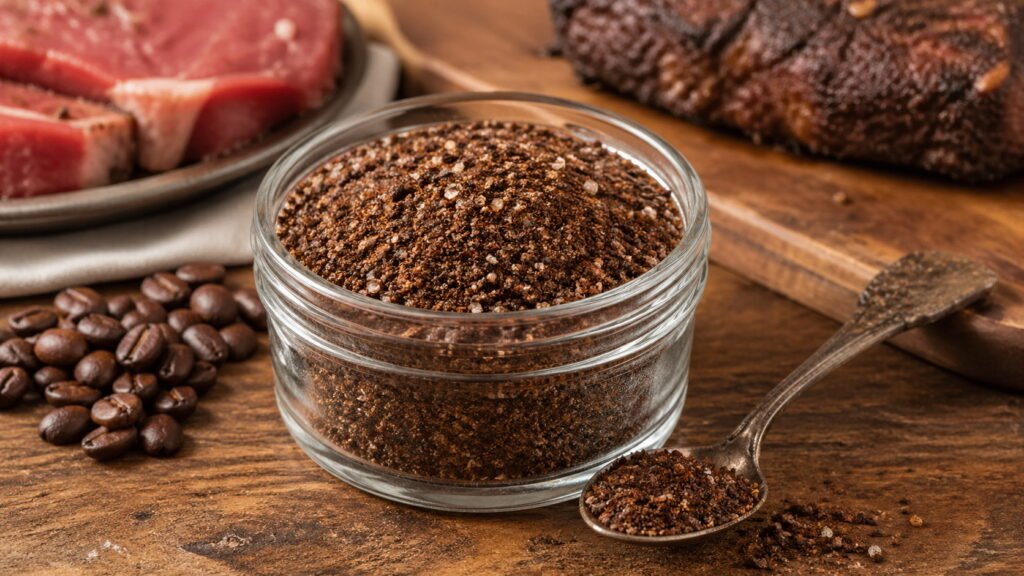
Trader Joe’s Coffee Rub Flavor Breakdown (What We’re Replicating)
Before making your own version, it helps to understand what you’re aiming for. Trader Joe’s blend is more nuanced than it seems.
Key Flavor Notes
Expect a layered profile:
- Smoky from paprika or similar spices
- Slightly sweet from sugar
- Peppery heat from black pepper or chili
- Rich and roasted from coffee
No single ingredient dominates—the balance is what makes it special.
Texture Matters More Than You Think
The grind size plays a big role. Trader Joe’s version uses a medium-coarse texture, which:
- Helps create a better crust
- Prevents the rub from turning muddy
- Distributes flavor evenly
Too fine, and it can burn. Too coarse, and it won’t stick properly.
Likely Ingredients Inside
While the exact formula isn’t public, most copycat versions include:
- Ground coffee (medium to dark roast)
- Brown sugar
- Smoked paprika
- Black pepper
- Garlic powder
- Salt
Understanding this base makes it much easier to recreate—and even improve—the blend in your own kitchen.
Trader Joe’s Coffee Rub Recipe (Copycat Version You Can Trust)
Recreating a Trader Joe’s coffee rub recipe at home is surprisingly simple. The key is balance—no single ingredient should overpower the others.
Ingredients
- 2 tbsp medium-coarse ground coffee (medium or dark roast)
- 1 tbsp brown sugar
- 1 tbsp smoked paprika
- 1 tsp freshly ground black pepper
- 1 tsp kosher salt
- 1 tsp garlic powder
- ½ tsp onion powder
- ½ tsp chili powder (adjust to taste)
Step-by-Step Instructions
- Add all ingredients to a small bowl.
- Mix thoroughly until evenly combined.
- Taste a small pinch and adjust salt, sweetness, or heat if needed.
- Store in an airtight container for immediate use or later.
Pro Tips for Best Results
- Use fresh coffee grounds for the most aromatic flavor.
- Keep the texture slightly coarse for a better crust.
- If the blend feels too bitter, add a touch more brown sugar.
This version closely mirrors the original while giving you control over flavor intensity.
Ingredient Deep Dive: Choosing the Right Coffee and Spices
Small ingredient choices can dramatically change your final result. Treat this rub like a recipe and a toolkit.
Choosing the Right Coffee
The coffee you use matters more than most people expect.
- Medium roast: Balanced, slightly sweet, great for most dishes
- Dark roast: Bolder, more bitter, ideal for steaks
- Grind size: Aim for medium-coarse, similar to coarse sand
Avoid ultra-fine grounds—they can burn quickly and turn harsh.
Why Brown Sugar Is Essential
Brown sugar isn’t just for sweetness.
- Helps create caramelization and crust
- Balances coffee’s natural bitterness
- Adds a subtle molasses depth
For a deeper flavor, try dark brown sugar instead of light.
Spice Adjustments That Make It Yours
Once you understand the base, customization becomes easy.
- Swap smoked paprika with chipotle powder for extra heat
- Add cumin for an earthier profile
- Increase chili powder if you want more kick
Tip: Start small when adjusting spices—this blend is all about balance.
How to Use Trader Joe’s Coffee Rub Like a Pro
Knowing how to apply your Trader Joe’s coffee rub recipe is just as important as making it.
Best Cuts of Meat
Coffee rub works best with rich, flavorful proteins:
- Steak (ribeye, sirloin, New York strip)
- Pork chops or ribs
- Chicken thighs
- Even burgers for a bold twist
How Much Rub to Use
A good rule of thumb:
- Use 1 to 2 tablespoons per pound of meat
You want a generous coating, but not so much that it cakes on.
When to Apply the Rub
Timing affects flavor intensity.
- 30–60 minutes before cooking: Balanced flavor, great crust
- Overnight (dry brine style): Deeper penetration and stronger taste
Let the meat sit at room temperature for about 20 minutes before cooking for even heat distribution.
Application Technique
- Pat the meat dry first (this helps the rub stick)
- Press the rub in gently—don’t just sprinkle
- Avoid rubbing too aggressively, which can clump the coffee
Done right, this method creates a deeply flavorful crust that locks in juices and elevates every bite.
Cooking Methods That Bring Out the Best Flavor
The way you cook your meat can make or break a Trader Joe’s coffee rub recipe. Heat transforms the rub into a flavorful crust—but too much can turn it bitter.
Grilling for Smoky Depth
Grilling is the most popular method for coffee-rubbed meats.
- Use medium-high heat to avoid burning the sugar
- Sear first, then move to indirect heat to finish cooking
- Keep the lid closed to enhance smoky flavor
This method works especially well for steaks, ribs, and pork chops.
Pan-Searing for a Perfect Crust
No grill? A cast iron pan delivers excellent results.
- Preheat the pan until it’s very hot
- Add a small amount of high smoke-point oil
- Sear each side until a dark crust forms
Tip: Avoid constant flipping—let the crust develop fully before turning.
Oven Roasting for Control and Consistency
Ideal for thicker cuts or chicken.
- Start with a quick sear, then transfer to the oven
- Roast at 180–200°C (350–400°F)
- Use a thermometer for accuracy
This approach prevents overcooking while preserving the rub’s flavor.
Avoiding Burnt or Bitter Flavors
Coffee and sugar are sensitive to high heat.
- Don’t cook over direct high flames for too long
- Watch for blackening—dark brown is ideal, not charred black
- Let the meat rest after cooking to stabilize flavors
Handled properly, the rub becomes rich and smoky—not harsh.
Flavor Pairing Ideas That Elevate Your Dish
A bold rub deserves thoughtful pairings. The right sides and drinks can highlight the depth of your Trader Joe’s coffee rub recipe.
Side Dishes That Balance the Richness
Coffee-rubbed meats are intense, so contrast is key.
- Roasted vegetables (carrots, sweet potatoes) for natural sweetness
- Creamy mashed potatoes to mellow the spices
- Fresh salads with citrus dressing to cut through richness
Sauces and Glazes That Work
You don’t need sauce—but the right one can elevate everything.
- BBQ sauce with a hint of sweetness
- Honey glaze for contrast
- Chimichurri for a fresh, herbal lift
Keep sauces light so they don’t overpower the rub.
Beverage Pairings (Yes, Coffee Too)
Pairing drinks with coffee-rubbed dishes adds another layer of enjoyment.
- Cold brew coffee for a complementary flavor
- Dark beer or stout for richness
- Red wine (like Cabernet Sauvignon) for bold pairing
The goal is harmony—not competition.
Customizing Your Coffee Rub Recipe
One of the biggest advantages of making your own Trader Joe’s coffee rub recipe is flexibility. You can tailor it exactly to your taste.
Sweeter vs Spicier Versions
Adjusting just a few ingredients changes the entire profile.
- Add more brown sugar for a sweeter, caramelized crust
- Increase chili powder or add cayenne for extra heat
Low-Sugar or Keto-Friendly Options
Cutting sugar doesn’t mean losing flavor.
- Replace brown sugar with a sugar-free alternative
- Use a smaller amount and rely more on spices
You’ll still get depth, just with less sweetness.
Adding Herbs or Smoky Elements
For a more complex blend:
- Add thyme or rosemary for an herbal touch
- Use liquid smoke (sparingly) or smoked salt for intensity
- Try espresso powder for a stronger coffee note
Pro tip: Make small test batches when experimenting. It’s easier to tweak than to fix an overpowering mix.
With a few adjustments, your homemade rub can go from a copycat to a signature blend you’ll keep coming back to.
Common Mistakes to Avoid When Making Coffee Rub
Even a great Trader Joe’s coffee rub recipe can go sideways with a few small missteps. These are the issues that most often affect flavor and texture.
Using the Wrong Grind Size
Coffee that’s too fine behaves like powder—it burns quickly and creates a bitter surface.
- Aim for medium-coarse grounds (similar to coarse sand)
- Avoid espresso-fine coffee unless blending into a sauce
Overloading the Blend with Coffee
More coffee doesn’t mean better flavor.
- Too much leads to harsh bitterness
- Keep coffee balanced with sugar and spices
Burning the Rub During Cooking
High heat can scorch sugar and coffee.
- Avoid prolonged direct flame
- Look for a deep brown crust, not black char
- Finish thicker cuts with indirect heat or in the oven
Skipping the Resting Time
Cutting into meat too early releases juices.
- Let meat rest 5–10 minutes after cooking
- This helps the crust settle and flavors intensify
How to Store Your Homemade Coffee Rub
A fresh rub delivers the best results, but proper storage keeps it flavorful for weeks.
Shelf Life and Freshness
- Best used within 2–4 weeks for peak flavor
- Coffee loses aroma over time, so freshness matters
Best Storage Containers
- Use an airtight glass jar or spice container
- Keep away from heat, light, and moisture
Keeping the Flavor Bold
- Store in a cool, dark cabinet
- Avoid shaking directly over steaming food (moisture ruins texture)
A well-stored rub keeps its aroma, balance, and punch intact.
Is Homemade Better Than Trader Joe’s Coffee Rub?
Both versions have their place, but making your own offers clear advantages.
Cost Comparison
- Store-bought: Convenient, but adds up over time
- Homemade: More cost-effective, especially in larger batches
Flavor Control
- Adjust sweetness, spice, and intensity
- Use higher-quality coffee for better results
Convenience vs Creativity
- Trader Joe’s: Ready to use
- Homemade: Fully customizable and adaptable
If you enjoy experimenting in the kitchen, homemade quickly becomes the better option.
Quick Variations: Beyond Meat (Creative Uses)
A Trader Joe’s coffee rub recipe isn’t limited to steak or ribs. It’s surprisingly versatile.
Coffee Rub on Vegetables
- Toss with carrots, sweet potatoes, or eggplant
- Roast until caramelized for a sweet-savory finish
Burgers and Plant-Based Dishes
- Mix into ground beef or plant-based patties
- Adds depth without needing extra seasoning
Unexpected Uses
- Sprinkle lightly on roasted nuts
- Add a pinch to BBQ sauce for complexity
- Use as a finishing touch on popcorn for a bold snack
Experimentation reveals just how flexible this blend can be.
FAQ: Trader Joe’s Coffee Rub Recipe
Can I use instant coffee for coffee rub?
Yes, but it’s not ideal. Instant coffee is finer and can taste harsher. Coarsely ground coffee provides better texture and flavor.
Does coffee rub make meat taste like coffee?
Not exactly. It adds depth and a roasted note rather than a strong coffee flavor.
Can I make Trader Joe’s coffee rub recipe without sugar?
Yes. You can reduce or replace sugar, but keep in mind it helps balance bitterness and create a crust.
How long should I leave coffee rub on meat before cooking?
At least 30–60 minutes for good flavor. Overnight application creates a deeper, more intense result.
What’s the best cooking method for coffee rub?
Grilling or pan-searing works best for developing a crust, followed by indirect heat if needed.
What grind size works best for coffee rub?
Medium-coarse grind is ideal—it sticks well and doesn’t burn as easily as fine grounds.
Final Thoughts: Mastering Your Signature Coffee Rub
Once you’ve made your own Trader Joe’s coffee rub recipe, it’s hard to go back. You get full control over flavor, better freshness, and the freedom to experiment with every batch.
If you want to refine your technique even further, understanding how roasting and grind size affect flavor can make a noticeable difference. The Specialty Coffee Association offers helpful standards and insights: https://sca.coffee
Try the recipe, tweak it to your taste, and use it across different dishes. One good batch is all it takes to turn this into a go-to staple in your kitchen.

Meet Suzee Amelia, the creative voice behind this space—a blog dedicated to exploring coffee culture, lifestyle insights, and everyday inspiration. With a passion for discovering rich flavors and sharing practical tips, Sophie Langford brings a thoughtful and engaging approach to every post.
