
Curious about Trader Joe’s cold brew medium roast caffeine content and whether it packs more punch than your usual cup? You’re not alone. Cold brew has a reputation for being smoother and stronger, which makes understanding its caffeine level especially important.
This guide breaks down exactly how much caffeine you’re getting, how it compares to other coffee styles, and how to control your intake without sacrificing flavor. Expect practical tips, real-world comparisons, and clarity you can actually use the next time you pour a glass.
In This Article
Why Everyone Is Curious About Trader Joe’s Cold Brew Medium Roast Caffeine Content
Cold brew has quickly moved from niche cafés to everyday fridges. Trader Joe’s version, in particular, stands out for being affordable, convenient, and surprisingly potent.
The curiosity around its caffeine content comes down to a few key reasons:
- Cold brew is often stronger than it tastes
Its smooth, low-acid profile can hide high caffeine levels, making it easy to drink more than intended. - It’s typically sold as a concentrate
Many people aren’t sure whether they should dilute it—or how that affects caffeine intake. - Serving sizes are unclear
Unlike a standard cup of drip coffee, cold brew servings vary depending on how you mix it. - Caffeine tolerance varies widely
What feels mild to one person can feel intense to another, especially with concentrated coffee.
Understanding Trader Joe’s cold brew medium roast caffeine content helps you avoid overdoing it while still enjoying the bold, smooth flavor that makes cold brew so popular.
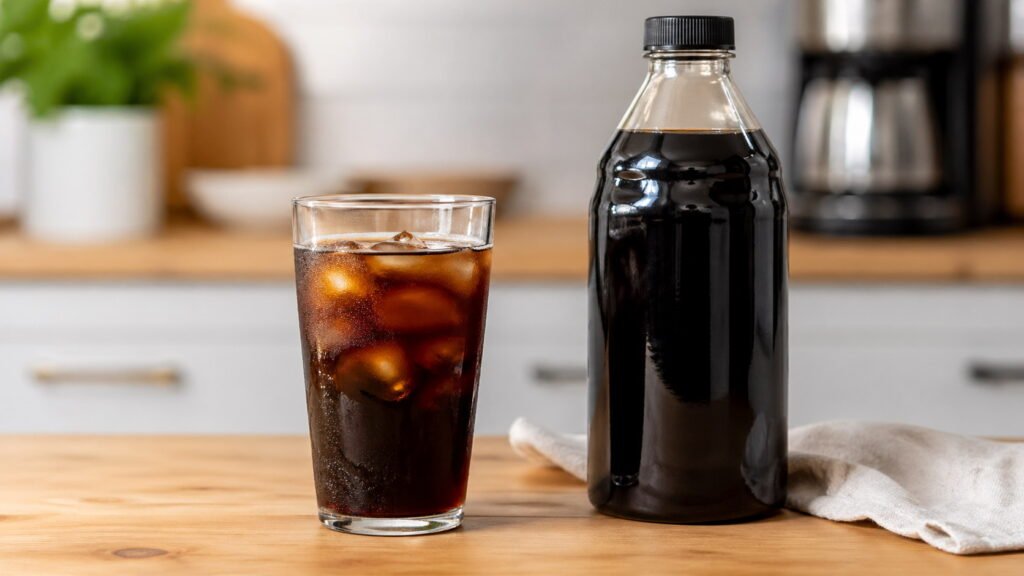
Trader Joe’s Cold Brew Medium Roast: Product Overview
Trader Joe’s offers cold brew in a format designed for flexibility—but that flexibility can also cause confusion if you’re not familiar with how it works.
What Exactly Are You Buying?
Most Trader Joe’s cold brew products fall into the concentrate category, not ready-to-drink coffee. That means:
- It’s brewed at a higher coffee-to-water ratio
- Designed to be diluted before drinking
- Delivers a stronger caffeine hit per ounce
If you drink it straight, you’re essentially consuming a double (or triple) strength coffee.
Roast Level and Bean Characteristics
This version uses a medium roast, which strikes a balance between:
- Brightness and acidity (lighter roasts)
- Boldness and bitterness (darker roasts)
In cold brew form, medium roast typically delivers:
- Smooth chocolatey notes
- Subtle nutty undertones
- Low acidity with a clean finish
Packaging and Serving Flexibility
Trader Joe’s cold brew usually comes in multi-serving bottles, giving you room to customize:
- Stronger mix: Less water, more caffeine
- Milder mix: More water or milk, lower caffeine
- Creative options: Ice, plant-based milk, flavored syrups
This flexibility is great—but it also means caffeine intake depends entirely on how you prepare it.
Trader Joe’s Cold Brew Medium Roast Caffeine Content (Per Serving Breakdown)
Here’s where things get practical. While Trader Joe’s doesn’t always publish exact caffeine numbers, we can estimate based on standard cold brew concentrate ratios.
Estimated Caffeine Per Serving
A typical cold brew concentrate contains roughly:
- 100–200 mg of caffeine per 8 oz (diluted serving)
- 200–300+ mg per 8 oz if consumed undiluted
That’s significantly higher than regular drip coffee, which averages around 80–100 mg per cup.
Diluted vs Undiluted: The Real Difference
How you drink it matters more than anything else:
| Preparation Style | Approx. Caffeine (8 oz) | Experience |
| Diluted (1:1 ratio) | 100–150 mg | Smooth, balanced |
| Light dilution | 150–200 mg | Strong but drinkable |
| No dilution | 200–300+ mg | Intense, high impact |
Key takeaway: Trader Joe’s cold brew medium roast caffeine content can easily double depending on your dilution.
Total Caffeine Per Bottle
Depending on bottle size, you could be looking at:
- 600–1,200 mg total caffeine per bottle
That’s enough for multiple servings—but also easy to overconsume if you’re not measuring.
Understanding these numbers gives you control. Instead of guessing, you can dial in the exact strength that fits your energy needs and daily routine.
How Strong Is It Really? Comparing Trader Joe’s Cold Brew Medium Roast Caffeine Content
Numbers are helpful, but context makes them meaningful. Let’s put Trader Joe’s cold brew medium roast caffeine content side by side with other popular coffee options.
Cold Brew vs Drip Coffee
A standard cup of drip coffee (8 oz) usually contains:
- 80–100 mg of caffeine
When properly diluted, Trader Joe’s cold brew often lands at:
- 100–150 mg per 8 oz
That makes it noticeably stronger than drip, even when mixed correctly.
Cold Brew vs Espresso
Espresso feels intense, but the serving size is small:
- 1 shot (1 oz): ~60–70 mg caffeine
To match one 8 oz glass of diluted cold brew, you’d need roughly:
- 2–3 espresso shots
Cold brew delivers its caffeine more gradually, which is why it feels smoother but lasts longer.
Cold Brew vs Bottled Coffee Drinks
Many ready-to-drink coffees are milder:
- Bottled iced coffee: 80–120 mg per serving
- Energy coffee drinks: 150–200 mg
Trader Joe’s cold brew concentrate can exceed both, especially if you pour freely without measuring.
Does Medium Roast Mean Less Caffeine?
A common myth suggests darker coffee equals more caffeine. In reality:
- Caffeine content is relatively stable across roast levels
- Light roasts may slightly retain more caffeine by weight
- Medium roast sits right in the middle—balanced, not weak
What really matters is the brewing method. Cold brew extracts caffeine over many hours, which increases overall concentration.
Bottom line: Trader Joe’s cold brew medium roast caffeine content feels stronger not because of the roast—but because of how it’s brewed and served.
What Affects the Caffeine in Trader Joe’s Cold Brew Medium Roast
Two people can drink the same bottle and experience completely different caffeine levels. That’s because several variables shape the final strength in your cup.
Brew Method: Time Changes Everything
Cold brew typically steeps for:
- 12 to 24 hours
This extended extraction pulls out:
- More caffeine
- More soluble compounds
- Less acidity than hot brewing
The result is a dense, concentrated coffee base.
Coffee-to-Water Ratio
Concentrate is made using a higher ratio than standard coffee:
- Typical cold brew concentrate: 1:4 to 1:5 (coffee to water)
- Drip coffee: 1:15 to 1:18
More coffee grounds = more caffeine per ounce
Grind Size and Extraction
Cold brew uses a coarse grind, which:
- Slows extraction
- Prevents bitterness
- Still allows high caffeine levels over time
Even with a coarser grind, the long steep makes up for it.
Your Dilution Habits
This is the biggest factor you control:
- Heavy dilution → smoother, lower caffeine
- Minimal dilution → bold, high caffeine
- No dilution → very strong and potentially overwhelming
Practical tip: Start with a 1:1 ratio (equal parts concentrate and water or milk), then adjust based on taste and energy needs.
Taste Profile vs Caffeine Strength: What to Expect
Strong coffee doesn’t always taste strong—and Trader Joe’s cold brew is a perfect example.
Flavor Notes of Medium Roast Cold Brew
Expect a profile that leans toward:
- Chocolatey richness
- Light nuttiness
- Subtle caramel sweetness
- Minimal acidity
Cold brewing smooths out sharp edges, creating a drink that’s easy to sip.
Smoothness vs Intensity
Despite its caffeine content, cold brew often feels:
- Less bitter than hot coffee
- Easier on the stomach
- More “rounded” in flavor
That smoothness can be misleading.
Important insight: You might drink more simply because it tastes less intense—even when caffeine levels are high.
Does Stronger Caffeine Mean Stronger Taste?
Not necessarily.
- Caffeine itself is only mildly bitter
- Flavor intensity comes from oils, acids, and dissolved solids
- Cold brew emphasizes smoothness over sharpness
This creates a unique experience:
- High caffeine + low perceived harshness
It’s one of the reasons Trader Joe’s cold brew is so popular—and also why it pays to measure your servings carefully.
Best Ways to Drink Trader Joe’s Cold Brew for Controlled Caffeine Intake
Getting the most out of Trader Joe’s cold brew medium roast caffeine content isn’t about drinking less—it’s about dialing it in. A few small adjustments can help you enjoy the flavor while keeping your caffeine exactly where you want it.
Start with a Smart Dilution Ratio
If you’re unsure where to begin, use this as a baseline:
- 1:1 ratio (concentrate : water or milk) → balanced strength, ideal for daily drinking
- 1:2 ratio → lighter caffeine, smoother and more session-friendly
- 2:1 ratio → stronger kick, best for mornings or high-focus tasks
Measure once or twice, and you’ll quickly learn what works for your body.
Choose Your Mixer Strategically
What you add doesn’t just change flavor—it affects how quickly you drink it.
- Water → clean, highlights coffee notes
- Milk or plant-based alternatives → softens intensity, slows sipping
- Ice → gradually dilutes, especially useful for strong pours
Pro tip: Pour over ice first, then add your concentrate. This naturally tempers the strength as it melts.
Time Your Intake
Cold brew’s higher caffeine can linger longer than expected.
- Morning: best window for stronger ratios
- Early afternoon: moderate dilution
- Late afternoon/evening: lighter mix or skip altogether
Spacing your intake helps avoid that delayed caffeine crash.
Watch Portion Size (Not Just Strength)
It’s easy to drink a large glass without realizing how much caffeine it contains.
- Use smaller glasses (8–10 oz)
- Avoid refilling immediately
- Treat it like a concentrated beverage, not regular iced coffee
Key takeaway: Control comes from both dilution and portion awareness—not just one or the other.
Who Should (and Shouldn’t) Drink Trader Joe’s Cold Brew Medium Roast
This isn’t a one-size-fits-all coffee. The strength and smoothness make it ideal for some—and a bit too much for others.
Great Fit For:
- Busy professionals needing sustained energy without multiple cups
- Students looking for focus during long study sessions
- Cold brew fans who enjoy smooth, low-acid coffee
- People who prefer customizable drinks over fixed-strength coffee
The extended caffeine release can feel more stable compared to quick espresso spikes.
Approach with Caution If You:
- Are sensitive to caffeine (jitters, anxiety, sleep disruption)
- Drink coffee late in the day
- Tend to eyeball portions instead of measuring
- Already consume other caffeine sources (tea, energy drinks)
Daily Caffeine Guidelines
Most health authorities suggest:
- Up to 400 mg per day for healthy adults
With Trader Joe’s cold brew, that could be:
- 2–3 properly diluted servings
- Or just 1–2 servings if consumed strong
Practical reality: It’s easier than you think to hit your daily limit with cold brew—especially if you enjoy larger glasses.
Trader Joe’s Cold Brew Medium Roast vs Dark Roast Cold Brew: Caffeine Differences
Choosing between medium and dark roast cold brew often comes down to flavor—but caffeine misconceptions can influence the decision.
The Big Myth: Dark Roast Has More Caffeine
This is one of the most persistent coffee myths.
- Dark roast beans are roasted longer, which slightly reduces density
- Light roasts may retain slightly more caffeine by weight
- In liquid form, the difference is minimal
Translation: Roast level has far less impact than brewing method.
What Actually Changes Between Medium and Dark Roast Cold Brew
| Factor | Medium Roast Cold Brew | Dark Roast Cold Brew |
| Flavor | Balanced, chocolatey, smooth | Bolder, smokier, more bitter |
| Acidity | Low | Very low |
| Perceived Strength | Moderate | Stronger taste |
| Caffeine Content | Similar overall | Similar overall |
Which One Should You Choose?
- Go with medium roast if you want:
- Smooth, easy-drinking cold brew
- Balanced flavor with subtle sweetness
- Choose dark roast if you prefer:
- Deep, bold flavors
- More traditional “strong coffee” taste
Important distinction: Stronger taste does not equal higher caffeine.
That means Trader Joe’s cold brew medium roast caffeine content is just as capable of delivering a serious energy boost as its darker counterpart—without the heavier flavor profile.
Pro Tips to Customize Strength Without Losing Flavor
Getting the caffeine level right is only half the equation. The real goal is to adjust Trader Joe’s cold brew medium roast caffeine content without flattening its flavor.
Dial In Strength Without Watering It Down
Too much water can make cold brew taste thin. Instead:
- Use a slightly stronger concentrate ratio, then add ice for gradual dilution
- Mix with cold filtered water (tap water can dull flavor)
- Keep dilution within 1:1 to 1:2 for best balance
Upgrade with Milk and Alternatives
Milk doesn’t just soften bitterness—it enhances body and sweetness.
- Whole milk → creamy, dessert-like texture
- Oat milk → naturally sweet and smooth
- Almond milk → lighter, nutty finish
These options help reduce perceived strength without actually needing to dilute as much.
Chill Without Compromising Taste
Temperature affects how you perceive strength.
- Always chill your concentrate beforehand
- Use coffee ice cubes to avoid dilution over time
- Store in an airtight bottle to preserve aroma
Add Flavor Without Overpowering the Coffee
A few subtle additions can make a strong brew feel more approachable:
- Vanilla extract (a drop or two)
- Cinnamon or cocoa powder
- Light sweeteners like honey or simple syrup
Key insight: You don’t need to weaken the coffee to make it enjoyable—just balance it.
Frequently Asked Questions About Trader Joe’s Cold Brew Medium Roast Caffeine Content
How much caffeine is in a full bottle of Trader Joe’s cold brew medium roast?
Most bottles contain roughly 600–1,200 mg of caffeine total, depending on concentration and size.
Is Trader Joe’s cold brew stronger than typical iced coffee?
Yes. Even when diluted, it often contains more caffeine than standard iced coffee due to its concentrate base.
Can you drink Trader Joe’s cold brew straight without dilution?
You can, but it’s very strong—often delivering 200–300+ mg per serving, which may be too intense for many people.
What’s the best dilution ratio for balanced caffeine and flavor?
A 1:1 ratio (equal parts concentrate and water or milk) is the most reliable starting point.
Does refrigeration affect caffeine strength?
No. Cold storage preserves flavor but doesn’t change caffeine content.
How does grind size affect cold brew caffeine extraction?
Cold brew uses a coarse grind, which slows extraction but still results in high caffeine due to the long steeping time.
How long should cold brew be steeped for optimal strength?
Typically 12–24 hours. Longer steeping increases extraction but can slightly deepen flavor rather than dramatically boosting caffeine.
Final Take: Is Trader Joe’s Cold Brew Medium Roast Too Strong or Just Right?
Trader Joe’s cold brew hits a sweet spot: high caffeine, smooth flavor, and total flexibility. That combination makes it incredibly appealing—but also easy to underestimate.
When handled properly, it’s:
- Strong enough to replace multiple cups of coffee
- Smooth enough to drink daily
- Flexible enough to match your exact caffeine preference
The real advantage lies in control. Once you understand Trader Joe’s cold brew medium roast caffeine content, you can tailor every glass to fit your routine—whether you need a gentle morning boost or a serious productivity push.
For deeper insights into caffeine intake and coffee standards, you can check the Specialty Coffee Association’s resources: https://sca.coffee
Now it’s your turn—grab a bottle, experiment with your ideal ratio, and find that perfect balance between flavor and energy.

Meet Suzee Amelia, the creative voice behind this space—a blog dedicated to exploring coffee culture, lifestyle insights, and everyday inspiration. With a passion for discovering rich flavors and sharing practical tips, Sophie Langford brings a thoughtful and engaging approach to every post.
