

Learning how to make good coffee at home for the first time can feel surprisingly tricky. One cup tastes bitter, the next is weak, and suddenly coffee feels more complicated than it should be. The truth is, great coffee isn’t about expensive gear or barista-level skills—it’s about getting a few key fundamentals right.
This guide walks you through everything you actually need to know, from choosing beans to setting up your first simple brew. Expect clear steps, practical tips, and small adjustments that make a big difference in flavor.
In This Article
Why Your First Cup Matters More Than You Think
That first successful cup sets the tone for your entire coffee routine. Nail it early, and coffee becomes something you look forward to. Miss it, and it turns into a frustrating guessing game.
What “Good Coffee” Really Means
A good cup isn’t just “strong” or “caffeinated.” It’s about balance:
- Bitterness (from extraction)
- Acidity (brightness or liveliness)
- Sweetness (natural sugars from the bean)
When these are in harmony, coffee tastes smooth, rich, and enjoyable—even without sugar.
Common Beginner Mistakes That Ruin Flavor
Most first-time brewers struggle because of a few avoidable issues:
- Using water that’s too hot (burns the coffee → bitterness)
- Guessing measurements instead of using a ratio
- Choosing stale or low-quality beans
- Ignoring grind size completely
Fixing even one of these can dramatically improve your cup.
Why Starting Simple Works Best
Complicated brewing methods don’t guarantee better coffee. A simple, repeatable process gives you consistency, which is far more important when you’re just starting out.
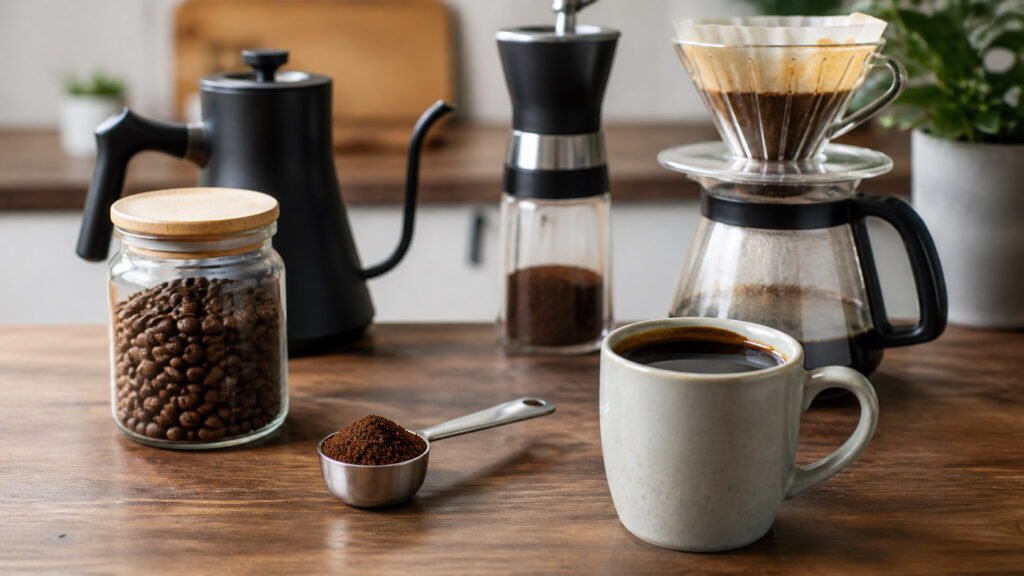
How to Make Good Coffee at Home for the First Time: The Essentials You Need
You don’t need a fancy setup to brew great coffee. Focus on a few key tools that actually impact flavor.
Must-Have Tools for Beginners
These are non-negotiable if you want consistent results:
- Fresh coffee beans (or quality pre-ground coffee)
- Clean water
- A basic brewing device (French press, pour-over, or drip machine)
- A way to measure (tablespoon or scale)
Nice-to-Have Upgrades (That Make Life Easier)
Once you’re comfortable, these improve precision:
- Burr grinder → consistent grind size
- Gooseneck kettle → better pour control
- Digital scale → accurate coffee-to-water ratio
You don’t need these on day one—but they’re worth considering later.
Budget Setup vs Smart Upgrade Path
| Level | Setup | What You Get |
| Basic | Pre-ground + French press | Simple, affordable, good flavor |
| Intermediate | Whole beans + grinder | Better freshness and control |
| Advanced | Scale + pour-over setup | Precision and clarity in flavor |
Key takeaway: Start simple, then upgrade based on what you enjoy—not what looks impressive.
Choosing the Right Coffee Beans (This Changes Everything)
Even perfect brewing won’t save bad beans. If your coffee tastes flat or harsh, the beans are often the problem.
Whole Beans vs Pre-Ground: What Should You Choose?
- Whole beans → fresher, more flavorful, longer shelf life
- Pre-ground → convenient, but loses aroma quickly
If possible, go with whole beans and grind just before brewing. The difference is noticeable even to beginners.
Understanding Roast Levels Without Overthinking It
- Light roast → brighter, more acidic, fruity notes
- Medium roast → balanced, smooth, slightly sweet
- Dark roast → bold, bitter, smoky
For first-time brewing, medium roast is the safest and most forgiving choice.
Freshness Tips That Actually Matter
- Look for a roast date, not just an expiration date
- Use beans within 2–4 weeks of roasting
- Store in an airtight container, away from light and heat
Avoid storing coffee in the fridge—it introduces moisture and dulls flavor.
Water, the Silent Ingredient That Makes or Breaks Coffee
Coffee is over 98% water, yet it’s the most overlooked part of brewing. Even high-quality beans can taste dull or harsh if your water isn’t right.
Why Water Quality Matters More Than You Think
Tap water often contains minerals, chlorine, or impurities that affect flavor. Too many minerals can make coffee taste flat, while too few can leave it tasting thin and lifeless.
Quick fix:
- Use filtered water if possible
- Avoid distilled water (it lacks minerals needed for extraction)
Ideal Water Temperature for Brewing
Temperature controls how flavors are extracted.
- Too hot (boiling) → bitter, over-extracted coffee
- Too cool → weak, sour, under-extracted coffee
The sweet spot is:
- 90–96°C (195–205°F)
No thermometer? Let boiling water sit for about 30–45 seconds before pouring.
Simple Ways to Improve Your Water at Home
- Use a basic water filter pitcher
- Let tap water sit briefly to reduce chlorine smell
- Keep your kettle clean to avoid mineral buildup
Key takeaway: Better water = cleaner, more balanced coffee without changing anything else.
Grind Size Explained Without the Confusion
Grind size is one of the fastest ways to fix bad coffee. It directly affects how quickly water extracts flavor from the grounds.
Matching Grind Size to Your Brewing Method
| Brewing Method | Grind Size | Texture |
| French press | Coarse | Like sea salt |
| Pour-over | Medium | Like sand |
| Drip machine | Medium | Slightly finer than sand |
| Espresso | Fine | Like powdered sugar |
What Happens If Your Grind Is Wrong?
- Too fine → water struggles to pass through → bitter, heavy taste
- Too coarse → water flows too quickly → weak, sour taste
This is why two identical recipes can taste completely different.
Easy Visual Cues Beginners Can Follow
- Coffee tastes harsh and drying? Try a coarser grind
- Coffee tastes thin or sour? Try a finer grind
- Brew time feels too fast or too slow? Adjust grind before anything else
Pro tip: Grind size matters more than expensive equipment. Even a simple brewer can produce great coffee if your grind is right.
How to Make Good Coffee at Home (Step-by-Step for Beginners)
Now let’s bring everything together into a simple, repeatable method. This version uses a French press because it’s beginner-friendly and forgiving.
The Golden Coffee-to-Water Ratio
A solid starting point:
- 1:15 ratio → 1 gram coffee to 15 ml water
No scale? Use this approximation:
- 1 tablespoon coffee per 1 cup (240 ml) water
Step-by-Step Brewing Process
- Boil water, then let it cool for 30–45 seconds
- Add coarse ground coffee to your French press
- Pour a small amount of water to bloom (let it sit for 30 seconds)
- Slowly pour the rest of the water
- Stir gently once
- Place the lid on (don’t press yet) and wait 4 minutes
- Press the plunger down slowly
- Pour immediately and enjoy
What You Should Taste (and Adjust)
- Too bitter?
Use a coarser grind or shorten brew time - Too weak or sour?
Use a finer grind or slightly more coffee - Too strong?
Add a bit of hot water after brewing (this is called bypassing)
Key takeaway: Consistency beats perfection. Stick to one method, adjust one variable at a time, and your coffee will improve quickly.
Brewing Methods Compared: Which One Is Best for Your First Time?
Choosing the right method can simplify everything. Some brewers are forgiving and easy, while others require more precision.
French Press vs Pour-Over vs Drip Machine
| Method | Ease of Use | Flavor Profile | Control Level | Best For |
| French press | Very easy | Rich, full-bodied | Low | Beginners who want simplicity |
| Pour-over | Moderate | Clean, bright | High | Flavor clarity and control |
| Drip machine | Very easy | Balanced | Low | Convenience and consistency |
Pros and Cons That Actually Matter
French press
- ✔ Minimal equipment
- ✔ Hard to mess up
- ✖ Slightly heavier texture (sediment in cup)
Pour-over
- ✔ Cleaner, more nuanced flavors
- ✔ More control over brewing
- ✖ Requires attention and pouring technique
Drip machine
- ✔ Fast and hands-off
- ✔ Great for multiple cups
- ✖ Limited control over flavor
The Best Choice for Your First Brew
If this is your first time learning how to make good coffee at home, start with a French press or drip machine. They reduce variables and help you focus on the fundamentals—beans, water, and ratio.
Once you’re comfortable, pour-over becomes a great next step for refining flavor.
Small Tweaks That Instantly Improve Your Coffee
Great coffee often comes down to tiny adjustments. These small changes can transform a disappointing cup into something you actually enjoy.
Adjust Strength Without Ruining Flavor
- Coffee too strong?
→ Add hot water after brewing instead of reducing coffee grounds - Coffee too weak?
→ Increase coffee dose, not brew time
Important: Changing brew time too much can lead to over- or under-extraction.
Fixing Common Flavor Problems Fast
- Bitter and harsh → grind coarser or use slightly cooler water
- Sour and thin → grind finer or increase brew time slightly
- Flat and dull → check bean freshness or improve water quality
These adjustments work because they directly affect how flavors are extracted.
Simple Habits That Elevate Every Cup
- Rinse your equipment with hot water before brewing
- Use freshly ground coffee whenever possible
- Brew immediately after grinding
- Clean your equipment regularly (old oils ruin taste)
Key takeaway: You don’t need new gear—just better control over the basics.
How to Make Good Coffee at Home Without Expensive Equipment
Expensive tools can help, but they’re not required. You can make genuinely good coffee with simple kitchen items if you understand the process.
Use What You Already Have (Smarter)
- No scale? Use consistent spoon measurements
- No grinder? Buy small batches of freshly ground coffee
- No fancy kettle? Pour slowly using any standard kettle
Consistency matters more than precision when you’re starting out.
Budget-Friendly Hacks That Actually Work
- Preheat your mug to keep coffee hotter longer
- Use a clean jar or container as a makeshift brewer (for immersion brewing)
- Strain coffee through a fine sieve or filter if needed
These aren’t perfect solutions, but they work surprisingly well.
When It’s Worth Upgrading
Consider upgrading when:
- You want more consistent results
- You start noticing flavor differences
- You’re brewing coffee daily
The first upgrade that makes a real difference is usually a burr grinder. It improves flavor far more than most brewing devices.
Key takeaway: You can absolutely learn how to make good coffee at home for the first time without spending much. Master the basics first—gear can come later.
Flavor Basics: How to Taste and Improve Your Coffee
Making good coffee is only half the equation—tasting it properly is what helps you improve.
The Three Core Flavor Elements
Every cup of coffee is built on:
- Acidity → brightness or liveliness (not the same as sourness)
- Sweetness → natural sugars, often subtle but important
- Bitterness → depth and intensity
A great cup feels balanced, with no single element overpowering the others.
How to Train Your Palate (Even as a Beginner)
You don’t need a refined palate to start noticing differences:
- Let your coffee cool slightly—flavors become clearer
- Take small sips and focus on aftertaste
- Compare two cups side by side (different beans or ratios)
You’ll start picking up patterns faster than you expect.
Adjust Brewing Based on Taste
- Tastes too sharp or sour? → extract more (finer grind, longer brew)
- Tastes too bitter or heavy? → extract less (coarser grind, shorter brew)
- Tastes flat? → try fresher beans or better water
Key takeaway: Your taste buds are your best brewing tool. Trust them and adjust accordingly.
Common First-Time Coffee Mistakes (and How to Avoid Them)
Most bad coffee isn’t bad luck—it’s small mistakes adding up.
Mistakes That Ruin Your First Brew
- Using boiling water directly
- Eyeballing coffee instead of using a ratio
- Brewing with stale coffee beans
- Ignoring grind size completely
Each one can throw off flavor balance.
Easy Fixes That Work Immediately
- Let water rest before pouring
- Stick to a simple ratio (1:15)
- Buy smaller amounts of fresher coffee
- Adjust grind before changing anything else
One Change at a Time
Trying to fix everything at once leads to confusion. Instead:
- Change only one variable per brew
- Taste the result
- Adjust again if needed
This approach builds consistency quickly.
Optional Add-Ins: Milk, Sugar, or Keep It Black?
There’s no “correct” way to drink coffee. The goal is to enjoy it.
How Add-Ins Change Flavor
- Milk softens bitterness and adds creaminess
- Sugar increases perceived sweetness and reduces harshness
- Creamers can mask subtle flavors entirely
Best Coffee Styles for Add-Ins
- Darker roasts pair well with milk
- Strong brews (like French press) hold up better with sugar
- Lighter roasts are often best enjoyed black to appreciate their complexity
When to Experiment
Start simple. Taste your coffee black first, then add small amounts:
- A splash of milk
- Half a teaspoon of sugar
This helps you understand what you’re changing.
How to Build a Simple Coffee Routine You’ll Actually Stick To
Consistency turns coffee-making from a chore into a habit.
Create a Repeatable Process
Stick to:
- One brewing method
- One coffee-to-water ratio
- One grind size
This removes guesswork and builds confidence.
Save Time Without Sacrificing Quality
- Pre-measure coffee the night before
- Use an electric kettle for faster heating
- Keep your tools clean and ready
Small habits make mornings smoother.
Turn Coffee Into a Daily Ritual
Instead of rushing:
- Take a moment to enjoy the aroma
- Sip slowly, even if just for a minute
- Notice how your coffee tastes each day
This shift makes coffee more than just caffeine—it becomes something you look forward to.
FAQ: First-Time Coffee Brewing Questions Answered
What’s the easiest way to make good coffee at home for beginners?
Use a French press or drip machine with a simple 1:15 coffee-to-water ratio. These methods are forgiving and require minimal technique.
How much coffee should I use per cup?
Start with 1 tablespoon per 240 ml (8 oz) of water, or use a 1:15 ratio for better accuracy.
Can I make good coffee without a grinder?
Yes, but buy small amounts of freshly ground coffee and use it quickly to preserve flavor.
Why does my coffee taste bitter or sour?
Bitter usually means over-extraction (too fine or too long). Sour often means under-extraction (too coarse or too short). Adjust grind size first.
What grind size should I use for different brewing methods?
French press: coarse. Pour-over: medium. Espresso: fine. Matching grind size to method is critical for proper extraction.
How should I store coffee to keep it fresh longer?
Store beans in an airtight container at room temperature, away from light and heat. Avoid the fridge.
From First Cup to Daily Ritual: Where to Go Next
Once you’ve learned how to make good coffee at home for the first time, the next step is simple: experiment with intention.
Try different beans, adjust your grind slightly, or test a new brewing method. Small changes reveal new flavors and help you understand what you actually enjoy.
If you want to go deeper into brewing standards and coffee quality, this guide from the Specialty Coffee Association is a great next step:
https://sca.coffee/research/protocols-best-practices
Keep it simple, stay consistent, and trust your taste. Your next cup can always be better than the last—so go brew one and see what changes.

Meet Suzee Amelia, the creative voice behind this space—a blog dedicated to exploring coffee culture, lifestyle insights, and everyday inspiration. With a passion for discovering rich flavors and sharing practical tips, Sophie Langford brings a thoughtful and engaging approach to every post.
